The victory of the Spanish national team over Argentina in the 2026 World Cup final did more than just secure a second star for the Iberian nation; it served as a definitive validation of the most celebrated youth development system in sporting history. As the final whistle blew at the MetLife Stadium, the narrative of the tournament shifted from tactical configurations to the enduring influence of La Masia, the famed youth academy of FC Barcelona. For decades, this institution has been the heartbeat of the Catalan club, but its performance on the global stage in 2026 has reaffirmed its status as the premier architect of modern football excellence. The tournament highlighted a remarkable convergence of generations, where the academy’s most legendary graduate, Lionel Messi, faced off against a new vanguard of talents who were barely toddlers when he won his first Ballon d’Or.
The 2026 World Cup Catalyst
The 2026 World Cup was a milestone for North American soccer, but on the pitch, it was a showcase of Mediterranean technical proficiency. Spain’s journey to the trophy was underpinned by a core of players who shared a common linguistic and tactical shorthand, developed years ago on the training pitches of Sant Joan Despí. The final against Argentina was particularly symbolic. It pitted the tactical rigidity and flair of the South American champions against the rhythmic, possession-based dominance of a Spanish side that felt like a localized version of FC Barcelona.
The influence of La Masia was not merely a footnote; it was the headline. While the world watched the likes of Lamine Yamal and Gavi orchestrate the midfield and attack, the defensive stability provided by Pau Cubarsí—who was named the tournament’s Best Young Player—demonstrated that the academy’s reach extended far beyond producing diminutive playmakers. The success of these individuals has sparked a global inquiry into the "secret sauce" of La Masia, leading many to realize that the institution is far more than a collection of football pitches; it is a holistic center for human and athletic development.
Defining La Masia: More Than a Farmhouse
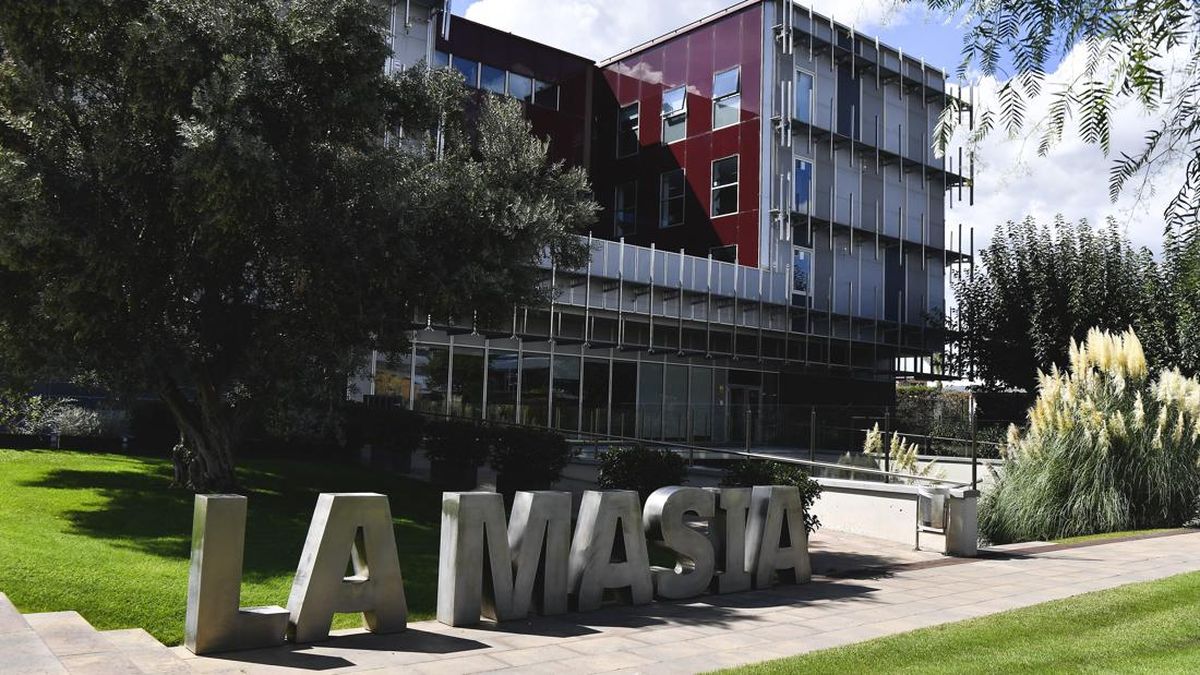
To understand the impact of the 2026 World Cup, one must understand the origins of the name. "La Masia" literally translates from Catalan as "The Farmhouse." The name originally referred to an ancient stone building constructed in 1702, located in the shadow of the Camp Nou. In 1979, under the presidency of Josep Lluís Núñez and at the suggestion of Johan Cruyff, this building was converted into a residence for young players from outside Barcelona. The goal was simple yet revolutionary: to create a home for talent where the values of the club could be instilled 24 hours a day.
In 2011, the academy moved to a state-of-the-art facility at the Ciutat Esportiva Joan Gamper, but the name and the philosophy remained. The modern La Masia is a 6,000-square-meter complex that houses nearly 100 student-athletes across various sports, though football remains its primary focus. The facility includes classrooms, specialized medical wings, and recreational areas, all designed to ensure that if a player fails to make it as a professional, they are still equipped with the education and character to succeed in life. This "Masia 360" approach is what sets the academy apart from the hyper-commercialized youth systems seen elsewhere in Europe.
The Cruyffian Revolution and the Tiki-Taka DNA
The success witnessed in 2026 is the direct result of a timeline that began in the late 1980s. When Johan Cruyff returned to Barcelona as manager in 1988, he demanded that every youth team, from the youngest "Aleví" to the senior "Dream Team," play the same 4-3-3 formation. He emphasized technical skill over physical size—a move that allowed players like Xavi Hernández, Andrés Iniesta, and eventually Lionel Messi to flourish despite their stature.
This philosophy evolved into what the world knows as tiki-taka: a style of play characterized by short passing, constant movement, and maintaining possession to tire out the opponent. Cruyff’s vision was that the ball is the most important player on the pitch; if you have it, the other team cannot score. By the time the 2026 World Cup arrived, this philosophy had been refined through three decades of trial and error, resulting in a Spanish national team that played with a telepathic understanding. The graduates of La Masia do not just play football; they speak it as a first language.
A Data-Driven Look at the 2026 Alumni
The sheer volume of La Masia graduates in the 2026 World Cup is staggering. At least eight players in the Spanish squad were products of the academy, accounting for more than 30% of the roster. These were not peripheral figures but the backbone of the starting eleven:
- Lamine Yamal: The youngest goalscorer in the tournament’s history, whose dribbling and vision from the wing drew inevitable, if daunting, comparisons to a young Messi.
- Dani Olmo: A versatile attacker who exemplified the "prodigal son" narrative, having honed his skills at La Masia before seeking experience abroad and returning to the elite level.
- Gavi: The emotional engine of the midfield, whose high-intensity pressing and technical security provided the balance Spain needed.
- Pau Cubarsí: The breakout star of the tournament, whose composure in central defense and ability to break lines with his passing earned him the Best Young Player award.
- Marc Cucurella: A tireless fullback whose defensive tenacity and overlapping runs provided essential width.
- Alejandro Grimaldo: A specialist in set-pieces and crossing who provided a different tactical dimension.
- Eric García: A reliable defensive option whose tactical intelligence allowed Spain to play a high defensive line.
- Víctor Muñoz: A rising talent who provided depth and showcased the academy’s continuous conveyor belt of talent.
Beyond Spain, the presence of Lionel Messi for Argentina served as a living monument to the academy’s greatest success. Messi’s journey from a 13-year-old with a growth hormone deficiency to the greatest player of all time began with a trial at La Masia and a contract signed on a paper napkin. His presence in the 2026 final was a poetic reminder of the academy’s global reach.
Character Education: The Invisible Advantage
One of the most significant takeaways from the 2026 tournament was the conduct of the Spanish players. In an era of high-stakes sports where tempers often flare, the La Masia graduates were noted for their discipline and humility. This is not accidental. From day one, players at the academy are taught that "the person is more important than the player."
The curriculum at La Masia includes mandatory study hours, psychological support, and workshops on social responsibility. This focus on "education in values" (humility, effort, ambition, respect, and teamwork) translates to the pitch as tactical discipline and a lack of ego. When Pau Cubarsí accepted his Young Player of the Tournament award, his speech focused on the collective effort of the team and his coaches, a hallmark of the Masia upbringing. This psychological grounding allows young players to handle the immense pressure of a World Cup final without crumbling.
Economic and Strategic Implications
The resurgence of La Masia also carries heavy implications for the business of football. In recent years, FC Barcelona has faced well-documented financial challenges. The club’s ability to compete at the highest level without spending hundreds of millions in transfer fees is entirely dependent on the academy.
The 2026 World Cup has significantly inflated the market value of these graduates. For Barcelona, this represents billions of euros in "internal assets." Strategically, it proves that the model of "Cantera vs. Cartera" (Homegrown vs. Wallet) is still viable. While other elite clubs rely on massive scouting networks and sovereign wealth funds to buy success, Barcelona’s success is "grown." This model provides a blueprint for clubs worldwide facing financial fair play constraints: investing in youth infrastructure is more sustainable than speculative spending in the transfer market.
Broader Impact on Global Football
The 2026 World Cup will likely be remembered as the moment the "La Masia style" became the global standard. Coaches from Tokyo to Texas are now looking to replicate the training drills and structural organization of the Catalan academy. The tournament proved that the "Total Football" ideology is not a relic of the past but a flexible framework that can be adapted to the high-speed, high-press environment of the modern game.
Furthermore, the success of players like Lamine Yamal and Pau Cubarsí has challenged the traditional timeline of player development. In the past, defenders were expected to peak in their late 20s. Cubarsí’s dominance at such a young age suggests that if the technical and tactical education is rigorous enough, age is no longer a barrier to entry at the highest level.
Conclusion: An Enduring Legacy
As the footballing world looks toward the 2030s, the shadow of La Masia looms larger than ever. The 2026 World Cup was not an anomaly; it was the result of a deliberate, 47-year experiment in how to cultivate human potential. By combining a rigid tactical philosophy with a flexible approach to character building, FC Barcelona has created more than just a football school; they have created a cultural institution that dictates the rhythm of the world’s most popular sport.
The victory of Spain in 2026, led by the sons of La Masia, serves as a reminder that in an increasingly commercialized sport, there is still immense power in the simple act of teaching a child how to play the game with intelligence, respect, and a sense of belonging. The "Farmhouse" continues to harvest the finest talent in the world, ensuring that the DNA of Barcelona remains the gold standard for generations to come.