
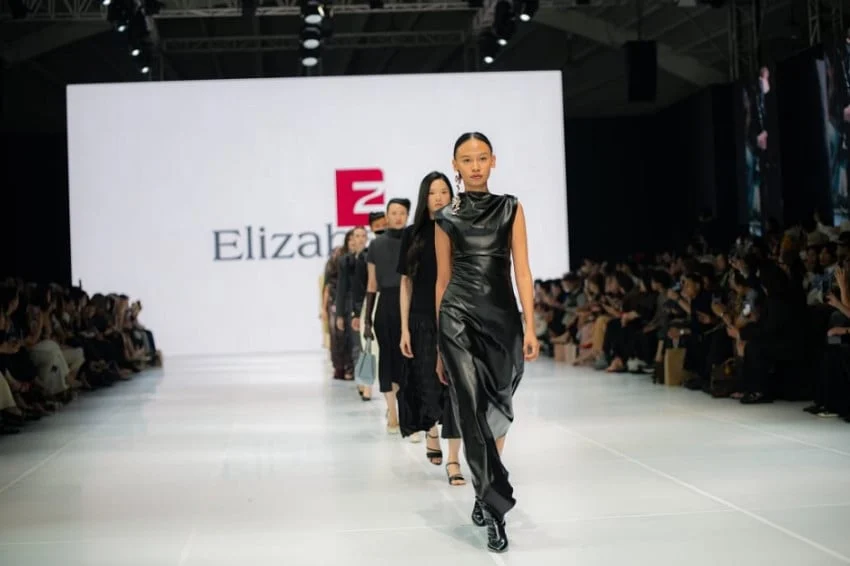
Jakarta has long established itself as the beating heart of Southeast Asia’s burgeoning fashion industry, serving as a dynamic crucible where heritage craftsmanship effortlessly converges with avant-garde modernism. Amidst the bustling calendar of style exhibitions and high-profile runway presentations, few moments capture the commercial resilience and creative evolution of indigenous enterprises quite like the annual Jakarta Fashion Week. In the midst of the high-stakes presentations at City Hall, Pondok Indah Mall 3, a storied name in the Indonesian retail landscape captured the attention of critics, buyers, and style enthusiasts alike. Elizabeth, a legendary domestic fashion and accessories brand that has maintained an unbroken presence in the archipelago since 1963, made a definitive statement on the runway with its latest design exploration.
The showcase, presented on a crisp Thursday evening, introduced a conceptual paradigm titled Bloom Beneath the Surface. Rather than relying on fleeting micro-trends or superficial ornamentation, the collection offered a profound meditation on quiet strength, organic metamorphosis, and structural innovation. As one of the enduring pillars of Indonesian retail, Elizabeth utilized this high-profile platform not merely to showcase garments, but to orchestrate a sophisticated brand repositioning that honors its six-decade heritage while boldly gazing toward the future of contemporary ready-to-wear.
A Chronology of Legacy and Evolution
To fully grasp the significance of Elizabeth’s presentation at Jakarta Fashion Week 2027, one must examine the brand’s remarkable trajectory over the past half-century. Founded in 1963 during a vastly different economic and cultural era in Indonesia, Elizabeth began as a modest enterprise that eventually evolved into a household name synonymous with accessible quality, particularly in the realm of handbags and leather goods. For generations of Indonesian consumers, the brand represented the quintessential milestone of acquiring one’s first professional handbag or dependable everyday accessory.
However, the modern fashion landscape demands relentless adaptation. In recent years, the leadership at Elizabeth recognized that maintaining market relevance required a strategic pivot toward holistic lifestyle offerings, bridging the gap between its heritage as an accessories manufacturer and a comprehensive fashion authority. The genesis of Bloom Beneath the Surface represents the culmination of years of design research, supply chain refinement, and creative exploration.
The runway presentation itself was meticulously choreographed to reflect this developmental timeline. As the lights dimmed at City Hall, the audience was introduced to a narrative arc divided into distinct emotional movements. The presentation moved fluidly from stark, architectural minimalism to soft, organic fluidity, echoing the collection’s core premise: that true resilience is rarely rigid; rather, it possesses a quiet, organic flexibility that allows it to flourish even beneath the most demanding surfaces.
Creative Vision and Design Philosophy
At the creative helm of this transformative collection is Vernalyn Subali, Director of Design Product at Elizabeth. Subali brings an international perspective and rigorous academic foundation to the brand, having studied Merchandising Management and Apparel Design at Oregon State University. Her global training, combined with a deep-rooted understanding of the domestic consumer market, enabled her to formulate a design language that speaks fluently to both local sensibilities and international aesthetic standards.
Subali’s creative philosophy for Bloom Beneath the Surface centers on the deliberate reconciliation of dichotomies. In previous decades of fashion design, strength and femininity were frequently cast as opposing forces—tailored power suits stood on one end of the spectrum, while fragile, diaphanous dresses occupied the other. Subali dismantles this binary entirely. Through the sixteen meticulously curated looks that graced the runway, the collection demonstrated that structural integrity and organic softness can not only coexist, but actively enhance one another.
"We wanted to articulate a narrative where power does not have to be loud, and femininity does not have to be fragile," design notes from the creative team indicated during the post-show briefing. "The collection explores how human beings, much like botanical elements pushing through hardened earth, undergo internal transformations that eventually manifest as outer beauty and structural grace."
This philosophy was manifested through an intricate balancing act of silhouettes. Boxy, architectural outerwear pieces featuring sharp, definitive lines were abruptly softened by fluid drapery underneath. Structured bodices gave way to billowing skirts, creating a visual rhythm that kept the audience engaged through every single transition on the runway.
Material Innovation and Technical Craftsmanship
One of the most striking aspects of the Bloom Beneath the Surface collection was its adventurous and sophisticated use of materials. Staying true to its foundational identity as a master of leather craftsmanship, Elizabeth made textured Polyurethane (PU) leather the cornerstone of the collection’s textile narrative. However, this was not the heavy, utilitarian leather typically associated with rugged outerwear. Instead, the design team manipulated the PU leather through advanced technological processes to achieve a lightweight, malleable quality suitable for high-fashion draping.
This signature material was masterfully sculpted into modern, sculptural silhouettes that hugged the body while maintaining an independent, architectural form. To counteract the inherent heaviness of leather, Subali integrated intricate laser-cut floral techniques. These precision-engineered cutouts introduced an organic, botanical motif that served as a visual counterpoint to the industrial feel of the structured garments.
Furthermore, the collection achieved textural depth through the deliberate juxtaposition of contrasting fabrics. Heavy textured PU leather was juxtaposed against delicate knits, breathable cottons, and the understated, liquid sheen of fine satin. This triangulation of textures created a multi-sensory runway experience where the interplay of light against matte leather and glossy satin emphasized the collection’s thematic duality.
The color palette was chosen with equal intentionality, grounding the avant-garde silhouettes in a sophisticated earthy spectrum. Dominated by foundational neutral tones such as stone, clay, and olive, the palette evoked the natural environment from which the collection drew its inspiration. These earthy base notes were punctuated by rich, emotional accent colors, including deep burgundy, soft blush pink, and muted dusty blue. This nuanced color curation ensured that the garments remained wearable and commercially viable while still possessing high-concept artistic merit.
Broader Industry Implications and Market Analysis
The debut of Bloom Beneath legacy brands navigating the fiercely competitive Southeast Asian retail market. In an era dominated by fast-fashion conglomerates and digital-native direct-to-consumer labels, legacy brands face the constant peril of cultural obsolescence. Elizabeth’s successful runway presentation offers a masterclass in how heritage houses can reinvent themselves without alienating their loyal customer base.
From a market analysis perspective, the expansion from an accessories-centric catalog into a full-scale apparel collection represents a lucrative vertical integration strategy. By utilizing the same high-grade textured PU leather developed for its renowned handbag lines as the primary textile for its outerwear and structural dresses, Elizabeth has created a cohesive ecosystem of style. Consumers can now pair their signature Elizabeth handbags with ready-to-wear ensembles crafted from matching materials, creating a unified brand synergy that strengthens overall market positioning.
Furthermore, the participation of an established mass-to-mid market brand in a prestigious platform like Jakarta Fashion Week reflects the democratization of Indonesian high fashion. Historically, JFW was viewed exclusively as a playground for high-end couturiers and exclusive designer labels. However, as the domestic fashion economy matures, the boundary between commercial retail and runway artistry has begun to blur. Brands like Elizabeth are proving that commercial viability and high-design experimentation are not mutually exclusive; rather, when executed with precision and creative integrity, they reinforce one another.
Industry analysts have noted that this strategic repositioning positions Elizabeth favorably to capture a younger, more design-conscious demographic—specifically Millennials and Generation Z consumers who prioritize brand authenticity, material innovation, and narrative-driven fashion. By anchoring their modern reinvention in a profound thematic exploration of resilience and transformation, Elizabeth has successfully transitioned from being a nostalgic relic of Indonesian retail history into a forward-thinking protagonist of its future.
As the echoes of the runway applause faded at City Hall, Pondok Indah Mall 3, the broader implications of Bloom Beneath the Surface began to settle across the domestic fashion landscape. Elizabeth has not merely presented a seasonal collection of sixteen looks; it has charted a definitive roadmap for how heritage brands can evolve, adapt, and bloom anew in an increasingly complex and demanding modern marketplace.
