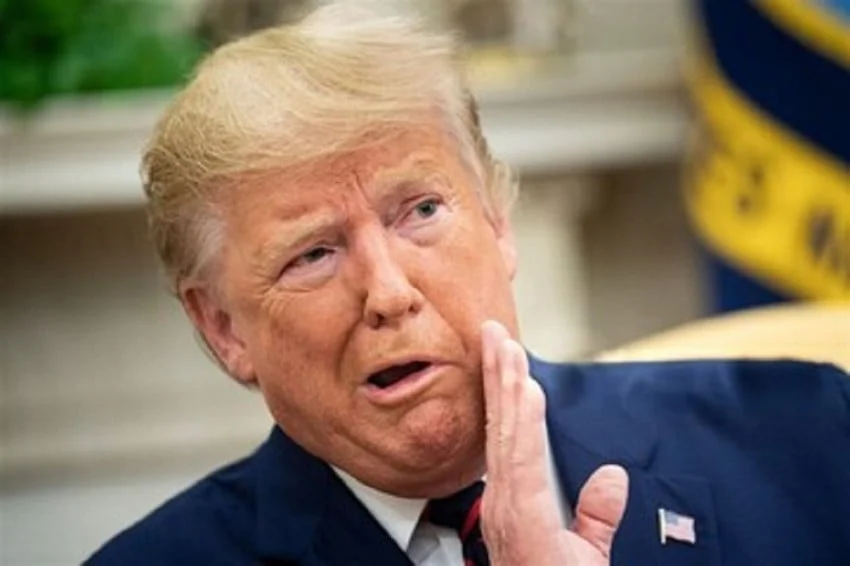
The geopolitical landscape of the Middle East remains on a precarious edge as reports emerge indicating that United States President Donald Trump has positioned himself as the most vocal proponent within his inner circle for potential military action against Iran. According to recent disclosures from the news outlet Semafor, citing an unnamed senior administration official, the President’s willingness to authorize kinetic operations serves as a fallback strategy should ongoing back-channel diplomatic initiatives fail to yield a "provisional peace agreement" with Tehran.
While the administration continues to explore avenues for negotiation, the specter of conflict looms large, particularly as the November 3 midterm elections approach. This potential shift in posture underscores the volatility of U.S.-Iran relations, a dynamic that has been characterized by cycles of high-stakes brinkmanship and intermittent diplomatic maneuvering since the U.S. withdrawal from the Joint Comprehensive Plan of Action (JCPOA) in 2018.
The Diplomatic Paradox and the Military Contingency
The current strategic environment is defined by a paradox: while the White House officially pursues a policy of "maximum pressure" intended to force Iran back to the negotiating table, internal discussions suggest a growing impatience with the pace of diplomatic progress. The Semafor report suggests that President Trump is uniquely positioned as the driving force behind a more aggressive stance, often outpacing his own national security advisors who remain more skeptical of the utility of renewed military operations.
Sources familiar with the administration’s deliberations indicate that the President has signaled a willingness to engage in a substantive deal, yet he has maintained a firm red line regarding Iran’s nuclear ambitions and regional proxy activities. Should the current negotiations for a temporary de-escalation framework collapse, the administration has reportedly prepared contingency plans for targeted military strikes. The timing of such a move, post-November 3, suggests a calculated approach to domestic political considerations, as the administration seeks to avoid major foreign entanglements during the immediate window of the midterm elections.
A Chronology of Escalation: From JCPOA to Maximum Pressure
To understand the current tension, one must look back at the trajectory of U.S.-Iran relations over the past several years. The foundation of the current crisis dates back to May 2018, when President Trump announced the United States’ withdrawal from the JCPOA, commonly known as the Iran Nuclear Deal. The move was predicated on the belief that the 2015 agreement did not sufficiently constrain Iran’s ballistic missile program or its support for regional militias in Lebanon, Syria, Iraq, and Yemen.
Following the withdrawal, the U.S. reinstated sweeping economic sanctions, targeting Iran’s oil exports, shipping, and financial sectors. In response, Iran gradually abandoned its commitments under the JCPOA, increasing its uranium enrichment levels and expanding its nuclear infrastructure. The timeline of subsequent escalations includes:
- May-June 2019: A series of attacks on oil tankers in the Gulf of Oman, which the U.S. attributed to Iranian forces.
- June 2019: Iran shot down a U.S. Navy RQ-4A Global Hawk surveillance drone, nearly triggering a retaliatory strike that was reportedly aborted by President Trump at the last minute.
- September 2019: A sophisticated drone and missile attack on Saudi Arabia’s Aramco oil facilities, which significantly crippled global oil production. The U.S. and Saudi Arabia accused Iran of orchestrating the strike.
- January 2020: The targeted killing of Islamic Revolutionary Guard Corps (IRGC) commander Qasem Soleimani in Baghdad, marking a historic peak in hostilities and leading to direct Iranian ballistic missile strikes on U.S. bases in Iraq.
This history suggests that the threshold for military intervention remains high but is subject to sudden shifts based on the administration’s perception of Iranian compliance or provocation.
Strategic Implications and Regional Responses
The prospect of a military confrontation carries profound implications for the global economy and regional stability. Iran’s ability to project power through the Strait of Hormuz—a critical maritime chokepoint through which approximately 20% of the world’s total petroleum consumption passes—remains a primary concern for international markets. Any disruption to this flow would likely result in an immediate and significant spike in crude oil prices, impacting inflationary pressures globally.
Furthermore, the regional architecture of the Middle East is deeply divided. Countries such as Saudi Arabia and the United Arab Emirates have historically supported a hardline approach against Tehran, viewing Iranian regional influence as an existential threat. Conversely, other regional players have consistently warned that military strikes could ignite a broader regional war, potentially drawing in non-state actors and destabilizing fragile governance structures in neighboring Iraq and Syria.
The Role of International Mediation
Amidst the internal deliberations in Washington, international actors have signaled their intent to play a stabilizing role. A spokesperson for the Kremlin recently informed Al Jazeera that Russia stands ready to serve as a formal intermediary between Tehran and Washington, should both parties request such assistance. Moscow’s offer reflects its long-standing interest in maintaining a foothold in Middle Eastern diplomacy and its desire to prevent a conflict that would inevitably disrupt its own strategic interests in the region.
European signatories to the original nuclear deal—France, Germany, and the United Kingdom—have also maintained a consistent position, urging both sides to return to the negotiating table. However, their influence has waned as the U.S. "maximum pressure" campaign has effectively locked European companies out of the Iranian market due to the risk of secondary U.S. sanctions.
Analytical Perspectives on Administration Policy
Political analysts note that the internal division described in the recent reporting is characteristic of the Trump administration’s foreign policy-making process. The President has often balanced his desire to be a "deal-maker"—frequently citing his preference for direct summits—against his campaign promises to curtail foreign military involvement.
"The internal skepticism mentioned in the report is indicative of a broader strategic debate," says an expert on Middle Eastern security studies. "There is a clear divide between those who believe that targeted, limited strikes can re-establish deterrence and those who fear the ‘slippery slope’ of a prolonged, unintended conflict. The President’s own volatility is the wildcard in this equation; he is willing to push to the brink, yet he remains wary of the political fallout associated with a protracted regional war."
The implications of these deliberations extend beyond the immediate security concerns. If the administration opts for military action, it would necessitate a massive reallocation of intelligence and military assets, potentially diverting attention from other global priorities, including the ongoing strategic competition with China and the complexities of the situation in Ukraine.
Economic and Humanitarian Considerations
Beyond the military and political dimensions, the potential for conflict carries severe humanitarian implications. Iran’s economy has already been severely strained by the combination of U.S. sanctions and the effects of the global pandemic. A renewed military campaign, coupled with the potential for further economic isolation, could lead to a catastrophic collapse of the Iranian social and economic infrastructure.
International aid organizations have repeatedly warned that the civilian population bears the brunt of these geopolitical tensions. The disruption of medical supplies and the devaluation of the Iranian rial have already made it increasingly difficult for ordinary citizens to access basic necessities. A military escalation would exacerbate these conditions, likely resulting in a significant humanitarian crisis and the potential for a new wave of migration.
Future Outlook and Strategic Readiness
As the administration weighs its options, the focus remains on whether the "provisional peace agreement" currently under discussion can bridge the fundamental trust deficit between Washington and Tehran. This agreement, as described by analysts, likely involves a temporary freeze on certain nuclear enrichment activities in exchange for limited sanctions relief.
Whether this constitutes a path toward a long-term resolution or merely a temporary reprieve remains the central question. For now, the administration is keeping its options open, maintaining a robust military presence in the region while continuing to test the diplomatic waters.
In the final assessment, the situation remains fluid. The President’s "most open" stance toward escalation functions as a pressure tactic, intended to signal to Tehran that the window for negotiation is not indefinite. As the political calendar moves toward November, the international community will be closely watching for any signs of a breakthrough—or a breakdown—that could fundamentally alter the security architecture of the Middle East for years to come. The administration’s ability to navigate this tension without stumbling into an avoidable conflict will likely define the legacy of its approach to Iranian policy, serving as a critical test of its broader foreign policy strategy in a multipolar world.