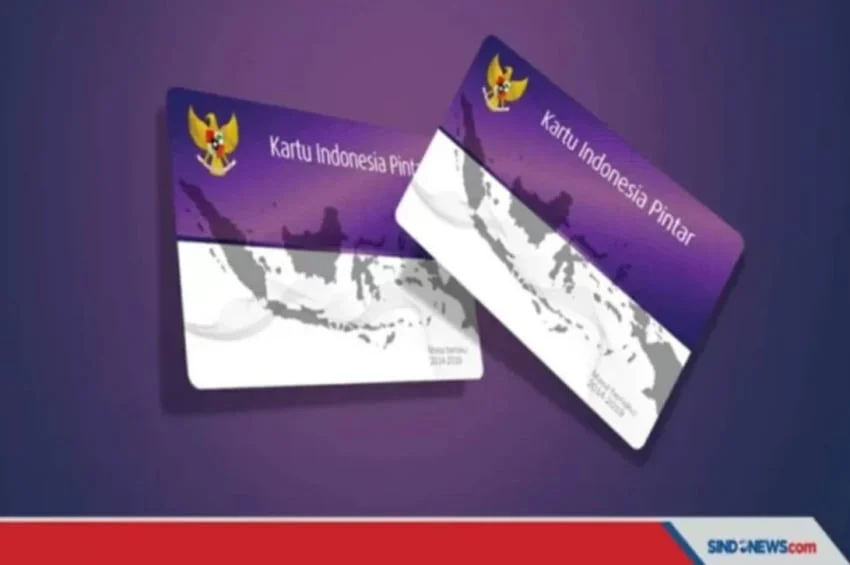
The Program Indonesia Pintar (PIP), a pivotal government initiative aimed at bolstering educational access and equity, provides critical financial assistance to students from underprivileged and vulnerable backgrounds, thereby safeguarding their right to education and preventing school dropouts. A cornerstone of Indonesia’s national human capital development strategy, the PIP facilitates online status checks for beneficiaries, enabling students and parents to verify their eligibility and disbursement status efficiently using only their Nomor Induk Kependudukan (NIK) and Nomor Induk Siswa Nasional (NISN). This digital accessibility underscores the government’s commitment to transparency and streamlining administrative processes for millions of families nationwide.
A Cornerstone of Indonesia’s Human Capital Strategy
Launched as a flagship program, the PIP represents a significant component of Indonesia’s broader social safety net, specifically designed to address financial barriers that often impede educational attainment among low-income households. The program’s core philosophy is rooted in the belief that every Indonesian child, regardless of their socio-economic status, deserves the opportunity to access quality education and fulfill their potential. By providing direct cash assistance, the PIP aims to cover essential school-related expenses, such as uniforms, books, stationery, transportation, and other learning materials, thus alleviating the financial burden on families and empowering students to remain enrolled and actively participate in their studies.
The origins of the Program Indonesia Pintar can be traced back to the comprehensive vision for human resource development articulated under successive administrations. While elements of educational assistance existed previously, PIP was formally strengthened and expanded under President Joko Widodo’s administration, becoming an integral part of the government’s commitment to "Nawacita," or nine priorities for national development. These priorities emphasize improving the quality of human life and enhancing productivity, both of which are directly supported by investment in education. The program aligns with Indonesia’s constitutional mandate to ensure every citizen has the right to education and contributes to achieving the United Nations Sustainable Development Goal 4 (SDG 4) on Quality Education, specifically targeting equitable access to education for all.
From Vision to National Program: The Evolution of PIP
The journey of PIP reflects an evolving understanding of the multifaceted challenges facing education in Indonesia. Initially conceptualized to support the existing compulsory education mandate, the program has continuously adapted and expanded its scope. Its initial focus was primarily on students in formal education settings, from elementary to high school. However, recognizing the diverse educational landscape and the need for inclusive support, PIP quickly extended its reach to encompass non-formal education pathways, including Paket A (equivalent to elementary school), Paket B (junior high school), and Paket C (senior high school) programs. This expansion ensures that students who may not be in traditional school settings but are pursuing equivalency education also receive vital support.
A significant policy evolution for PIP is its planned expansion to include Taman Kanak-Kanak (TK) or kindergarten students by 2026. This forward-looking initiative underscores the government’s recognition of the critical importance of early childhood education (ECE) as a foundation for lifelong learning and holistic development. Research consistently demonstrates that high-quality ECE programs have a profound positive impact on children’s cognitive, social, and emotional development, leading to better academic outcomes and overall life chances. By extending PIP to TK, the government aims to reduce financial barriers to early education, promoting greater enrollment in preschool and ensuring that children from disadvantaged backgrounds begin their educational journey on an equal footing. This move aligns with global best practices that advocate for early interventions to address educational inequalities, fostering a more equitable start for all Indonesian children.
Defining the Vulnerable: Who Qualifies for PIP?
The efficacy of any social assistance program hinges on its ability to accurately identify and reach its intended beneficiaries. For PIP, the eligibility criteria are meticulously defined to ensure that assistance is directed towards students genuinely in need. The primary target group comprises students from families classified as poor or vulnerable poor. This classification is predominantly determined through the Data Terpadu Kesejahteraan Sosial (DTKS) or Integrated Social Welfare Data, managed by the Ministry of Social Affairs. DTKS serves as the master database for various social assistance programs in Indonesia, ensuring better targeting and reducing duplication of efforts across different governmental aid schemes.
Specific categories of eligible students include:
- Holders of Kartu Indonesia Pintar (KIP): The KIP card is a tangible symbol of eligibility for PIP, often issued to students from families listed in the DTKS.
- Recipients of Program Keluarga Harapan (PKH): Students whose families are beneficiaries of PKH, a conditional cash transfer program targeting very poor families, are automatically considered eligible.
- Recipients of Bantuan Pangan Non Tunai (BPNT): Families receiving non-cash food assistance are also prioritized for PIP.
- Participants in Penerima Bantuan Iuran (PBI) BPJS Kesehatan: Students from families whose health insurance premiums are paid by the government due to their low-income status.
- Orphans/Orphans from Social Welfare Institutions: Students who have lost one or both parents or are residing in orphanages or social welfare institutions.
- Students Affected by Disasters or Special Circumstances: This includes students from disaster-stricken areas or those with specific needs that may hinder their access to education.
- Students from Remote or Disadvantaged Areas: Priority is often given to students residing in 3T areas (Terdepan, Terluar, Tertinggal – Frontier, Outermost, Disadvantaged), where educational access challenges are most acute.
- Students who are Dropouts or at Risk of Dropping Out: The program specifically targets those who need support to re-enter or remain in school, serving as a critical intervention against educational discontinuity.
The rigorous selection process, leveraging robust data systems like DTKS, is crucial for minimizing errors of inclusion (providing aid to those not in need) and exclusion (missing those who are truly eligible). Schools play a vital role in identifying potential beneficiaries and submitting their data for verification.
The Nomination Pathway for PIP
The process of becoming a PIP beneficiary typically involves several steps, starting with identification and nomination. Students can be nominated through various channels to ensure comprehensive coverage:
- School Nominations: The most common pathway, where schools identify eligible students based on their existing data, discussions with parents, and cross-referencing with local social welfare information. School principals or designated school operators compile lists of potential beneficiaries and submit them through the Dapodik (Data Pokok Pendidikan) system, the national education data collection system. This system integrates student data with eligibility criteria, streamlining the nomination process.
- Community Proposals: Local community leaders, village heads, or even non-governmental organizations (NGOs) can propose students they identify as deserving of assistance. These proposals are then forwarded to the relevant educational authorities for verification and inclusion in the nomination pool.
- Direct Proposals from Parents/Guardians: In some cases, parents or guardians can directly apply for PIP for their children, provided they meet the eligibility criteria and can furnish the necessary documentation. This option serves as a safety net for those who might be missed by other channels.
- Ministry of Education and Culture Nominations: The Ministry, through its data analysis and coordination with the Ministry of Social Affairs, can also directly nominate students, particularly those identified through DTKS as highly vulnerable but not yet enrolled in PIP.
Once nominated, the data undergoes a stringent verification process by the Ministry of Education and Culture’s Center for Education Financing Services (Puslapdik) to confirm eligibility against the national criteria. Approved beneficiaries are then listed, and their information is made available through the online portal.
Seamless Access: The Online Status Check and Disbursement Mechanism
The availability of an online portal for checking PIP status is a significant step towards modernizing government services and enhancing user convenience. This digital platform empowers parents, guardians, and students to access crucial information from anywhere with an internet connection, reducing the need for physical visits to administrative offices and improving overall program accessibility. The process is designed to be straightforward:
- Access the Official Website: Users need to visit the official PIP portal, typically hosted by the Ministry of Education and Culture (e.g., pip.kemdikbud.go.id).
- Input Identification Details: On the portal, there will be designated fields to enter the student’s Nomor Induk Kependudukan (NIK) and Nomor Induk Siswa Nasional (NISN). The NIK is a 16-digit unique identifier from the student’s Kartu Keluarga (Family Card) or identity card, while the NISN is an official 10-digit student identification number universally recognized across the Indonesian education system.
- Complete Security Check: A CAPTCHA or similar security verification step is usually required to prevent automated queries and ensure data security.
- Submit and View Status: Upon successful submission, the system will display the student’s PIP status, which typically includes information such as:
- Whether the student is a confirmed recipient for the current year.
- The education level and school of the student.
- The amount of assistance entitled.
- The disbursement status (e.g., "dana masuk" – funds disbursed, "dana cair" – funds activated, "belum cair" – not yet disbursed).
- The bank through which the funds will be disbursed.
- Details about account activation requirements if applicable.
This online transparency mechanism not only provides convenience but also serves as a critical tool for accountability, allowing beneficiaries to monitor their aid status and