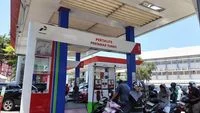
Jakarta — In a decisive effort to tackle debilitating traffic congestion and long queues at fuel distribution hubs, PT Pertamina Patra Niaga has officially rolled out an odd-even license plate restriction system across all Public Fuel Filling Stations (SPBU) in South Sulawesi. The policy, which commenced on Sunday, September 13, represents a critical intervention by energy regulators and regional authorities designed to restore order, optimize fuel distribution equity, and mitigate the escalating pressure on local supply chains that has plagued the province over recent weeks.
The implementation of this localized traffic and purchasing control mechanism underscores the growing strain on subsidized energy distributions in regional Indonesia. By systematically alternating access based on numerical vehicle registration suffixes, state-owned energy enterprise Pertamina, in close coordination with provincial administrators, aims to normalize operational flows at fueling stations and alleviate the frustrations of motorists who have faced hours of waiting time just to secure basic automotive fuel.
Chronology of the Crisis and the Genesis of the Policy
The genesis of the odd-even SPBU policy traces back to a sharp surge in vehicular congestion outside fueling stations across multiple municipalities and regencies in South Sulawesi. Over the preceding days, social media platforms and local news outlets were saturated with images and reports of serpentine vehicle queues stretching for kilometers, paralyzing adjacent thoroughfares and disrupting daily commerce.
The tipping point prompted swift administrative intervention from the regional government. On September 12, 2026, the South Sulawesi Provincial Energy and Mineral Resources (ESDM) Office formally issued an urgent directive addressed to the Executive General Manager Regional Sulawesi of PT Pertamina Patra Niaga. Formulated under official letter number 670/2478/DESDM, the communication outlined a comprehensive suite of emergency containment measures requested by the provincial administration to immediately stabilize the local fuel distribution network.
Responding directly to the regional government’s mandate, Pertamina Patra Niaga mobilized its logistical framework to operationalize the directives within 24 hours. Community Relation Pertamina Patra Niaga Regional Sulawesi, Okky Aditya, confirmed to media outlets that the system took effect on Sunday, targeting vehicles carrying odd-numbered registration plates on its inaugural day.
According to the alternating schedule established by operational managers, vehicles bearing even-numbered registration plates are designated for fuel replenishment on Monday, September 14, establishing a rolling cadence designed for straightforward compliance by motorists and effortless enforcement by station attendants.
Mechanics of the Odd-Even System and Public Compliance
The logistics governing the odd-even framework require strict adherence from motorists seeking access to fuel pumps. The numerical identifier utilized for the restriction is the final digit on the vehicle’s license plate. On odd calendar dates, only vehicles with odd-ending license plates are permitted to purchase fuel at participating South Sulawesi SPBU locations. Conversely, even-numbered plates are serviced exclusively on even calendar dates.
"Yes, the odd-even policy has officially been implemented," stated Okky Aditya during a briefing on Sunday, emphasizing that the rapid deployment is vital to preventing further operational bottlenecks. "This is being done so that the implementation can run in an orderly, effective manner, and be well-socialized to the general public."
Pertamina has placed a heavy emphasis on civic responsibility, urging motorists to recognize that energy distribution logistics rely heavily on consumer cooperation. The company warns against panic buying—a psychological phenomenon that historically exacerbates shortages by driving consumers to hoard fuel beyond their immediate requirements. By regulating access through numerical sequencing, the state energy provider hopes to flatten demand curves and ensure that fuel inventories are distributed equitably across the entire demographic spectrum of South Sulawesi.
"We appeal to the public to purchase fuel according to their actual needs and intended use so that services at gas stations can run more smoothly, orderly, and equitably," Okky added.
Comprehensive Provincial Directives Beyond Odd-Even Restrictions
While the odd-even license plate rule forms the most visible consumer-facing pillar of the intervention, it is part of a multifaceted regulatory package drafted by the South Sulawesi ESDM Office to reform fuel station operations from multiple angles.
Acting Head of the South Sulawesi ESDM Office, Kasman, outlined several concurrent stipulations mandated in the official governmental directive. Among the most significant is a targeted temporal restriction for commercial freight transport. Heavy-duty trucks, which consume substantial volumes of diesel and traditionally occupy fueling bays for extended periods, are now restricted to nighttime refueling schedules. By shifting heavy truck operations away from daytime hours, authorities anticipate a dramatic reduction in spatial congestion at pumps during peak commuter and business hours.
Furthermore, regional regulators have targeted passenger cars and private vehicles regarding the acquisition of heavily subsidized fuels, such as Solar (diesel) and Pertalite (RON 90 gasoline). Under the new guidelines, private vehicle operators are strictly prohibited from entering fueling queues unless the fuel indicator on their vehicle’s odometer clearly demonstrates that reserves have dropped to one bar or lower.
"This restriction is aimed at preventing panic buying and repeated refueling cycles," Kasman explained in the official document. The measure is designed to root out predatory practices where certain motorists engage in multiple daily fill-ups to capitalize on price differentials between subsidized and non-subsidized variants.
To ensure compliance on the ground, the South Sulawesi government has also instructed Pertamina to intensify supervisory audits of individual franchise and corporate-owned SPBU operators. Stations must ensure that all dispensing nozzles are fully manned and operational during business hours to maximize throughput velocity. SPBU management teams found failing to meet performance benchmarks face severe regulatory repercussions. Kasman issued a stern warning that poorly managed stations could face administrative sanctions, temporary operational suspensions, or, in persistent cases of non-compliance, complete revocation of operating licenses followed by direct operational takeover by Pertamina.
Broader Economic and Logistical Implications
The acute fuel supply friction in South Sulawesi highlights broader structural challenges facing Indonesia’s energy distribution architecture, particularly regarding the fiscal sustainability and logistical distribution of state-subsidized petroleum products. As one of the primary economic hubs in eastern Indonesia, South Sulawesi acts as a crucial logistical conduit; disruptions in its fuel supply chain rapidly propagate across neighboring provinces, threatening agricultural transport, inter-city commerce, and passenger transit.
The emergency measures implemented by Pertamina and the provincial administration carry several clear implications for the regional economy:
-
Short-Term Inconvenience vs. Long-Term Stability: While motorists will inevitably face logistical adjustments and potential delays while adapting to the odd-even schedule, the policy is projected to eliminate the multi-hour gridlock that previously crippled local mobility. By introducing predictability into the consumer pipeline, supply levels at terminal storage facilities can stabilize.
-
Curbing Fiscal Leakage of Subsidized Fuels: The strict enforcement of the odometer threshold (one bar or less) for subsidized fuel access directly addresses a long-standing structural vulnerability in Indonesia’s energy subsidy program. Historically, a significant percentage of subsidized products have been siphoned off by commercial entities or consumed disproportionately by high-income motorists who fail to qualify for government assistance. Restricting access helps preserve national fiscal allocations for their intended demographic targets.
-
Optimization of Freight Logistics: Shifting heavy freight refueling to nocturnal hours provides dual benefits. It clears daytime capacity for private and public passenger transport while allowing logistics companies to take advantage of potentially shorter overnight queues once the operational protocol gains traction.
-
Heightened Accountability for Retailers: The threat of franchise takeovers and license revocations signals a zero-tolerance policy toward operational inefficiency or negligence at the retail level. SPBU operators are now legally and administratively compelled to maintain high staffing levels and functional equipment to prevent localized bottlenecks.
Outlook and Future Recommendations
As the odd-even policy enters its second day with the transition to even-numbered plates on Monday, September 14, state energy officials and regional regulators will closely monitor compliance metrics and consumer feedback. The success of this emergency intervention will largely depend on sustained enforcement by local law enforcement and SPBU attendants, alongside continued public compliance.
Experts suggest that while administrative rationing mechanisms like odd-even systems and odometer checks are effective short-term shock absorbers, long-term stability in regional fuel markets will require enhanced digital monitoring, such as the full implementation of QR-code-based fuel purchase tracking (Subsidi Tepat Pertamina). This technological integration aims to seamlessly track fuel volumes dispensed to individual vehicles across national databases, ultimately phasing out manual visual checks and streamlining the consumer experience without imposing rigid calendar-based restrictions.
For now, residents of South Sulawesi must navigate the newly minted odd-even parameters as the region works collectively to restore equilibrium to its vital energy supply networks.