
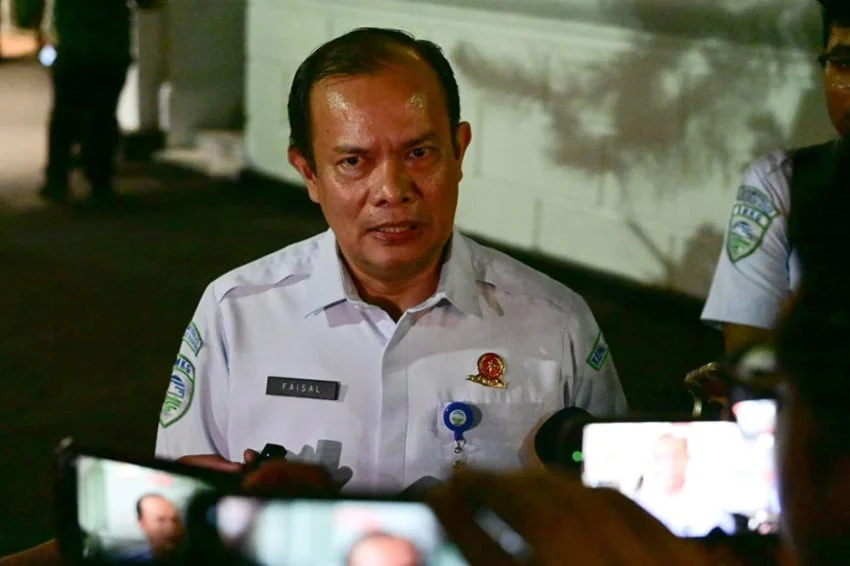
The Indonesian government is recalibrating its strategy to combat the persistent threat of forest and land fires (karhutla), with a specific focus on high-risk peatland ecosystems. Following a high-level limited meeting at the Presidential Palace in Jakarta on Thursday, September 24, 2026, the Head of the Meteorology, Climatology, and Geophysics Agency (BMKG), Teuku Faisal Fathani, introduced a tactical innovation involving shallow drilling to enhance firefighting capabilities in remote and challenging terrains. This strategic shift reflects a broader commitment by the administration of President Prabowo Subianto to move away from reactive measures toward more localized, ground-based interventions.
The Shallow Drilling Innovation
The proposed technique, described by Fathani as a crucial component of the government’s new fire suppression framework, involves the rapid deployment of shallow borehole infrastructure. By drilling into the water table, ground crews can utilize portable pumps to draw water directly from the subsurface to drench affected peat layers.
According to Fathani, this method is designed to provide immediate relief to localized fires, covering a radius of approximately 200 meters from each drilling point. This radius is significant, as it addresses the logistical difficulties often faced by ground crews who struggle to transport water across unstable or dense forest terrain. By decentralizing water sources, the government aims to empower ground task forces to act with greater autonomy and speed.
"We are reinforcing the ground task forces so they can handle fires directly in the field," Fathani stated. "The shallow drilling method, combined with portable pumps, is one of several technical solutions discussed to ensure that we have a sustainable water supply even in the heart of peatland regions, which are notoriously difficult to reach."
Contextualizing the Peatland Challenge
Indonesia’s peatlands are among the most carbon-rich ecosystems on the planet, but they are also highly susceptible to combustion. When peat dries out, it becomes extremely flammable, and fires can burn underground for weeks or months, emitting massive quantities of greenhouse gases and creating hazardous transboundary haze.
Historically, the government has relied heavily on aerial water-bombing and cloud seeding. While these methods are effective for large-scale surface fires, they often fail to extinguish the smoldering combustion that occurs deep within the peat. The introduction of shallow drilling represents a shift toward addressing the "root" of the fire—literally and figuratively—by re-wetting the peat from beneath the surface.
A Chronology of Escalating Concerns
The government’s renewed focus on fire management follows years of fluctuating success in fire mitigation.
- 2023-2024: The return of El Niño conditions led to significant spikes in fire incidents across Sumatra and Kalimantan, prompting international concern regarding air quality and biodiversity loss.
- Early 2026: Recognizing the cyclical nature of these crises, the Prabowo administration initiated a comprehensive review of the national fire management architecture.
- September 2026: The recent meeting at the Presidential Palace formalized the creation of the National Peat and Mangrove Management Agency, a body reporting directly to the President, signaling a top-down priority for environmental protection.
- September 24, 2026: BMKG unveiled the technical integration of localized drilling as part of the new operational mandate for ground task forces.
Community-Led Fire Prevention
Beyond technical hardware, the government is emphasizing the human element of fire management. The strategy discussed at the Palace includes the formalization and expansion of "Fire Care Community Groups" (Kelompok Masyarakat Peduli Api).
These community-based units are being trained not only in suppression techniques but also in early detection and prevention strategies. By integrating local knowledge with government-provided equipment, the administration hopes to create a "first-responder" network that can address small flare-ups before they escalate into uncontrollable disasters. This community-centric approach is widely supported by environmental experts, who argue that sustainable forest management cannot be achieved without the active cooperation of local populations.
Supporting Data and Environmental Impact
Data from the Ministry of Environment and Forestry (KLHK) and the BMKG indicates that the cost of fire suppression, when factoring in economic loss, health expenditures, and carbon credit impacts, far outweighs the cost of proactive infrastructure.
Peatland degradation has been identified as a primary contributor to Indonesia’s national carbon footprint. Statistics show that a single hectare of burnt peat can release hundreds of tons of carbon dioxide into the atmosphere. By utilizing the shallow drilling method to maintain soil moisture, the government aims to prevent the initial ignition, thereby preserving both the ecosystem and the national carbon budget.
Furthermore, the expansion of the ground task force capabilities is intended to reduce the reliance on expensive aerial operations. While aircraft remain necessary for large-scale fire lines, the operational cost-benefit ratio of ground-based drilling is significantly higher, allowing for more frequent interventions at a fraction of the cost.
Implications for Policy and Governance
The establishment of the National Peat and Mangrove Management Agency represents a significant institutional upgrade. By placing this agency directly under the President, the government is signaling that fire mitigation is no longer just an environmental issue, but a matter of national security and economic stability.
Analysts suggest that this centralized oversight, combined with decentralized field tactics, could provide the balance needed to manage Indonesia’s vast landscape. However, the success of the shallow drilling program will depend heavily on several factors:
- Maintenance: Portable pumps and drilling equipment require rigorous maintenance cycles to remain functional in harsh forest environments.
- Training: Ground task forces must be highly trained to operate in difficult conditions, particularly in areas where peat fire smoke can be toxic.
- Logistics: The deployment of equipment must be timed with the onset of the dry season, requiring advanced meteorological data—a role the BMKG is uniquely positioned to fulfill.
Expert Perspectives and Broader Challenges
While the introduction of technical solutions like shallow drilling is being welcomed, experts remain cautious. Dr. Haryanto, a forestry researcher, noted that while drilling is an effective tactical tool, it is only one piece of the puzzle. "Fire suppression is essential, but it must be accompanied by strict enforcement of land-clearing regulations and the restoration of peatland hydrology through permanent canal blocking," he explained.
He noted that the focus on "ground-up" solutions is a positive sign that the government is listening to the challenges faced by local responders. "The move to involve villages is crucial. When the community is involved, the ‘ownership’ of the forest increases, and fire prevention becomes a shared responsibility rather than a government directive."
The Road Ahead
As the 2026 dry season reaches its peak, the implementation of these new strategies will face its first major test. The coordination between the newly formed national agency, local government, and the fire-aware community groups will be scrutinized by both domestic and international observers.
The Prabowo administration’s focus on this issue suggests that fire management will remain a headline policy priority. With the integration of meteorological data provided by the BMKG, the technical deployment of drilling, and the human capital of village-level responders, Indonesia is attempting to build a multi-layered defense system against one of its most persistent and destructive challenges.
The success of these efforts will ultimately be measured by the reduction in hectares burned and, more importantly, the long-term stabilization of the peatland ecosystems that define the archipelago’s landscape. As the government continues to refine these methods, the shift toward a more proactive, localized, and science-based model marks a defining moment in the history of Indonesia’s environmental management. The upcoming months will provide the evidence needed to determine whether these innovations are sufficient to turn the tide against the recurring annual threat of forest and land fires.
