
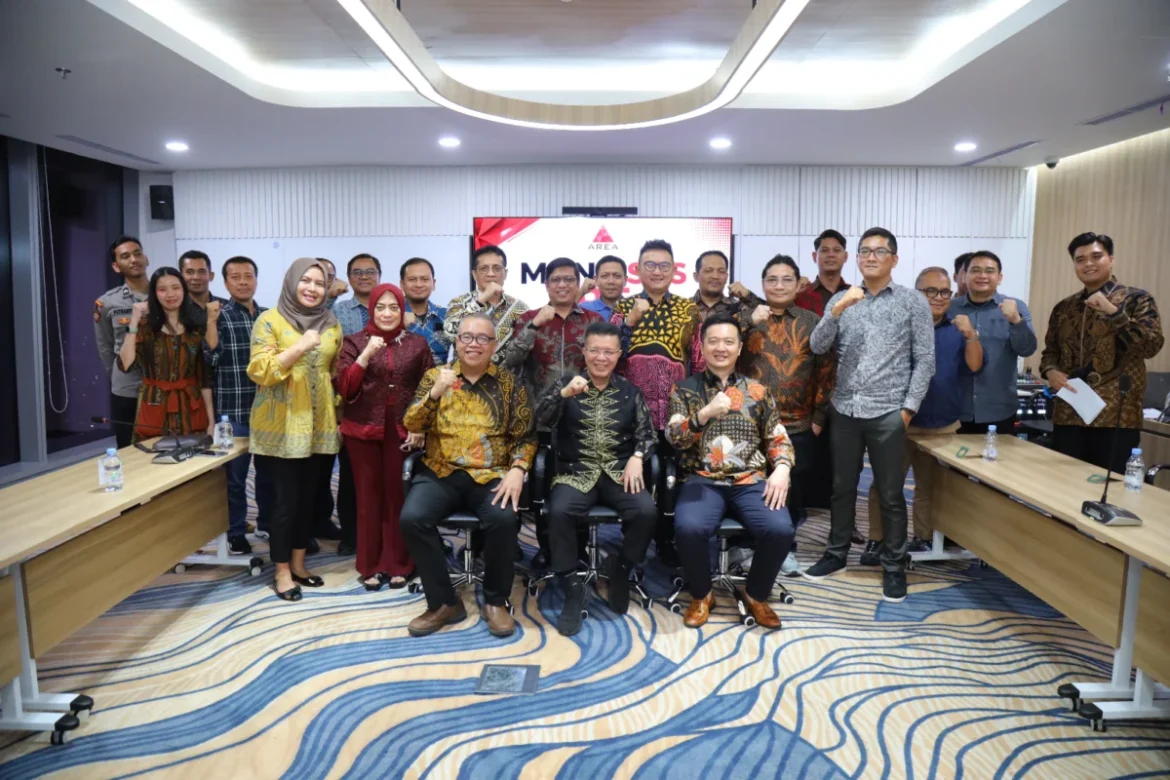
AREA Indonesia has formally established its leadership structure following a Special National Congress (Munasus) held on Wednesday, July 22, 2026, at the World Capital Tower in Jakarta. During the assembly, Indra Utama was elected by acclamation as the President of the organization for the 2026–2031 term. He is joined by Ruly Muliarto, who will serve as Secretary General, and Nico Purnomo, who takes on the role of General Treasurer. This strategic formation marks a significant milestone in the Indonesian real estate landscape, as AREA Indonesia positions itself not as a competitor to existing associations, but as a unifying "big house" for the entire property and housing ecosystem.

The organization’s emergence comes at a critical juncture for the Indonesian economy, where the property sector continues to serve as a primary engine for national growth. By fostering a spirit of synergy, AREA Indonesia aims to bridge the gaps between various stakeholders, including developers, real estate agents, building material manufacturers, financial institutions, property managers, and government bodies. The ultimate goal is to create a healthy, professional, and globally competitive industry that can effectively address the nation’s housing challenges while delivering high-quality products to consumers.
A Vision of Unity and Professionalism
In his inaugural address, President Indra Utama emphasized that the primary motivation behind the formation of AREA Indonesia is the necessity of a collaborative platform. He clarified that the organization was not designed to challenge established groups such as developer associations or agent unions. Instead, it is intended to act as a catalyst for collective growth.

"We were not formed to compete with developer organizations, property agent associations, the building materials industry, banking sectors, property management firms, appraisers, consultants, or other professional organizations," Utama stated. "We are here to unite strengths, build synergy, and serve as a bridge for collaboration across the entire Indonesian property ecosystem. Our presence is intended to provide greater benefits to the community and the nation."
Utama, who also serves as the Chairman of the DPP Abpednas Indonesia and the Chairman of LSP Area Indonesia, noted that the complexities of the modern property market require a multidisciplinary approach. The challenges of providing decent, high-quality, and affordable housing cannot be solved by any single sector in isolation. This realization forms the bedrock of AREA Indonesia’s operational philosophy: that the integration of government policy, private sector innovation, academic research, and media advocacy is essential for sustainable development.

Leadership Profiles and Strategic Expertise
The leadership team of AREA Indonesia brings a wealth of experience from various sectors of the economy, ensuring a well-rounded approach to organizational management. Indra Utama is a prominent figure in the Indonesian media and industrial sectors, serving as the CEO of Journalist Media Network (JMN) and the President Commissioner of PT Waskita Beton Precast Tbk. His background in both journalism and heavy industry provides him with a unique perspective on the intersection of public information, infrastructure, and real estate.
Secretary General Ruly Muliarto brings specialized knowledge in housing and settlement areas, holding a position as Vice Secretary of the LPEU MUI for Housing and Residential Areas. Meanwhile, General Treasurer Nico Purnomo represents the high-end development sector as the CEO of the Pollux Properties Group, a major player in the Indonesian luxury real estate market. The inclusion of diverse professionals from finance, business, and academia in the broader board of directors further strengthens the organization’s capacity to influence policy and industry standards.

The Eight Pillars of AREA Indonesia’s Mission
For the 2026–2031 period, AREA Indonesia has outlined a comprehensive vision: to become the leading professional real estate organization in Indonesia that builds a professional, competent, and integrated industry ecosystem with global competitiveness. To achieve this, the organization has established eight primary missions:
- Professional Certification and Standards: Enhancing the competency of property professionals through rigorous training and certification programs in line with international standards.
- Ecosystem Integration: Creating a seamless network between developers, financiers, and service providers to streamline the property development lifecycle.
- Government Partnership: Acting as a strategic partner to the government in formulating and implementing housing policies that promote sustainable urban development.
- Consumer Protection: Ensuring that property products and services meet high quality and ethical standards to protect the rights of Indonesian homebuyers.
- Technological Innovation: Encouraging the adoption of PropTech (Property Technology) and digitalization within the industry to improve efficiency and transparency.
- Sustainability and Green Building: Promoting environmentally friendly construction practices and sustainable urban planning to mitigate the impact of climate change.
- Investment Advocacy: Facilitating a conducive environment for both domestic and foreign investment in the Indonesian real estate sector.
- Research and Data Excellence: Providing accurate market data and analysis to help stakeholders make informed decisions and anticipate market trends.
Supporting the National Housing Agenda
The formation of AREA Indonesia is timely given the ambitious housing targets set by the administration of President Prabowo Subianto and Vice President Gibran Rakabuming Raka. Central to this agenda is the "3 Million Houses" program, overseen by the Minister of Housing and Settlement Areas (PKP), Maruarar Sirait. This initiative seeks to drastically reduce the national housing backlog, which has historically hovered around 12.7 million units.

Indra Utama expressed AREA Indonesia’s full support for this government program, noting that the organization would act as a vital link in the supply chain required to achieve these targets. By synchronizing the efforts of private developers with government subsidies and banking facilities, AREA Indonesia hopes to accelerate the delivery of affordable housing.
"With the spirit of ‘Sustaining and Building the Indonesian Property Ecosystem,’ we are optimistic that we can become a catalyst for national collaboration," Utama remarked. "This collaboration will produce superior human resources, a healthy industrial climate, and increasingly high-quality housing for all Indonesians."

Economic Context and Market Implications
The Indonesian property sector is a massive contributor to the national Gross Domestic Product (GDP). Historically, the sector, along with its related industries, accounts for significant economic activity, influencing over 180 sub-sectors including cement, steel, furniture, and home appliances. As of mid-2026, despite fluctuations in global interest rates, demand for housing in Indonesia remains resilient, driven by a growing middle class and urbanization.
However, the industry faces hurdles such as land acquisition complexities, regulatory bottlenecks, and the need for more diverse financing schemes. AREA Indonesia intends to address these issues by advocating for regulatory simplification and the expansion of the Housing Finance Liquidity Facility (FLPP) and other mortgage subsidies. By bringing banks and developers to the same table, the organization aims to create more flexible financial products that cater to the Millennial and Gen Z demographics, who often struggle with traditional down-payment requirements.

Strengthening Human Resources and Professionalism
A key component of AREA Indonesia’s strategy is the focus on human capital. Through LSP Area Indonesia (the Professional Certification Body), the organization plans to standardize the skills of real estate agents, property managers, and consultants. In an era of global competition, Indonesian property professionals must be equipped with the same level of expertise as their counterparts in Singapore, Australia, or the United Arab Emirates.
By professionalizing the workforce, AREA Indonesia aims to reduce disputes and increase trust in the real estate market. This is particularly important for attracting foreign direct investment (FDI) into the sector. When international investors see a transparent, certified, and regulated professional environment, they are more likely to commit capital to large-scale infrastructure and residential projects.

Conclusion and Future Outlook
The formal establishment of AREA Indonesia marks the beginning of a new chapter in the country’s real estate history. By moving away from the "silo" mentality where different associations operate in isolation, AREA Indonesia offers a blueprint for integrated growth. The leadership of Indra Utama, Ruly Muliarto, and Nico Purnomo provides a stable foundation for the organization to pursue its ambitious 2026–2031 agenda.
As the organization begins its operations, the industry will be watching closely to see how its collaborative initiatives translate into tangible results. If successful, AREA Indonesia could set a new standard for how professional organizations contribute to national development, ensuring that the dream of homeownership becomes a reality for millions of Indonesians while simultaneously elevating the country’s standing in the global real estate market. The focus remains clear: unity, professionalism, and a shared commitment to building a better Indonesia through a robust property ecosystem.
