The recruitment process for the Petugas Penyelenggara Ibadah Haji (PPIH) for the 1448 Hijriah / 2027 Gregorian pilgrimage has officially ignited widespread public interest across Indonesia, particularly regarding the compensation and financial incentives associated with serving as a Hajj officer. As the Ministry of Hajj and Umrah opens its doors for applicants aiming to serve in both the Kloter (group-based) and Saudi Arabia-based PPIH divisions, prospective candidates are carefully evaluating not only the rigorous selection criteria and structural timelines but also the financial remuneration and logistical support provided during their deployment in the Holy Land.
The official registration phase commenced on August 25, 2026, marking the official kickoff for individuals aspiring to assist Indonesian pilgrims. With the responsibilities of a Hajj officer extending far beyond basic administrative duties—encompassing critical logistical management, health oversight, and direct pastoral care for thousands of elderly and vulnerable pilgrims—understanding the comprehensive compensation package, legal foundations, and operational expectations has become essential for applicants nationwide.
Detailed Breakdown of Projected Hajj Officer Compensation for 2027
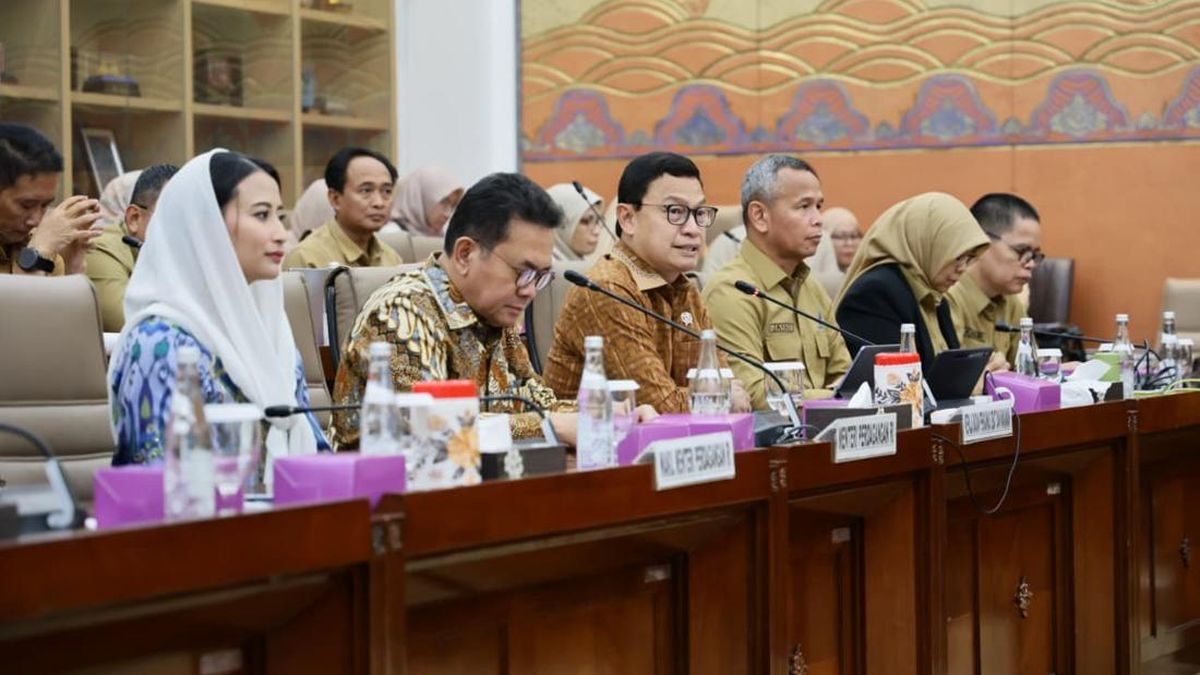
Financial remuneration remains one of the most heavily scrutinized aspects of the annual recruitment drive. Insights into the compensation structure were recently provided by Deputy Minister of Hajj and Umrah, Dahnil Anzar Simanjuntak, who highlighted that Hajj officers can anticipate daily honorariums ranging between Rp900,000 and Rp1,000,000. Given that the standard deployment period in Saudi Arabia spans approximately 70 days, the total financial compensation for individual officers can reach significant sums.
Using the higher end of the projected daily estimate—Rp1,000,000 per day—an officer serving a full 70-day tenure could theoretically accumulate up to Rp70,000,000 in gross honorariums. However, administrative authorities have clarified that while this calculation offers a reliable benchmark derived from daily rates, it should be viewed as an informed projection rather than a rigid, fixed salary scale uniformly mandated for every specific role in 2027. Individual compensation may fluctuate depending on specific assignment categories, leadership responsibilities within the group, and specialized functional roles such as medical personnel, spiritual guides (TPIH), or general administrative support staff (TPHI).
Policymakers and administrative officials maintain that this financial structure is entirely commensurate with the demanding nature of the deployment. Hajj officers operate under extreme environmental conditions, navigating intense desert heat, dense crowd dynamics, and rigorous physical schedules. Beyond logistical coordination, officers are tasked with resolving emergency crises, managing pilgrim accommodations, coordinating transportation networks between Mecca, Medina, and Arafah-Muzdalifah-Mina (Armuzna), and providing constant psychological and physical support to pilgrims who may be experiencing their first time abroad or coping with advanced age.
Comprehensive Compensation Components and Operational Support
The financial package allocated to Hajj officers extends well beyond the baseline daily honorarium. To ensure that personnel can execute their duties without personal financial strain, the Indonesian government provides a fully integrated support system that covers all operational necessities while deployed overseas.
According to official guidelines, the total remuneration and operational framework comprise multiple vital components:
- Daily Honorarium: The direct financial compensation paid to officers based on their daily service in the field.
- Operational Allowances: Supplementary funds designated for field-related expenses, communication, and localized coordination tasks.
- International and Domestic Accommodation: Fully covered lodging provisions throughout the duration of the training, transit, and in-country deployment phases.
- Comprehensive Consumption: Provision of daily meals and nutritional support tailored to maintain officer health and stamina during peak operational phases.
- Transportation Infrastructure: Full coverage of all transit requirements, including international flights between Indonesia and Saudi Arabia, as well as local ground transportation across the holy sites.
The legal mandate governing these provisions is rooted in national legislation, specifically Law Number 14 of 2025, which serves as an amendment to Law Number 8 of 2019 concerning the Organization of Hajj and Umrah. Under this legislative framework, Hajj officers are formally appointed directly by the Minister, with all operational expenses, training costs, and officer compensation funded through the State Budget (APBN). This institutional backing ensures transparency, accountability, and the systematic disbursement of funds for all deployed personnel.
Rigorous Selection Criteria and Eligibility Standards
Securing a position as a PPIH officer for the 2027 pilgrimage requires navigating a highly competitive, multi-tiered selection process designed to filter for professional competence, physical resilience, and moral integrity. The Ministry of Hajj and Umrah has established strict baseline criteria that every applicant must satisfy before moving forward in the recruitment pipeline.
Mandatory administrative and personal prerequisites include:
- Citizenship and Identity: Applicants must be Indonesian citizens of the Islamic faith, possessing valid and legal national identity documentation (KTP).
- Health and Vitality: Candidates must pass comprehensive physical and psychological health screenings, demonstrating robust wellness capable of withstanding high-stress environments.
- Integrity and Conduct: A clean legal record is non-negotiable; applicants must not be undergoing any criminal legal proceedings and must possess a demonstrable track record of professional integrity.
- Social Security Compliance: Active membership in the national health insurance scheme (BPJS Kesehatan) is mandatory.
- Technological Proficiency: Given the increasing digitalization of Hajj operations—including smart cards, mobile tracking apps, and digital reporting systems—candidates must be functionally adept at operating computers, tablets, and smartphones.
Chronology and Timeline of the 2026-2027 Recruitment Cycle
The administrative runway leading up to the 2027 pilgrimage follows a strict, time-sensitive schedule designed to allow ample duration for vetting, training, and logistical preparation. The structured timeline highlights the key milestones of the recruitment process:
- August 25, 2026: Official nationwide opening of registration for the PPIH Kloter and PPIH Arab Saudi selections for the 1448 H / 2027 M pilgrimage season.
- August 31, 2026: Closing date for applicant submissions and document uploads through the Ministry’s portal.
- Early September 2026: Administrative verification and document screening phases conducted by regional and central religious offices.
- September 5, 2026: Implementation of the Computer Assisted Test (CAT), evaluating candidates on general knowledge, religious regulations, and operational problem-solving.
- Post-CAT Phase: Medical Check-Ups (MCU) and psychological evaluations administered to successful test-takers.
- Final Training Phase: Intensive Education and Training (Diklat) programs modeled after the previous year’s protocols—such as the PPIH 2026 training cycle concluded at the Halim Perdanakusuma Air Base—to ensure tactical and operational readiness before departure to Saudi Arabia.
Broader Socio-Economic Implications and Policy Analysis
The structured compensation and professionalization of the Hajj officer corps carry profound implications for the overall quality of Indonesia’s Hajj pilgrimage management. In past decades, criticisms often surrounded the operational readiness, responsiveness, and endurance of field officers, occasionally leading to logistical bottlenecks during critical phases like the peak days in Mina.
By standardizing remuneration through state budgets and establishing transparent, merit-based selection mechanisms like the CAT and rigorous medical evaluations, the government aims to professionalize the service corps. Offering competitive daily incentives ranging from Rp900,000 to Rp1,000,000 transforms the role from a purely voluntary community assignment into a highly respected, accountable public service position. This professional shift attracts top-tier talent, including experienced medical professionals, logistics experts, educators, and religious scholars who might otherwise be hesitant to leave their primary employment for a demanding 70-day overseas deployment.
Furthermore, the integration of strict technological competencies ensures that future Hajj operations will be managed by digitally literate personnel capable of interacting seamlessly with Saudi Arabia’s modern electronic platforms, Nusuk systems, and real-time crowd-monitoring technologies. As the volume of Indonesian pilgrims remains among the largest in the world, the quality of PPIH officers directly correlates with national prestige, pilgrim safety, and overall satisfaction ratings reported annually.
Ultimately, the comprehensive framework established for the 2027 Hajj deployment reflects a maturing administrative apparatus dedicated to balancing fiscal responsibility to the state with fair compensation for frontline workers who shoulder the immense responsibility of guiding millions of Indonesian citizens through one of Islam’s most sacred pillars.