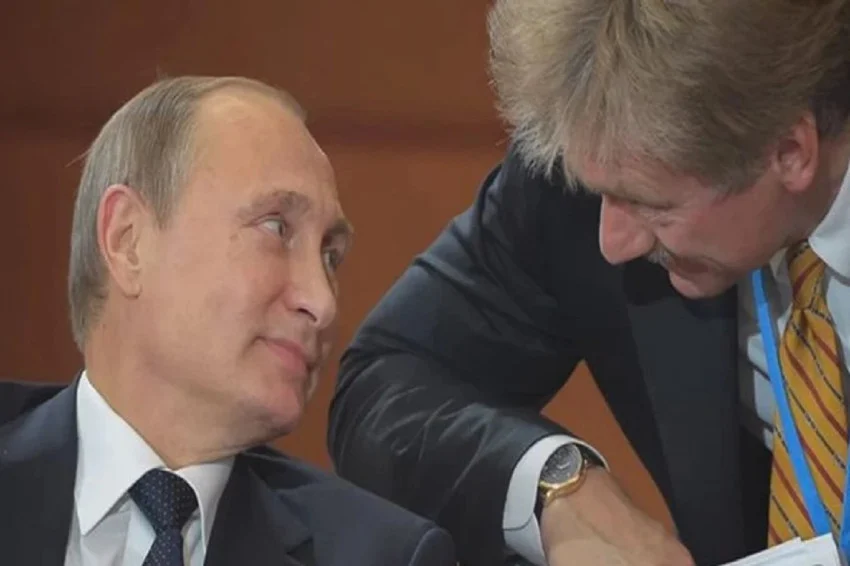
President Vladimir Putin has categorically rejected allegations that the Russian Federation is mobilizing for an offensive military campaign against European nations, dismissing such narratives as manufactured provocations intended to sustain Western military aid for Ukraine. Speaking at the 12th United Cultural Forum in St. Petersburg, the Russian leader characterized warnings from European officials regarding a potential invasion as "complete nonsense" and an elaborate strategy designed to manipulate domestic public opinion within the European Union and NATO member states.
The Russian President’s remarks arrive at a critical juncture in the ongoing conflict in Eastern Europe, as Western capitals remain divided over the future of financial and military support for Kyiv. According to the Kremlin, the persistent rhetoric regarding a Russian threat to the European continent serves as a political justification for the continued allocation of massive budgetary resources toward the war effort in Ukraine. By painting Russia as an imminent aggressor, Moscow argues, Western leaders are shielding themselves from accountability regarding the economic costs of the conflict and the diminishing returns of their foreign policy objectives.
Chronology of Escalating Rhetoric
The current diplomatic impasse is the culmination of years of deteriorating relations between Moscow and the West. To understand the context of President Putin’s recent denials, one must examine the timeline of the post-2022 security landscape:
- February 2022: The launch of the "Special Military Operation" in Ukraine fundamentally altered the European security architecture, leading to the rapid expansion of NATO and the abandonment of neutrality by historically non-aligned nations such as Finland and Sweden.
- Late 2023: Several European defense officials, particularly in the Baltic states and Poland, began issuing warnings that Russia might test the resilience of NATO’s Article 5 after the conclusion of the conflict in Ukraine.
- Early 2024: The European Union announced a significant shift toward a "war economy" model, with defense spending reaching historic highs, citing a long-term Russian threat.
- September 2026: In the lead-up to the St. Petersburg Cultural Forum, various European defense ministers—notably Estonia’s Hanno Pevkur—publicly discussed the necessity of preventive defense measures and the potential for direct confrontation, fueling the fire that Putin sought to extinguish during his latest address.
The Dynamics of Defense Spending and Public Perception
The core of the dispute lies in the economic burden of the ongoing conflict. European nations have collectively contributed billions of dollars in humanitarian, financial, and military assistance to Ukraine since February 2022. However, as the conflict persists, political fatigue has begun to set in among several European electorates.
Analysts suggest that the "Russian threat" narrative acts as a cohesive mechanism for the European political establishment. By framing the conflict as an existential struggle for the security of Europe itself, governments can argue that the ongoing expenditures are not merely acts of solidarity with Ukraine, but essential investments in the national security of their own populations.
Putin’s assessment that Europe is using Ukraine as "cannon fodder" to stymie Russian development reflects a long-standing Kremlin viewpoint. Moscow contends that the West has orchestrated a "proxy war" designed to weaken Russia’s geopolitical influence, deplete its military-industrial complex, and force regime change or internal destabilization. From the Kremlin’s perspective, the accusations of an impending European invasion are a psychological operation intended to unify a fractured European coalition under the umbrella of fear.
Confronting the "Clowns of Politics"
The Russian President’s rhetoric during the St. Petersburg event was notably sharp, particularly when addressing the specific comments made by Estonian Minister of Defense Hanno Pevkur. By labeling such warnings as the work of "political clowns," Putin sought to delegitimize the voices of European defense officials who advocate for a more aggressive posture toward Moscow.
"The circus has left, but the clowns remain," Putin stated, effectively framing the European discourse on security as a performative exercise devoid of strategic reality. This language serves to reinforce the Russian domestic narrative that the Western leadership is disconnected from the realities of modern warfare and is pursuing policies that are fundamentally irrational.
However, the international reaction to these comments has been one of skepticism. NATO representatives and European foreign ministries have consistently maintained that the risk of Russian aggression is not a product of political imagination but a conclusion drawn from Russia’s military modernization, the scaling of its domestic arms production, and the explicit rhetoric emanating from the Russian state media and high-ranking officials over the past three years.
Strategic Implications and the Prospect of Negotiations
The broader impact of this rhetorical standoff is a total freeze in meaningful dialogue between Moscow and Brussels. With both sides characterizing the other as either an existential threat or a fraudulent actor, the possibility of diplomatic mediation appears increasingly remote.
Regarding the potential for future negotiations with Kyiv, Putin maintained a position of strategic ambiguity. He asserted that any decision to return to the negotiating table would be predicated solely on the interests of the Russian state. This stance underscores the Kremlin’s current confidence, bolstered by the failure of the 2023 Ukrainian counter-offensive and the gradual attrition of Ukrainian frontlines.
As the war enters its fifth year, the implications for European stability are profound. The current geopolitical environment is defined by:
- Militarization: Europe is currently undergoing its most significant rearmament program since the end of the Cold War. The focus is shifting toward long-range strike capabilities, advanced missile defense systems, and the replenishment of munitions stockpiles that have been depleted by aid to Ukraine.
- Economic Decoupling: The energy and trade links that once bound Russia and Europe have been almost entirely severed. This structural change is irreversible in the near term, forcing Russia to pivot its economic focus toward the Global South and Asia, while Europe seeks to diversify its energy sources and reduce dependency on external authoritarian regimes.
- The Information War: The struggle for the narrative has become as important as the struggle on the battlefield. Both the Kremlin and the Western coalition are engaged in an intense effort to shape global perception, as seen in the recent exchange regarding the "threat of invasion."
Analysis: A Calculated Stance
From a strategic standpoint, Putin’s denial serves several purposes. Domestically, it reassures the Russian populace that the government is not seeking a wider, more devastating war that would require general mobilization or threaten the stability of the Russian economy. Internationally, it attempts to drive a wedge between the "hawks" in Europe—who favor a confrontational stance—and the more cautious factions within the European Union who are wary of a direct conflict with a nuclear-armed power.
However, the efficacy of this strategy is limited by the deep-seated distrust that has characterized EU-Russia relations since 2014. The fact remains that as long as the war in Ukraine continues, European states will likely continue to prioritize defense spending and maintain a posture of deterrence, regardless of the denials issued from the Kremlin.
The "clown" rhetoric, while perhaps intended to minimize the influence of critics, also signals a deepening of the ideological divide. It suggests that the Russian leadership no longer views Western politicians as counterparts to be engaged with, but as actors in a theater whose motives are inherently hostile.
Conclusion
The diplomatic landscape in late 2026 remains precarious. As President Putin attempts to reframe the debate around European security, the Western response continues to be one of cautious apprehension. While the Russian President insists that Moscow has no designs on European territory, the underlying structural conflict—defined by the war in Ukraine and the collapse of the post-Cold War security architecture—ensures that the tension between Russia and the European continent will remain a defining feature of the international system for the foreseeable future.
The events in St. Petersburg have not provided a roadmap for de-escalation; rather, they have served to clarify the irreconcilable differences in the strategic perceptions of Moscow and the West. As both sides continue to project strength and prepare for a prolonged standoff, the possibility of a return to a period of stability seems distant, overshadowed by the ongoing kinetic conflict in Ukraine and the accelerating arms race across the European continent. Whether the "circus" of diplomatic accusation will eventually yield to a structured dialogue remains the most significant, yet unanswered, question of the decade.