Jakarta, CNN Indonesia — In an aggressive push to fortify national energy security against a backdrop of escalating global geopolitical tensions, the Government of the Republic of Indonesia is taking decisive steps to diversify its domestic energy portfolio. Minister of Energy and Mineral Resources (ESDM) Bahlil Lahadalia has formally elaborated on the strategic rationale driving President Prabowo Subianto’s ambitious directive to manufacture alternative liquid fuels and gases directly from the nation’s abundant coal reserves.
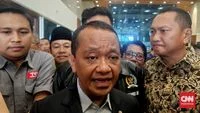
This policy initiative represents a paradigm shift in how Indonesia approaches resource utilization, transitioning from a traditional exporter of raw commodities to a value-adding economy capable of converting solid hydrocarbons into essential liquid fuels. Speaking publicly on the sidelines of a blood donation drive held in commemoration of the 81st Mining and Energy Anniversary at Balai Sudirman, Jakarta, Minister Bahlil articulated the administration’s core philosophy: national sovereignty in the energy sector cannot be achieved through reliance on volatile global supply chains.
The urgency of this strategy is underscored by the unpredictable nature of international trade relations, persistent conflicts in critical energy-producing regions, and fluctuating global crude oil prices. By leveraging advanced processing technologies to transform domestic coal into high-value energy products, Jakarta aims to insulate its economy from external shocks while simultaneously maximizing the utility of its geological assets.
Geopolitical Uncertainty and the Imperative of Domestic Energy Optimization
Global energy markets have experienced profound volatility over the past several years, driven by supply chain disruptions, geopolitical conflicts in Eastern Europe and the Middle East, and shifting trade policies among major economic powers. For an import-dependent emerging economy like Indonesia, these external shocks translate directly into fiscal pressures, fluctuating state budget allocations for energy subsidies, and vulnerabilities in national security.
In response to these systemic risks, President Prabowo Subianto has championed a doctrine of total energy self-sufficiency. Minister Bahlil emphasized that the presidential mandate is clear: Indonesia must optimize every available domestic energy resource to ensure that the nation remains resilient in the face of international crises.
"Terkait dengan membuat gas ataupun minyak lewat batu bara itu berangkat dari pemikiran bahwa dalam kondisi geopolitik yang tidak menentu, maka kalau Presiden Prabowo berkata, ini adalah mengoptimalkan seluruh potensi energi yang ada di Indonesia," Bahlil stated during his address in Jakarta.
This pragmatic approach acknowledges that while the global energy transition toward net-zero emissions remains a long-term goal, the immediate priority of the state is safeguarding economic stability through energy security. By unlocking the chemical potential of coal through gasification and liquefaction, Indonesia is charting a multi-faceted course that complements its existing renewable energy initiatives.
Technological Viability and Global Precedents in Coal-to-Liquid Processing
Skeptics of coal-to-liquid (CTL) and coal-to-gas (CTG) technologies often point to historical economic hurdles, high capital expenditure, and environmental concerns. However, Minister Bahlil highlighted that modern industrial engineering has evolved significantly, rendering these conversion processes both technically feasible and economically viable, particularly for low-calorie coal varieties that traditionally command lower market prices and face export limitations.
Advanced industrial economies have already demonstrated the commercial scalability of these methods. Notably, the People’s Republic of China has successfully integrated coal gasification and liquefaction into its national energy matrix, utilizing low-grade coal resources to secure synthetic natural gas and chemical feedstocks, thereby reducing its reliance on liquefied natural gas (LNG) imports.
"Sekarang teknologinya sudah canggih, di mana batu bara yang low calorie itu bisa menghasilkan gas maupun minyak. Nah, tapi ini kan kita akan tindak lanjut terus. Di beberapa negara seperti di China, itu gasnya sudah diambil dari batu bara low calorie," Bahlil explained.
Indonesia’s vast geological reserves of sub-bituminous and brown coal—often categorized as low-rank or low-calorie coal—position the country ideally for the implementation of this technology. Rather than extracting and exporting this material at marginal profit margins, domestic processing enables the country to capture higher economic value downstream while creating specialized employment opportunities within the industrial and technological sectors.
International Partnerships and Investment Interest
The Ministry of ESDM has not been working in a vacuum; the announcement of Indonesia’s pivot toward coal-derived fuels has already triggered substantial interest from international technology providers and multinational energy conglomerates. According to Minister Bahlil, several foreign corporations have approached the Indonesian government with concrete proposals for technological cooperation and foreign direct investment (FDI) in CTL and CTG infrastructure.
"Beberapa perusahaan-perusahaan sudah melakukan penawaran kepada kami untuk melakukan kerja sama. Kita tahu bahwa potensi batu bara kita untuk melakukan teknologi itu sangat besar sekali. Ini pun yang dimaksudkan oleh Pak Presiden," noted Bahlil.
These prospective partnerships are expected to facilitate the transfer of proprietary chemical engineering knowledge, enabling state-owned enterprises and private domestic partners to construct and operate complex conversion facilities. The Ministry of ESDM is currently evaluating these proposals to ensure that any resulting joint ventures align with national environmental standards, economic viability metrics, and regulatory frameworks.
Broadening the Domestic Energy Matrix: From Biodiesel to Ethanol and Coal-Derived Bensin
The initiative to produce fuel from coal is part of a broader, highly coordinated strategy by the Prabowo administration to systematically eliminate Indonesia’s dependence on imported petroleum products. This comprehensive energy roadmap spans multiple resource sectors, encompassing agriculture, forestry, and heavy mining.
A foundational milestone in this journey is the government’s aggressive implementation of palm oil-based biofuels. Following the successful operationalization of biodiesel mandates, the government has set its sights on achieving the complete cessation of automotive diesel imports by July 1, 2026, driven by the rollout of the B50 biodiesel blend. This policy not only saves billions of dollars in foreign exchange reserves but also provides a guaranteed domestic market for millions of smallholder palm oil farmers.
Building upon the success of the biodiesel program, the administration is now looking to replicate this substitution model in the gasoline (bensin) sector. Minister Bahlil confirmed that the Ministry of ESDM, in collaboration with technical agencies, is actively reviewing the large-scale development of ethanol-based gasoline. The planned regulatory framework envisions a progressive blending schedule, starting from E10 (10 percent ethanol) and scaling up incrementally to E50 (50 percent ethanol), utilizing agricultural feedstocks such as sugarcane, cassava, and sorghum.
Simultaneously, the integration of coal-derived bensin provides a vital industrial counterpart to agricultural biofuels. While biofuels rely heavily on seasonal crop yields and arable land availability, coal-derived fuels tap into the nation’s extensive mineral reserves, ensuring a reliable, year-round baseload of liquid fuel production that is immune to agricultural droughts or crop failures.
"Kita ingin memanfaatkan produksi kita dalam negeri," Bahlil asserted, reiterating the philosophical cornerstone of the administration’s industrial policy.
Macroeconomic Implications and Challenges for the Energy Sector
The transition toward coal-derived liquid fuels and expanded alternative blending mandates carries profound macroeconomic implications for Indonesia. On the positive side, successfully substituting imported gasoline and diesel with domestically produced alternatives will drastically narrow the nation’s current account deficit. Energy imports have historically been one of the largest drains on Indonesia’s foreign exchange reserves; curbing these imports will stabilize the rupiah and enhance fiscal resilience.
Furthermore, domestic energy self-sufficiency shields consumers and industries from the inflationary shocks of international oil price spikes. Manufacturing fuels locally creates a predictable pricing structure that benefits transportation, logistics, and manufacturing sectors across the archipelago.
However, analysts and industry experts also point out significant challenges that the government must navigate. Chief among these are the environmental and capital expenditure considerations. Coal gasification and liquefaction processes are notoriously energy-intensive and have a substantial carbon footprint if not paired with advanced Carbon Capture, Utilization, and Storage (CCUS) technologies. As global capital markets increasingly penalize high-carbon investments through stringent ESG (Environmental, Social, and Governance) criteria, securing international financing for coal-to-liquid projects may require innovative financial structuring and robust environmental mitigation guarantees.
Moreover, the initial capital outlay required to construct commercial-scale gasification plants is immense. It will necessitate a delicate balance of state budget allocations, state-owned enterprise (SOE) investments, and private sector participation through clear, investor-friendly public-private partnership (PPP) frameworks.
Looking Ahead: The Ministry of ESDM’s Action Plan
As the Ministry of ESDM moves to operationalize President Prabowo’s directives, bureaucratic streamlining and regulatory harmonization will be critical. Minister Bahlil has reaffirmed his agency’s unwavering commitment to translating policy pronouncements into actionable, measurable infrastructure projects.
"Karena itu kami sebagai Menteri ESDM akan menindaklanjuti setiap perintah arahan Pak Presiden terkait dengan optimalisasi dalam rangka meningkatkan ketahanan energi dengan memakai sumber energi dalam negeri," Bahlil concluded.
Over the coming months, the ministry is expected to finalize feasibility studies regarding low-calorie coal utilization, review incoming technological proposals from international engineering firms, and establish the regulatory scaffolding required for pilot-scale coal-to-liquid and coal-to-gas production facilities. Through these concerted efforts, Indonesia is methodically engineering a future where its domestic resources serve as the unshakeable bedrock of national sovereignty and economic prosperity.