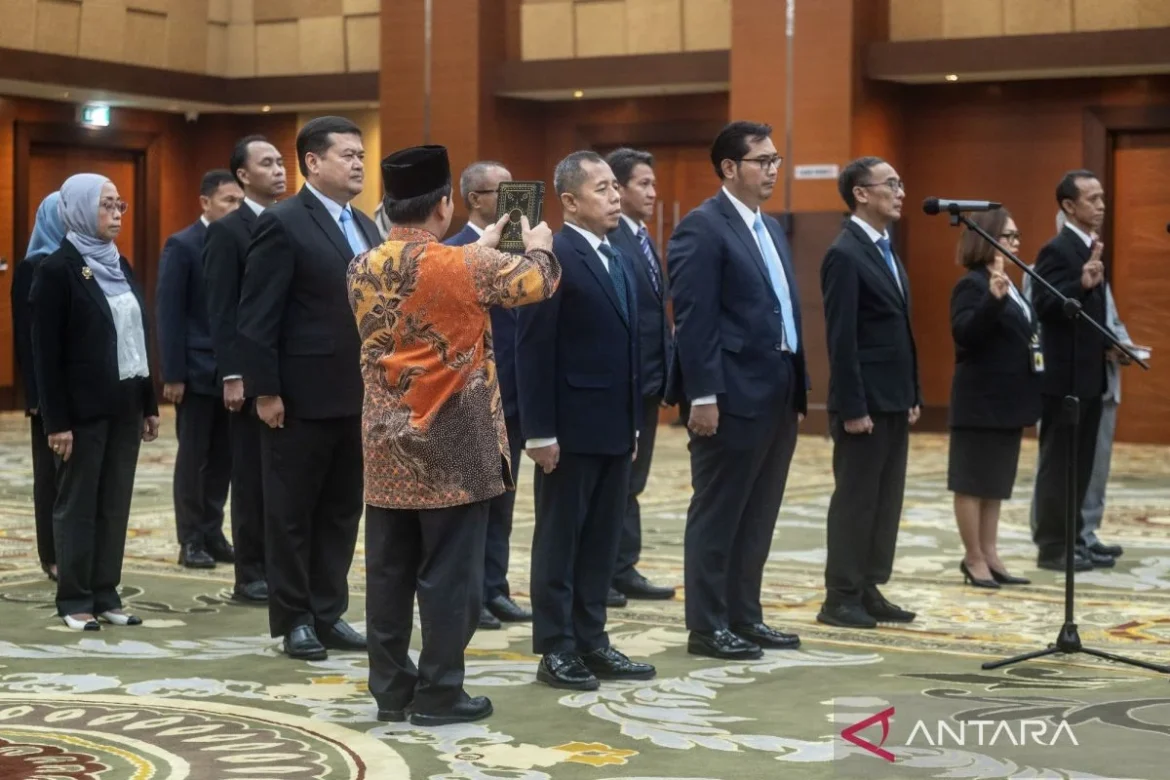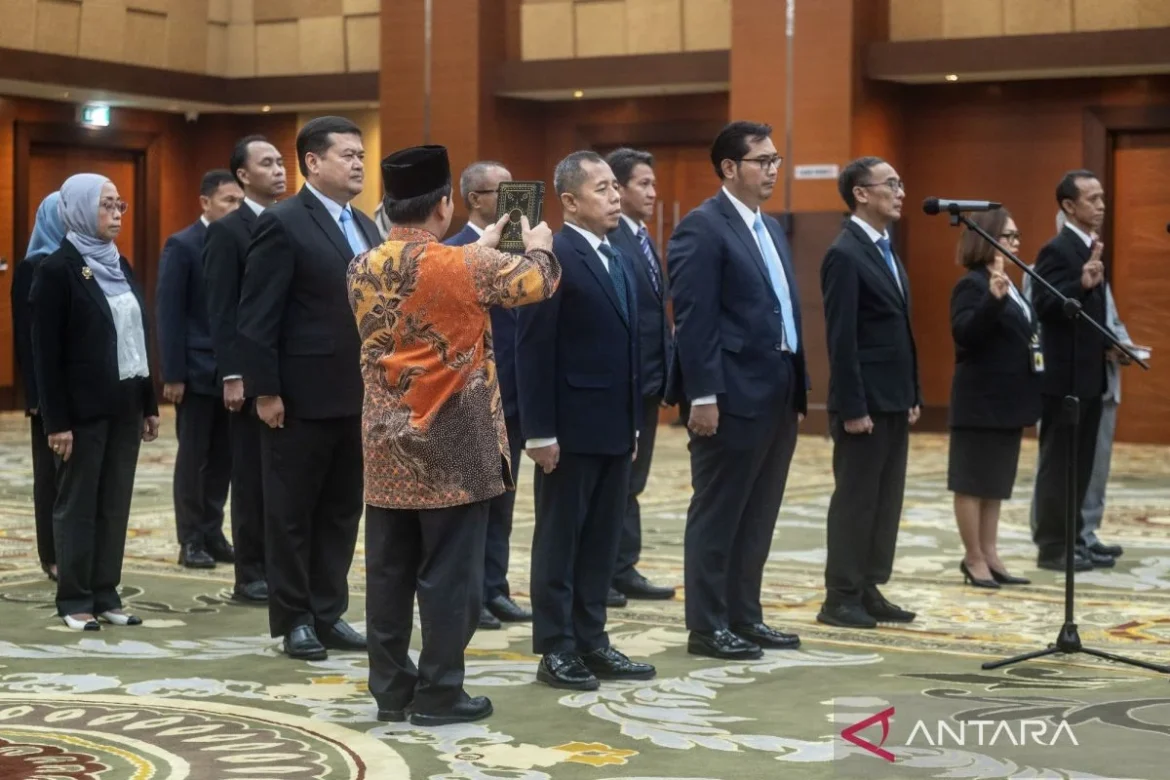
Jakarta, September 2026 – In a decisive move aimed at bolstering the institutional capacity of the national fiscal authority and reinforcing macroeconomic stability, the Indonesian Ministry of Finance officially inaugurated 14 new high-ranking officials. The swearing-in ceremony, which took place at the Mezanine Hall of the Ministry of Finance in Jakarta, marked a crucial milestone in the ongoing bureaucratic reforms designed to optimize state revenue, expenditure management, customs oversight, and financial system coordination.
The comprehensive leadership transition encompasses 12 High-Level Pratama Officials—commonly referred to as Echelon II officials—within the internal structure of the Ministry of Finance, alongside two key appointments designated for the Secretariat of the Financial System Stability Committee (KSSK). Led by high-ranking ministry officials, the selection and placement process was rigorously conducted through the Civil Service Advisory Board, known locally as Baperjakat. This mechanism ensures that candidates meet stringent criteria regarding competence, track record, leadership capacity, and integrity before assuming vital responsibilities that directly influence the nation’s macroeconomic trajectory.
The restructuring comes at a time when Indonesia, like many emerging economies, faces multifaceted global and domestic economic challenges. By solidifying the leadership lineup across various directorate generals, the ministry aims to ensure seamless continuity in state budget execution, enhanced compliance in tax and customs collection, prudent management of state assets, and proactive risk mitigation within the broader financial sector.
Background Context and Structural Significance of the Appointments
The recent inauguration represents the culmination of an extensive series of administrative evaluations, institutional adjustments, and talent pool assessments within the Ministry of Finance. Over the past several years, the ministry has systematically pursued organizational streamlining and agility to respond more effectively to shifting global financial landscapes, geopolitical tensions, commodity price volatility, and domestic developmental imperatives.
The inclusion of two positions dedicated to the Secretariat of the Financial System Stability Committee (KSSK) highlights the heightened importance of inter-institutional coordination. KSSK serves as a critical coordination forum involving the Ministry of Finance, Bank Indonesia (BI), the Financial Services Authority (OJK), and the Deposit Insurance Corporation (Lembaga Penjamin Simpanan/LPS). This body is tasked with monitoring, evaluating, and formulating policy responses to potential systemic risks that could threaten national financial stability. By aligning structural adjustments within the KSSK Secretariat, the government seeks to foster a more integrated, preemptive, and robust defense mechanism against external financial shocks.
Furthermore, the replenishment of Echelon II positions addresses critical functional nodes within the ministry, spanning taxation, customs and excise, treasury management, state assets and auction, the Tax Court, and broader fiscal policy formulation. These directorates serve as the administrative engine room of Indonesia’s fiscal policy, directly influencing the realization of the state budget (APBN) targets and the equitable distribution of development funds across the archipelago.
Official Directives and Core Expectations for the Newly Appointed Leaders
During the formal inauguration ceremony, leadership underscored the profound responsibilities shouldered by the newly installed officials. Rather than viewing their roles as mere administrative titles, the appointees were reminded that public office within the Ministry of Finance carries a dual mandate: technical proficiency in financial governance and an unwavering commitment to public trust.
The ministry’s leadership emphasized that the responsibilities entrusted to these 14 officials extend far beyond the numerical balancing of the state budget. While rigorous oversight of state revenues, optimization of tax collection, meticulous expenditure tracking, and innovative financing strategies remain paramount, the ultimate metric of success is the tangible impact of these policies on the welfare of the Indonesian populace.
Key directives communicated during the ceremony included:
- Strategic Foresight and Adaptability: Officials are expected to cultivate forward-looking analytical capabilities, anticipating potential fiscal bottlenecks and global economic shifts before they materialize into domestic crises.
- Cross-Unit Synergies and Collaboration: Given the interconnected nature of modern fiscal and monetary policy, silos must be dismantled. Seamless coordination between tax, customs, treasury, and external regulatory bodies like the KSSK is deemed non-negotiable.
- Uncompromising Integrity and Professionalism: In an institution tasked with managing trillions of rupiah in public funds, ethical standards must remain unassailable. Transparency, accountability, and zero tolerance for corruption are foundational pillars emphasized for all incoming leadership.
- Active Fiscal Execution: Officials were urged to hit the ground running, immediately translating macroeconomic policies into practical, on-the-ground execution within their respective domains—whether managing state-owned assets, enforcing customs regulations, or facilitating efficient treasury disbursements.
Broader Implications for National Economic Governance
The finalization of these structural appointments carries significant implications for Indonesia’s macroeconomic performance moving forward. As the government navigates complex structural reforms—ranging from tax administration modernization through the Core Tax Administration System (CTAS) to enhanced asset recovery and fiscal decentralization—having stable, competent, and visionary leadership at the Echelon II level is indispensable.
Experts note that Echelon II officials act as the vital bridge between top-level ministerial policymaking and grassroots operational implementation. They are responsible for translating broad fiscal strategies into daily directives for thousands of civil servants spread across regional offices nationwide. Consequently, the efficacy of the newly inaugurated officials will directly influence key national indicators, including the tax-to-GDP ratio, state revenue realization rates, the efficiency of capital expenditure disbursements, and the overall health of the national banking and financial sectors.
Moreover, these appointments coincide with ongoing government efforts to ensure strict accountability regarding state finances, including persistent initiatives to recover outstanding obligations from obligors and debtors, manage historical liquidity assistance cases, and optimize non-tax state revenue (PNBP). The coordination between the Ministry of Finance and related institutional task forces requires steadfast administrative backing, which these newly appointed leaders are expected to provide.
Conclusion and Future Outlook
The formal induction of the 14 high-ranking officials concludes a comprehensive institutional refinement phase within the Ministry of Finance and the KSSK Secretariat. By deploying qualified leaders through a merit-based Baperjakat mechanism, the ministry has reinforced its institutional readiness to face upcoming fiscal challenges.
As these officials assume their respective posts across taxation, customs, treasury, state asset management, and financial system stability, the business community, investors, and the broader public will be watching closely. Their ability to foster transparency, enhance revenue collection efficiency, and maintain rigorous fiscal prudence will play a decisive role in sustaining Indonesia’s economic resilience, bolstering investor confidence, and steering the nation toward its long-term developmental aspirations.