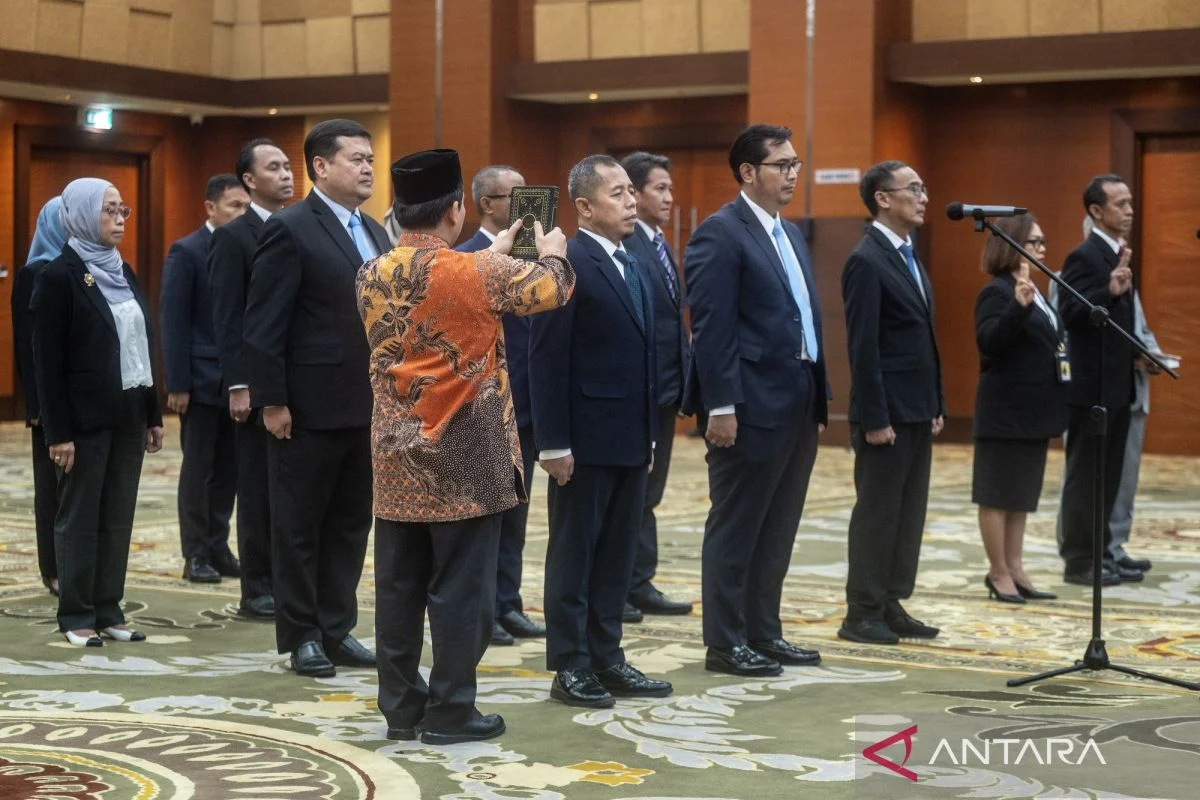
The Indonesian Ministry of Finance has officially inaugurated 14 high-ranking officials in a strategic leadership refresh designed to optimize fiscal governance, enhance revenue collection, and reinforce national financial stability. The swearing-in ceremony, held at the Mezanine Hall of the Ministry of Finance in Jakarta, marked a pivotal milestone in the government’s ongoing bureaucratic reform and structural alignment. Suahasil Nazara, acting in his capacity during the proceedings, presided over the formal induction of 12 Pratama High Leadership Officials—commonly referred to as echelon II officials—within the ministry, alongside two critical appointments designated for the Secretariat of the Financial System Stability Committee (KSSK).
This comprehensive administrative overhaul reflects the government’s continued commitment to agile, responsive, and highly accountable public institutions. As global economic headwinds persist and domestic development targets demand robust fiscal backing, the Ministry of Finance has prioritized placing seasoned technocrats and administrators into pivotal roles overseeing state revenue, budgetary allocation, customs, treasury, state assets, and financial sector coordination.
The selection and appointment of these 14 officials were not arbitrary; they followed a rigorous and transparent evaluation process administered by the Advisory Board for Civil Service Ranks and Appointments (Baperjakat). Baperjakat operates under strict regulatory frameworks to ensure that candidates possess the requisite competencies, integrity, and track records necessary to handle the immense responsibilities associated with managing Southeast Asia’s largest economy’s public purse.
Chronology and Background of the Institutional Refresh
The leadership refresh on Monday, September 21, 2026, represents the culmination of a multi-stage organizational restructuring within the Ministry of Finance. Over the past several years, the ministry has undertaken systematic reviews of its internal architecture to align with evolving national priorities, technological advancements in tax and customs administration, and enhanced mandates regarding financial system surveillance.
The integration of the two Secretariat KSSK positions into this overarching reshuffle underscores the deep interconnection between fiscal policy managed by the Ministry of Finance and broader macroeconomic and financial stability overseen by the KSSK, which also includes Bank Indonesia, the Financial Services Authority (OJK), and the Deposit Insurance Corporation (LPS). Following the legislative and regulatory adaptations of recent years, the KSSK secretariat requires specialized leadership capable of seamless cross-institutional coordination to preempt systemic risks and manage potential financial vulnerabilities.
The bureaucratic journey leading to this appointment phase involved months of performance evaluations, competency assessments, and strategic mapping. The Ministry of Finance has increasingly relied on merit-based talent management systems to identify leaders who not only understand traditional bureaucratic workflows but also demonstrate proficiency in digital transformation, risk management, and strategic foresight.
Strategic Directives and Expectations from Ministry Leadership
During the inauguration ceremony, Suahasil Nazara delivered a stern yet inspiring directive to the newly inducted officials. He emphasized that the positions they now occupy carry profound responsibilities that extend far beyond routine administrative compliance. The officials were instructed to immediately assume their duties across various critical sectors, encompassing state revenue generation, rigorous expenditure oversight, public spending efficiency, and innovative financing mechanisms.
Suahasil reminded the officials that their mandates require an uncompromising commitment to integrity and professionalism. In a ministry entrusted with managing trillions of rupiah in the State Budget (APBN), any lapse in ethical standards or administrative diligence can have far-reaching consequences for the nation’s economic health. He stressed the necessity of cultivating a strategic mindset, urging the leaders to look beyond siloed departmental objectives and foster robust cross-unit coordination.
Furthermore, the leadership underscored that managing the APBN is fundamentally about managing public trust. The figures and allocations detailed in the state budget are direct reflections of the government’s promises to the populace, translating into infrastructure development, social protection programs, education enhancements, and healthcare services. Therefore, the newly appointed officials are expected to view their roles through the prism of national welfare, ensuring that every rupiah collected and spent yields optimal socio-economic outcomes.
Scope of Responsibilities for the Newly Appointed Officials
The 14 officials stepping into their new roles will be deployed across a diverse and highly technical array of departments within the financial ecosystem. Their assignments cover core areas that form the backbone of Indonesia’s economic governance:
- Taxation: Officials stepping into tax administration roles face the ongoing challenge of optimizing the tax-to-GDP ratio through digital transformation, data integration, and enhanced compliance monitoring, while maintaining a taxpayer-friendly environment.
- Customs and Excise: Leaders in this domain are tasked with safeguarding domestic industries from illicit trade, streamlining export-import logistics, and maximizing revenue collection at national borders through advanced risk-management technologies.
- Treasury: Treasury officials assume responsibility for the orderly execution of the state budget, ensuring that cash management is efficient, transparent, and aligned with national development objectives.
- State Assets Management: Directorate General of State Assets (DKN) appointees will oversee the optimization, inventory, and valuation of state-owned properties and assets to generate non-tax state revenues (PNBP) and support public infrastructure projects through Public-Private Partnerships (PPPs).
- Tax Court: Judicial and administrative appointments within the Tax Court aim to expedite dispute resolution, ensuring legal certainty for taxpayers and reducing the backlog of unresolved cases.
- Financial System Stability: Secretariat KSSK officials will facilitate critical communication and analytical coordination among financial sector regulators to safeguard the economy against external shocks and systemic crises.
Broader Economic Implications and Analytical Perspectives
The timing of this structural consolidation is particularly significant given the broader macroeconomic landscape of 2026. Indonesia, like many emerging economies, navigates a complex global environment marked by fluctuating commodity prices, geopolitical tensions, and shifting global monetary policies. In this context, the Ministry of Finance must maintain absolute fiscal credibility.
Economic analysts have generally welcomed the structured refresh of leadership within the ministry, noting that continuous bureaucratic renewal is essential for maintaining investor confidence. A well-functioning Ministry of Finance acts as a stabilizing anchor for the entire financial markets ecosystem. When key operational units—such as customs, taxation, and the KSSK secretariat—are led by dynamic and competent officials, the transmission of monetary and fiscal policies becomes significantly more efficient.
Moreover, the emphasis on cross-unit coordination highlighted during the inauguration addresses a historical challenge within large public institutions: bureaucratic fragmentation. By demanding that new leaders break down institutional silos, the ministry is positioning itself to better address complex, multi-faceted economic challenges, such as the energy transition, digital economy taxation, and climate finance accounting.
Alignment with National Governance and Anti-Corruption Initiatives
The appointment of these officials also occurs within the broader context of the Indonesian government’s intensified efforts to ensure clean governance, legal enforcement, and the recovery of state assets. Recent high-profile initiatives by the Ministry of Finance, including aggressive stances on recovering outstanding state claims from obligors and debtors—such as ongoing actions related to the Bank Indonesia Liquidity Assistance (BLBI) legacy funds—demonstrate that institutional integrity is a non-negotiable prerequisite for public service.
While the newly appointed officials may not directly sit on specialized asset recovery task forces, the cultural tone set by leadership trickles down to every echelon of the civil service. Upholding stringent accountability standards in routine departmental operations reinforces the government’s overarching crusade against fiscal leakages and administrative inefficiencies.
Conclusion and Forward Outlook
As the 14 officials officially assume their respective mandates following the September 21 ceremony, the Ministry of Finance completes another crucial chapter in its institutional development. The successful execution of their duties will be closely monitored by policymakers, business leaders, and the general public alike.
Ultimately, the effectiveness of this leadership refresh will be measured by tangible outcomes: improved revenue performance, disciplined and impactful public spending, enhanced ease of doing business through efficient customs and tax services, and unwavering resilience in the nation’s financial system stability framework. Through this strategic deployment of human capital, the Ministry of Finance reaffirms its dedication to steering Indonesia toward sustainable, equitable, and resilient economic growth in the years ahead.