
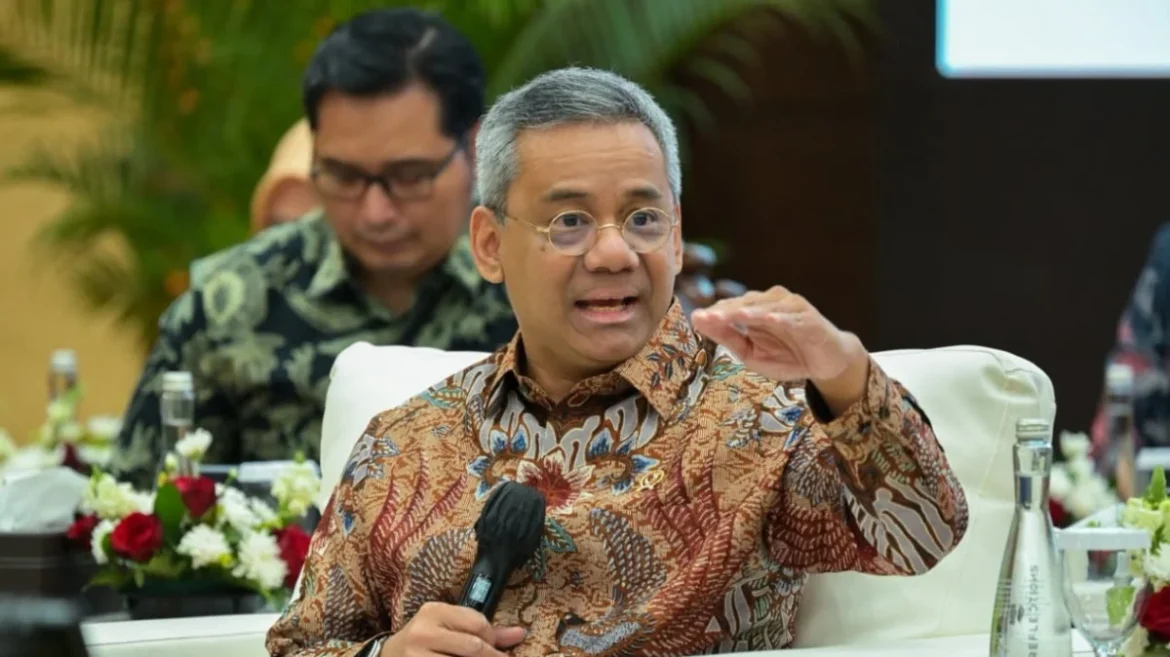
The Indonesian Ministry of Finance has officially affirmed its commitment to upholding the rights of business entities regarding tax restitution, ensuring that all legitimate claims for excess tax payments will be processed and disbursed in strict accordance with prevailing legal frameworks. During the release of the APBN KiTa (State Budget) report for September 2026 in Jakarta, Minister of Finance Suahasil Nazara addressed mounting concerns from the business community regarding the speed and transparency of tax refunds. He emphasized that the government remains committed to maintaining a business-friendly environment while balancing the integrity of state revenue collections.
The Commitment to Fiscal Transparency and Tax Compliance
Minister Suahasil Nazara explicitly stated that if a business entity holds a legal right to a tax refund, the government is obligated to fulfill that obligation. This assurance comes at a critical juncture as the Ministry of Finance balances the need for robust state revenue against the liquidity requirements of the private sector. The Minister noted that he has provided direct instructions to the Director General of Taxes, Bimo Wijayanto, to enhance the management of tax restitution. This directive includes improving communication between the tax authority and taxpayers to ensure that the process is not only efficient but also transparent.
The management of tax restitution is a cornerstone of the relationship between the state and the taxpayer. By ensuring that refunds are handled correctly, the government aims to foster a culture of voluntary tax compliance. The Ministry of Finance’s current strategy focuses on balancing the enforcement of tax laws with the provision of facilities that support corporate cash flow, which is essential for ongoing economic development.
Operational Protocols and the Role of the Directorate General of Taxes
Director General of Taxes Bimo Wijayanto clarified that the issuance of tax refunds is not an arbitrary process but one governed by rigorous Standard Operating Procedures (SOPs). He explained that many applications for restitution are currently undergoing mandatory audits to ensure that the claims are valid and that the calculations are accurate.
"The Directorate General of Taxes operates under strict regulatory guidelines. Every restitution claim must be verified to ensure it aligns with the actual tax liability. We are not in a position to deviate from these SOPs, as they are designed to protect the state budget from potential leakage," Bimo stated during the briefing.

This systematic approach is intended to provide a safeguard against fraudulent claims while ensuring that legitimate businesses can reclaim their capital. The audit process, while sometimes perceived as a delay by taxpayers, is a standard mechanism employed by tax administrations globally to verify the accuracy of PPh (Income Tax), PPN (Value Added Tax), and PPnBM (Sales Tax on Luxury Goods) filings.
Strategic Alignment with National Fiscal Objectives
A significant aspect of the current tax policy shift is the integration of restitution management with broader national fiscal needs. According to the Director General of Taxes, the pace and volume of tax refunds must be managed in a way that preserves the strength and sustainability of the APBN (State Budget).
As Indonesia moves into the final quarter of 2026, the government is tasked with maintaining a healthy fiscal deficit. The management of tax refunds is therefore treated as a strategic variable in the national budget. By regulating the outflow of funds through restitution, the government seeks to ensure that the state remains "strong, healthy, resilient, and sustainable." This does not imply a refusal to pay, but rather a calculated effort to time these outflows so as not to destabilize the government’s liquidity management during critical phases of infrastructure development and social spending.
Contextualizing Tax Restitution: Mechanisms and Legal Basis
Under the current Indonesian tax law, tax restitution serves as a corrective mechanism for taxpayers. It generally arises under two specific conditions:
- Tax Overpayment on Non-Taxable Objects: This occurs when a taxpayer mistakenly remits tax for a transaction or income stream that, under the law, is not subject to taxation.
- Excessive Tax Payment: This occurs when the actual tax liability calculated at the end of the tax period is lower than the total installments or withholdings already paid by the taxpayer throughout that period. This is most common in VAT (PPN) scenarios, where input tax exceeds output tax.
The Directorate General of Taxes provides a clear portal for taxpayers to submit these claims. However, the law stipulates that the tax authority must conduct an investigation to verify the supporting documents. This verification is the primary stage where "selectivity" is applied, as the tax authority seeks to confirm the legitimacy of the input tax credits and the accuracy of the taxpayer’s records.
Implications for the Digital Economy and Marketplace Taxation
The Ministry of Finance is simultaneously preparing for significant changes in the digital economy. Starting November 1, 2026, the government will implement new regulations regarding the collection of Income Tax (PPh) Article 22 on transactions conducted through marketplace platforms. This move is part of a larger, ongoing effort to modernize the tax system and ensure that the rapid growth of the digital economy contributes fairly to the national revenue.

This policy shift, alongside the ongoing management of tax restitution, reflects a dual focus: widening the tax base to capture revenue from modern digital transactions while maintaining a fair mechanism for established businesses to claim what is rightfully theirs. The business community has expressed cautious optimism regarding these changes, noting that clear communication from the Ministry of Finance is vital for market stability.
Economic Analysis: Balancing Revenue and Business Growth
From a macroeconomic perspective, the government’s stance on tax restitution is a delicate balancing act. On one hand, quick and efficient restitution serves as an economic stimulus, providing businesses with the liquidity needed for expansion and operational stability. On the other hand, the state must ensure that it does not experience significant revenue shortfalls that could hinder its ability to fund essential services.
The decision to manage restitution "selectively and measurably" suggests that the government is utilizing a risk-based approach. By focusing audit resources on high-risk or complex claims, the tax authority can expedite the approval of simpler, straightforward claims, thereby reducing the burden on the taxpayer. This risk-based model is consistent with international best practices recommended by organizations like the OECD.
Future Outlook and Policy Directions
As Minister Suahasil Nazara takes the helm in overseeing these policies, the market is looking for consistency. The assurance given during the September 2026 press conference is a signal to both domestic and foreign investors that the Indonesian tax system is moving toward greater predictability.
Looking ahead, the Ministry of Finance is expected to continue its digital transformation of the tax administration. Increased automation in the filing and processing of tax returns is intended to reduce the frequency of manual audits, which would naturally accelerate the restitution process. For the business community, the hope is that the promise of a "strong and sustainable" budget will be achieved through increased compliance and broader taxation rather than through the administrative delay of legitimate business claims.
In conclusion, the message from the Ministry of Finance is one of institutional rigor tempered by administrative fairness. By reinforcing the importance of SOPs and aligning restitution management with fiscal reality, the government aims to navigate the complexities of the 2026 economic landscape. For taxpayers, the process remains one of strict adherence to filing requirements and transparency, while for the state, the focus remains on protecting the integrity of the national coffers while facilitating the necessary flow of capital back to the private sector. The coming months will be a test of these systems, particularly as the new marketplace tax regulations come into effect, providing a comprehensive picture of how the government balances revenue collection with private sector growth.
