
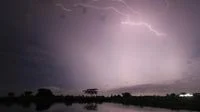
Denpasar, Bali — The Meteorology, Climatology, and Geophysics Agency (BMKG) has issued a high-alert warning regarding the looming threat of severe weather phenomena across the island of Bali. The warning comes as the region officially enters the transitional period, commonly known as pancaroba, moving away from the prolonged dry season and heading toward the upcoming wet season. Meteorological authorities have strongly urged residents, local communities, and travelers to maintain heightened vigilance against potential hydrometeorological disasters, including flash floods, localized landslides, and destructive windstorms, which frequently accompany this volatile climatic shift.
The transition phase, characterized by sudden atmospheric fluctuations and erratic weather patterns, is projected to persist for approximately two to three dekads—translating to roughly 30 days. However, climatologists emphasize that the exact duration and onset of this transitional window will vary significantly across different regions, strictly depending on the distinct Seasonal Zones (ZOM) established by meteorological mapping models.
Atmospheric Instability and the Pancaroba Phenomenon
Aminudin Al Roniri, Head of the Bali Climatology Station, explained that the atmospheric conditions throughout the pancaroba period are inherently unstable. This instability is the direct result of the large-scale regional shift in wind directions, temperature gradients, and moisture levels as the prevailing monsoon patterns change.
"Because of this inherent atmospheric volatility, we are seeing a significantly elevated potential for severe weather events that materialize within very short timeframes and change unpredictably," Al Roniri stated. He noted that the erratic nature of these meteorological shifts makes localized forecasting exceptionally challenging, leaving narrow windows of early warning for communities residing in high-risk topography.
"Therefore, the potential for hydrometeorological disasters occurring concurrently is notably high. We are placing particular emphasis on the heightened risks of sudden landslides, destructive urban flooding, overflowing riverbanks, and widespread fallen trees," Al Roniri added.
Recent Incidents and Real-World Impacts
The warnings issued by BMKG are far from theoretical, as severe weather has already begun making its destructive presence felt across several parts of the island. In the early days of November, specifically between Sunday, November 1, and Monday, November 2, heavy torrential downpours accompanied by powerful wind gusts swept across multiple districts in Bali.
The sudden squalls wreaked havoc on local infrastructure and community properties. Dozens of large roadside trees were uprooted by high winds, blocking major thoroughfares, damaging residential roofs, and temporarily disrupting traffic flow in various regencies. Simultaneously, heavy saturation of topsoil triggered localized landslides in vulnerable hilly terrains, threatening homes and cutting off access to remote settlements. While local disaster management agencies (BPBD) swiftly deployed emergency response teams to clear debris and restore road access, the incidents served as a stark reminder of the island’s physical vulnerability to sudden climate shocks.
Macro-Climatic Context: El Nino and the Delayed Monsoons
The current weather volatility in Bali does not occur in a vacuum; it is heavily influenced by broader, macro-climatic phenomena affecting the entire Indonesian archipelago. Earlier seasonal forecasts projected a notable delay in the onset of the rainy season compared to historical climatological averages.
This delay was primarily driven by persistent atmospheric anomalies, most notably a very strong El Nino event coupled with a positive Indian Ocean Dipole (IOD) phase. These concurrent phenomena significantly elevated surface air temperatures across Southeast Asia and suppressed moisture convergence, severely restricting cloud formation and rainfall generation throughout the lengthy 2026 dry season.
The resulting severe and prolonged drought conditions disrupted traditional agricultural planting schedules, strained local water reservoirs, and fundamentally altered the expected timing of the monsoon cycle. According to comprehensive national assessments by BMKG, approximately 61 percent of Indonesia’s total territory experienced a delayed transition into the wet season relative to previous years.
Addressing the national implications of these shifts, BMKG Head Teuku Faisal Fathani previously noted at the Presidential Palace complex in Jakarta that the cumulative impact of El Nino forced the average nationwide rainy season to shift backward by roughly two to three dekads, equating to a 20-to-30-day delay. Furthermore, Fathani highlighted that the onset of the rainy season across the archipelago would be remarkably asynchronous. Rather than arriving uniformly, the wet season was slated to take hold progressively, with 24 percent of Indonesia’s total land area entering the rainy season in November, followed by an additional 17 percent in December.
Implications of a Compressed and Intense Wet Season
Climatological experts warn that the delayed arrival of the wet season carries secondary implications that extend beyond the initial inconvenience of prolonged dry spells. Because the dry season was extended and exceptionally arid, the subsequent rainy season is projected to be more compressed in duration while simultaneously featuring significantly heavier, more concentrated rainfall characteristics.
This dynamic—where high volumes of rain fall over a shorter overall timeframe—substantially increases the baseline risk profile for saturation-related disasters. When heavy downpours hit parched, hardened soils that have lost much of their natural water-absorption capacity, surface runoff increases exponentially. This process rapidly swells local river systems, heightens the probability of flash floods in low-lying urban areas, and destabilizes steep slopes, multiplying the threat of landslides in mountainous districts.
Government Response, Preparedness, and Public Guidelines
In response to the escalating risks outlined by BMKG, regional disaster mitigation agencies and local governments across Bali have stepped up preparedness measures. Emergency response units have been placed on standby, drainage systems in densely populated urban centers and tourism hubs are undergoing emergency clearing to prevent localized inundation, and public awareness campaigns are being intensified.
Authorities have outlined several critical precautionary guidelines for residents and visitors during this transitional period:
- Infrastructure Inspection: Property owners are advised to trim overhanging tree branches near buildings and reinforce roofs to withstand sudden high-velocity wind gusts.
- Travel Caution: Motorists and pedestrians are urged to exercise extreme caution during heavy downpours, avoiding travel through landslide-prone mountainous routes and flood-susceptible lowlands.
- Environmental Maintenance: Communities are strongly encouraged to clear local drainage channels and prevent the accumulation of solid waste that blocks water flow during intense storms.
- Real-Time Monitoring: Citizens are advised to regularly monitor official weather updates and early-warning advisories broadcasted through BMKG’s official communication channels to stay informed of rapidly changing localized conditions.
As Bali navigates this critical thirty-day transitional window, coordinated efforts between meteorological forecasters, disaster management authorities, and local communities will remain paramount in mitigating the adverse impacts of severe weather and safeguarding public safety across the island.
