The Indonesian Ministry of Home Affairs (Kemendagri) has officially spotlighted the Kelurahan Girian Weru Dua in Bitung, North Sulawesi, as one of the top three national finalists in the 2026 Village and Sub-district Achievement Competition. This recognition serves as a testament to the local government’s success in implementing innovative governance, enhancing public services, and fostering deep-seated community involvement in regional development. The acknowledgement follows a rigorous assessment process conducted by the ministry’s Directorate General of Village Government Development, aimed at identifying administrative units that demonstrate excellence in sustainability, digital integration, and citizen welfare.
A High-Stakes Field Visit and Verification
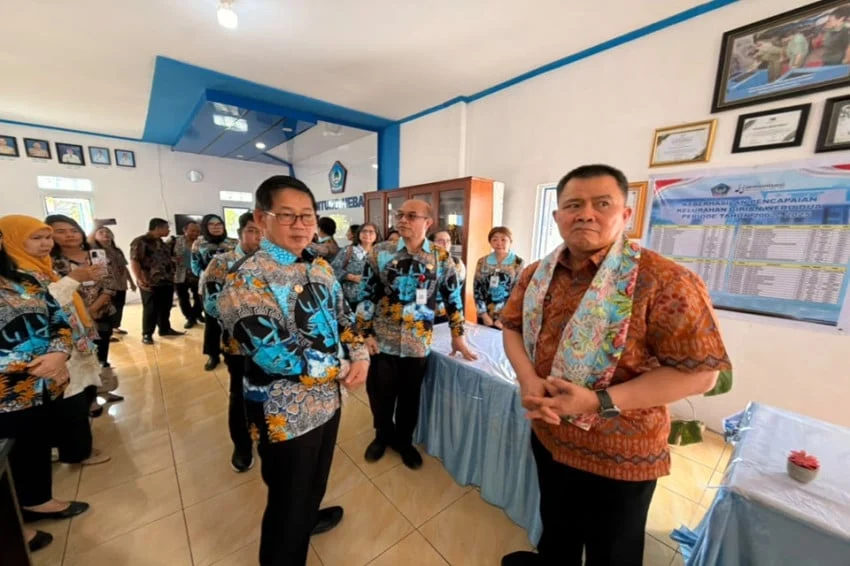
On Thursday, November 5, 2026, the Directorate General of Village Government Development, led by Bernhard E. Rondonuwu, arrived in Bitung to conduct an on-site verification of the Kelurahan Girian Weru Dua. The arrival of the central government team marked a critical milestone in the national competition. Accompanying Bernhard were key officials, including the Director of the Institute of Domestic Governance (IPDN) Sulawesi Utara, Harimas Ginting, and the Chairperson of the National Clarification Team for Village and Sub-district Achievement, Zanaria.
The field visit was not merely a symbolic gesture but a deep-dive evaluation of the administrative performance, fiscal transparency, and social impact of programs managed by the sub-district. The team reviewed documentation, interviewed local stakeholders, and inspected the physical facilities that support public service delivery in the area. This verification phase is the final hurdle before the ultimate national rankings are determined, positioning Girian Weru Dua as a primary contender for the top spot.
The Significance of the National Competition
The Village and Sub-district Achievement Competition is a flagship initiative by the Ministry of Home Affairs designed to catalyze administrative excellence at the grassroots level. By recognizing top-tier sub-districts, the Ministry aims to create a "demonstration effect," where successful models of governance can be replicated across the archipelago.
For a region like Bitung—a city historically defined by its strategic role as a bustling port and industrial hub—the achievement of Girian Weru Dua holds profound importance. Bitung has transitioned significantly over the last decade, shifting from a traditional maritime trading post to a modern industrial nexus. As the population density increases and economic demands rise, the efficiency of local sub-districts becomes the backbone of urban stability. The recognition of Girian Weru Dua highlights the success of the local government in managing this transition through effective community-level leadership.
Chronology of Excellence
The journey to the top three in the national standings was not achieved overnight. It began with a series of regional assessments conducted by the North Sulawesi provincial government, where Girian Weru Dua consistently scored high marks for its innovative approach to public health, waste management, and youth engagement programs.
- Early 2026: Initial identification of high-performing sub-districts within the North Sulawesi region.
- Mid-2026: Preliminary screening by the Ministry of Home Affairs, selecting candidates based on the "Village/Sub-district Performance Index."
- September 2026: Girian Weru Dua is confirmed as a semi-finalist, having met stringent criteria for budgetary transparency and digitized administrative workflows.
- November 5, 2026: The official National Clarification Team visit, confirming the status of the sub-district as a top-three national finalist.
Analysis: What Sets Girian Weru Dua Apart?
Preliminary reports suggest that the success of the sub-district stems from a paradigm shift in how services are delivered. Rather than adopting a top-down approach, the leadership in Girian Weru Dua prioritized a collaborative model.
- Digital Transformation: The sub-district has been praised for integrating digital platforms into its daily operations, allowing residents to access public records and submit complaints without needing to visit the office physically.
- Economic Empowerment: By facilitating small and medium-sized enterprise (SME) growth through training programs, the sub-district has managed to reduce local unemployment rates, a metric that the Ministry of Home Affairs weighs heavily.
- Community Resilience: The sub-district has implemented robust community-led security and environmental initiatives, which have significantly reduced the incidence of petty crime and improved urban sanitation.
Bernhard E. Rondonuwu, in his capacity as the Director General, noted that the Ministry is particularly interested in how sub-districts leverage local resources to solve complex urban challenges. "The innovation shown by Girian Weru Dua is not just about technology; it is about the human element—how effectively the sub-district head bridges the gap between the citizens’ needs and the local government’s capacity," he remarked during the visit.

Implications for Public Governance in Indonesia
The success of Girian Weru Dua serves as a bellwether for the future of administrative reform in Indonesia. As the nation continues its decentralization agenda, the sub-district (Kelurahan) level is becoming increasingly vital. It is the first point of contact for the citizenry, and therefore, its efficiency directly correlates with the public’s trust in the central government.
By awarding national recognition, the Ministry of Home Affairs is signaling a policy shift: rewards and accolades are no longer reserved for provincial or regency/city governments. Instead, the spotlight is turning to the "front lines" of governance. This competition creates a healthy incentive structure, encouraging other sub-districts across Indonesia to optimize their performance metrics, improve fiscal accountability, and embrace modern management practices.
Official Responses and Future Outlook
The local government of Bitung has expressed immense pride in the achievement. Officials present during the visit emphasized that the nomination is a collective effort involving the sub-district administration, local community leaders, and the residents of Girian Weru Dua.
"This is not just an award for the administration, but a validation of the hard work of the people of Bitung," stated one local representative during the closing of the field visit. The City of Bitung has committed to using the momentum generated by this competition to further enhance the quality of life in all its sub-districts.
For the Ministry of Home Affairs, the next steps involve a comprehensive review of all three finalists. The ultimate winner will be recognized at a national ceremony, receiving not only prestige but also potential grants or technical support to scale their innovative programs further.
Broader Impact: A Model for Development
The case of Girian Weru Dua provides a blueprint for what a modern, responsive sub-district looks like in 2026. As Indonesia navigates the complexities of an evolving economy, the ability of local units to provide stable, transparent, and innovative services is essential.
The "Girian Weru Dua model" emphasizes:
- Adaptive Governance: The ability to pivot policies based on real-time community feedback.
- Synergy: Active cooperation between the sub-district administration and the municipal level, ensuring that local initiatives align with broader city development goals.
- Sustainability: Long-term planning that ensures infrastructure projects and social programs do not rely solely on transient funding.
As the nation waits for the final announcement of the competition results, the success of Girian Weru Dua stands as a beacon of progress. It underscores the potential for grassroots-level leadership to drive national-level change. Regardless of the final outcome of the competition, the sub-district has already achieved the most significant goal: creating a sustainable and high-quality environment for its citizens to thrive.
In conclusion, the visit by Director General Bernhard E. Rondonuwu and his team is more than just a bureaucratic check-up. It is an affirmation that the efforts of local officials, when aligned with the needs of the community and supported by clear performance goals, can lead to transformative outcomes. Bitung continues to emerge as a city that not only contributes to the national economy but also leads the way in administrative innovation, setting a standard for other regions in Indonesia to emulate. The coming weeks will be critical as the ministry finalizes its assessment, but for the residents of Girian Weru Dua, the path forward is clear: continued commitment to excellence, transparency, and community-centric service.