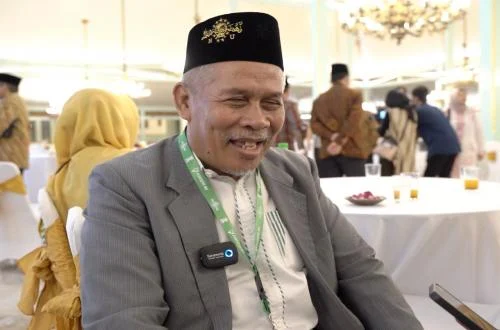
The National Awakening Party (PKB) is actively pursuing the former Chairman of the East Java Regional Board of Nahdlatul Ulama (PWNU), Kiai Haji Marzuki Mustamar, as a potential candidate for the highly anticipated 2024 East Java Regional Head Election (Pilkada Jatim). This strategic move, confirmed by party officials, could set the stage for a compelling electoral showdown against the incumbent and formidable former Governor of East Java, Khofifah Indar Parawansa, promising a contest rich in political maneuvering and a deep appeal to the province’s influential Nahdlatul Ulama (NU) constituency. The decision hinges critically on Kiai Marzuki Mustamar’s willingness to enter the political fray, a development eagerly awaited by various political factions and the broader public in Indonesia’s most populous province.
PKB’s Strategic Bid and Public Aspirations
Abdul Halim Iskandar, the Head of PKB’s Pilkada Desk, revealed the party’s intentions during a press conference held at the PKB Central Executive Board (DPP PKB) office in Central Jakarta on Wednesday, May 29, 2024. He stated that Kiai Marzuki Mustamar’s name is currently "circulating in society," with various groups meeting with the respected cleric to convey their aspirations for him to run under the PKB banner. "For East Java, today Kiai Haji Marzuki’s name is actively being discussed among the community, who are meeting with him to convey their aspirations to PKB," Halim Iskandar explained, emphasizing the grassroots momentum behind the potential candidacy.
PKB, a political party with deep historical and ideological ties to Nahdlatul Ulama, views this public sentiment as a significant and welcome development. The party leadership expressed enthusiasm for these aspirations, recognizing the immense political capital Kiai Marzuki Mustamar brings, particularly within the traditionalist Muslim community that forms the bedrock of NU’s support. However, Halim Iskandar underscored that while PKB is prepared to embrace these public demands, the ultimate decision rests with Kiai Marzuki Mustamar himself. "PKB is ready to facilitate these aspirations, but the final touch will depend on Kiai Marzuki’s readiness and willingness," he affirmed, highlighting the delicate balance between party strategy and the cleric’s personal choice.
The party also stressed its commitment to respecting Kiai Marzuki Mustamar’s stance, irrespective of his decision. Given his stature as a highly esteemed cleric and an iconic figure within East Java’s NU community, PKB indicated that it would not exert undue pressure. This deferential approach is strategic, aiming to maintain goodwill and respect within the broader NU ecosystem. "Even if we are ready, but Kiai Marzuki says ‘no, thank you,’ we certainly will not force him, because he is an extraordinary figure and icon of NU East Java, whose popularity has only grown after receiving unfavorable treatment following his dismissal by PBNU," Halim Iskandar elaborated. This observation points to a critical turning point in Kiai Marzuki Mustamar’s public profile, where a controversial decision by the Nahdlatul Ulama Central Executive Board (PBNU) unexpectedly bolstered his public appeal and solidarity among his followers. This surge in popularity is precisely what has fueled the current wave of public aspirations for his political involvement, making him an even more attractive candidate for PKB.
Regarding the selection of a running mate, PKB indicated that discussions on this matter are secondary and will only commence once Kiai Marzuki Mustamar confirms his availability. "Many are ready to be Kiai Marzuki’s companion, but we will not expose them yet, because the focus is on Kiai Marzuki first. Many have come forward expressing readiness to accompany Kiai Marzuki, but the key remains with him," Halim Iskandar stated, reinforcing the party’s prioritized approach. This suggests a deep pool of potential candidates eager to align with Kiai Marzuki Mustamar, further solidifying his perceived strength as a gubernatorial contender.
The Significance of East Java in Indonesian Politics
East Java is not merely a province; it is a political barometer for Indonesia. With a population exceeding 40 million, it is the country’s most populous province and a critical electoral battleground. Its demographics are largely agrarian, with a strong presence of traditionalist Islamic communities, particularly those affiliated with Nahdlatul Ulama. NU, as the largest Islamic organization in the world, holds immense social, cultural, and political sway in East Java, where its pesantren (Islamic boarding schools) network and extensive community organizations form a powerful base of influence. Any candidate aspiring to lead East Java must garner significant support from this demographic, making the endorsement or candidacy of a prominent NU figure like Kiai Marzuki Mustamar exceptionally potent.
Historically, East Java has been a stronghold for parties with NU affiliations, primarily PKB. The province consistently delivers a substantial number of votes in national and regional elections, often dictating the broader political narrative. The gubernatorial election in East Java is thus not just a regional contest but a bellwether for national political trends and power dynamics. The winner of Pilkada Jatim gains control over significant economic resources, a vast bureaucracy, and a strategic position that connects Java to the eastern parts of Indonesia.
Kiai Marzuki Mustamar: A Figure of Influence and Controversy
Kiai Haji Marzuki Mustamar is a highly respected figure in East Java’s religious landscape. Prior to his dismissal, he served as the Chairman of the East Java PWNU, a position that placed him at the helm of the provincial branch of the world’s largest Islamic organization. His influence extends beyond administrative roles; he is a charismatic preacher, a scholar, and the head of Pondok Pesantren Sabilurrosyad in Malang. His sermons and teachings resonate deeply with millions of NU followers, particularly among the ‘nahdliyin’ (NU adherents) who value religious scholarship and moral leadership.
His dismissal from the chairmanship of East Java PWNU by the PBNU in late 2023 sent shockwaves through the NU community. While the exact reasons cited by PBNU were internal organizational matters, the move was widely perceived by many of his supporters as politically motivated. This controversial decision, rather than diminishing his standing, inadvertently elevated his popularity. Many saw him as a victim of political maneuvering, fostering a sense of solidarity and loyalty among his followers. This unexpected surge in public sympathy and admiration transformed him into an even more potent symbol of resistance and authenticity, making him a formidable, albeit reluctant, political figure. His moral authority and perceived independence from national political pressures are now seen as significant assets.
The Incumbent Challenge: Khofifah Indar Parawansa
Should Kiai Marzuki Mustamar accept PKB’s overtures, he would face Khofifah Indar Parawansa, a seasoned politician and the former Governor of East Java. Khofifah, who successfully led the province for one term (2019-2024), also possesses strong ties to Nahdlatul Ulama through her leadership of Muslimat NU, the women’s wing of the organization. Her political career spans decades, including ministerial positions in the national government, which have given her extensive experience and a broad network.
Khofifah’s tenure as governor was marked by efforts in economic development, social welfare programs, and disaster management. She enjoys significant cross-party support and has demonstrated an ability to build broad coalitions. Her popularity is rooted in her track record and her appeal to a diverse range of voters, including women, youth, and moderate Muslims. Her potential re-election bid is expected to be backed by a strong coalition of major political parties, potentially including Golkar, Gerindra, and Democratic Party, as she has cultivated relationships across the political spectrum. A contest between Kiai Marzuki Mustamar and Khofifah would represent a clash of two prominent NU figures, each with their distinct base of support and approach to leadership, effectively dividing the traditionalist vote and intensifying the campaign’s religious and cultural dimensions.
Broader Political Implications and Scenarios
The entry of Kiai Marzuki Mustamar into the East Java gubernatorial race would fundamentally reshape the political landscape. For PKB, it would be a strategic coup, potentially uniting a significant portion of the NU vote under its banner. PKB has historically relied on the NU base but has sometimes struggled to consolidate it fully against other parties that also appeal to NU members. Kiai Marzuki Mustamar’s candidacy could be the catalyst PKB needs to maximize its electoral potential in the province.
The contest would likely devolve into a fierce battle for the hearts and minds of the nahdliyin. While both candidates have strong NU connections, Kiai Marzuki Mustamar’s recent controversy with PBNU could position him as a champion of traditionalist values against perceived political interference, potentially galvanizing a segment of the NU community that feels disenfranchised or critical of the national NU leadership. Khofifah, on the other hand, would likely leverage her administrative experience and her standing within Muslimat NU to appeal to women and those who prioritize stability and proven governance.
Political analysts suggest that such a high-profile clash could also force other parties to pick sides carefully. Parties not aligned with PKB might flock to Khofifah’s camp, creating a powerful coalition of established political forces. Conversely, if Kiai Marzuki Mustamar secures the nomination, PKB would likely seek alliances with smaller, nationalist, or Islamist parties to broaden its appeal beyond the core NU constituency. The 2024 Pilkada Jatim could become a proxy battle for influence within NU itself, reflecting internal dynamics and power struggles within the revered organization.
The timeline for the 2024 Pilkada is progressing rapidly. Candidate registration for regional head elections is typically set for August 2024, followed by campaigning and the election day in November 2024. This leaves a relatively short window for PKB to secure Kiai Marzuki Mustamar’s commitment and for all potential candidates to finalize their political platforms and coalition agreements. The coming months will be crucial for political parties to solidify their strategies, conduct internal surveys, and engage in intense negotiations to form viable tickets.
The Waiting Game: Marzuki Mustamar’s Decision
The ball is now firmly in Kiai Marzuki Mustamar’s court. His decision will have far-reaching consequences, not only for his personal trajectory but also for the political future of East Java and the broader dynamics of Indonesian politics. Should he accept, it would mark a significant shift for a figure primarily known for his religious and educational leadership to enter the demanding arena of electoral politics. His potential entry promises to infuse the East Java gubernatorial race with a potent mix of religious authority, popular sentiment, and intricate political strategy, setting the stage for one of the most compelling regional elections in Indonesia’s recent history. The political world, particularly in East Java, now holds its breath, awaiting the word from the revered kiai. His choice will undoubtedly reverberate across the archipelago, shaping alliances, campaigns, and ultimately, the governance of a pivotal Indonesian province.