
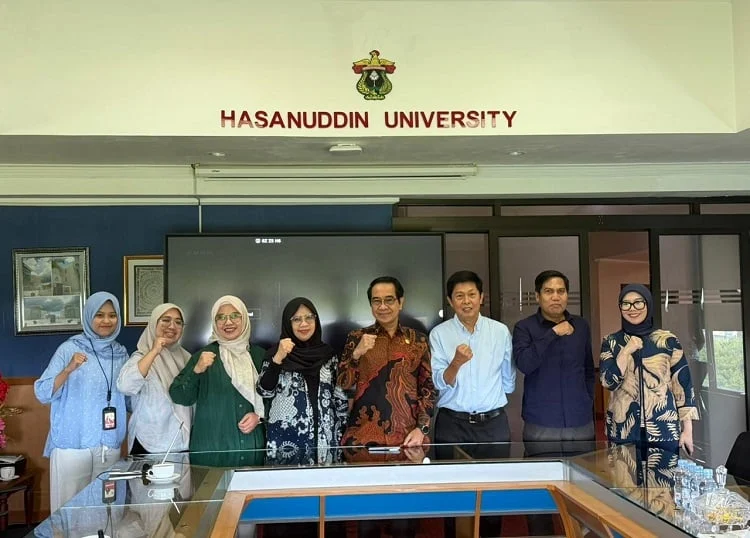
Universitas Hasanuddin (Unhas) is set to host the highly anticipated Innovation and Technology for Social and Environmental Sustainability (InTechSEA) Awards 2026, an event poised to redefine the intersection of academia, industry, and governance in Indonesia. Scheduled to take place on Monday, September 14, 2026, at the Four Seasons Hotel in Jakarta, the ceremony serves as the culmination of an extensive initiative designed to honor breakthroughs that harmonize technological advancement with social responsibility and environmental stewardship. This event represents a strategic milestone in Unhas’s ongoing evolution as a premier center of excellence focused on the Indonesian Maritime Continent—a geographical and economic corridor vital to the nation’s future.
A High-Level Gathering of National Stakeholders
The upcoming gala is expected to draw an elite assembly of policymakers, industry titans, and academic visionaries. Among the confirmed high-profile attendees is the Minister of Energy and Mineral Resources (ESDM), Bahlil Lahadalia. His presence underscores the government’s vested interest in the themes explored by the awards, particularly those concerning energy transition and the strategic management of natural resources.
The ministerial representation at the event reflects the multi-sectoral importance of the InTechSEA platform. Joining Minister Bahlil will be the Coordinating Minister for Infrastructure and Regional Development, Agus Harimurti Yudhoyono (AHY), and the Coordinating Minister for Food, Zulkifli Hasan. The inclusion of these key cabinet members suggests a holistic government approach to integrating innovation into national development strategies, ranging from food security to infrastructure expansion. Furthermore, the participation of prominent national figures such as entrepreneur Arsjad Rasjid and various C-suite executives signals a strong alignment between the private sector and the academic research community.
The Genesis of InTechSEA and the Role of Innovation
The InTechSEA Awards are not merely a ceremony; they are the result of a rigorous evaluation process that spans several months. According to Asmi Citra Malina, Director of Innovation and Intellectual Property at Unhas, the initiative was conceived to bridge the "implementation gap" that often exists between laboratory-scale research and industrial-scale application.
The collaboration between Unhas and the Ministry of ESDM has been particularly fruitful. During a series of preparatory audiences, the Ministry expressed a keen interest in the program, specifically proposing the creation of a "Downstreaming of Mining" (Hilirisasi Pertambangan) category. This addition is strategically aligned with the national agenda to move away from raw material exports toward value-added processing, a cornerstone of Indonesia’s economic strategy to maximize the benefits of its mineral wealth.
Scale of Participation and Corporate Engagement
The 2026 edition of the InTechSEA Awards has witnessed an unprecedented level of engagement from the corporate sector. Over 80 companies have submitted entries, spanning a wide array of industries including energy, oil and gas, mining, manufacturing, and financial services. This diversity in participation highlights a growing corporate recognition that sustainability is no longer an optional corporate social responsibility (CSR) activity, but a fundamental requirement for long-term viability.
Participating entities represent some of the most significant players in the Indonesian economy. The roster includes state-owned enterprises such as PT Pertamina Gas and PT Perusahaan Gas Negara Tbk, as well as private and joint-venture leaders like Energy Equity Epic (Sengkang) Pty. Ltd., PT Hadji Kalla, and PT Asuransi Kredit Indonesia. The broad spectrum of participants allows for a robust cross-pollination of ideas, where a mining firm’s approach to land reclamation might inform the sustainable logistics strategy of a shipping company.
Chronology and Evaluative Framework
The path to the September 14 gala began early in 2026, characterized by a structured timeline of submissions, on-site technical audits, and panel reviews. The selection criteria are multifaceted, focusing on three primary pillars:
- Technological Efficacy: The technical robustness and originality of the innovation.
- Social Impact: The direct benefits to local communities, including job creation, education, and health improvements.
- Environmental Sustainability: Measurable reductions in carbon footprint, waste management efficiency, and resource conservation.
The event organizers have emphasized that the evaluation is not limited to theoretical models. Innovations must demonstrate a clear path toward scalability. By prioritizing projects that have already moved beyond the pilot phase, the InTechSEA Awards provide a platform for companies to showcase their tangible contributions to Indonesia’s national targets, such as the Net Zero Emission 2060 goal.
Bridging the Gap: Academia, Industry, and Government
One of the most significant implications of the InTechSEA 2026 event is its role as a "quadruple helix" catalyst. In modern innovation theory, the interaction between government, industry, academia, and civil society is essential for fostering a competitive and sustainable economy. By hosting this event, Unhas is effectively positioning itself as a central node in this network.
For the corporate world, the awards offer a rare opportunity to gain academic validation for their sustainability initiatives. For the government, the event provides a "sandbox" of proven technological solutions that could be scaled up through policy support or public-private partnerships. For the academic community, the event provides invaluable data on real-world industrial challenges, which can help align future research curricula with the actual needs of the labor market and the economy.
Economic and Environmental Implications
The relevance of the event is amplified by the current global economic climate. As Indonesia navigates the complexities of energy transition, the themes of efficiency, renewable energy, and emissions reduction are critical. The presence of Minister Bahlil Lahadalia is particularly relevant here; his portfolio is at the center of the nation’s energy transition strategy. The InTechSEA event acts as a venue where the technical challenges of this transition—such as grid stability, renewable integration, and mineral processing for battery technology—can be discussed with the experts who are implementing these systems on the ground.
Moreover, the emphasis on "downstreaming" (hilirisasi) is a signal of a broader shift in industrial policy. By rewarding companies that innovate within this sector, Unhas and the Ministry are incentivizing the development of high-tech manufacturing processes that reduce the environmental impact of traditional mining activities. This is a critical move, as the global market increasingly demands "green" commodities produced with minimal ecological disruption.
Looking Toward the Future
As the date of the gala approaches, the excitement within the scientific and corporate communities continues to build. The organizers are already looking beyond the 2026 ceremony, with plans to create a repository of the winning innovations that can serve as a permanent resource for policymakers and industry leaders.
The success of InTechSEA 2026 will be measured not just by the trophies awarded on the night, but by the long-term partnerships formed in the halls of the Four Seasons Hotel. If the current trajectory of interest holds, the event will serve as a model for how Indonesian universities can transcend their traditional boundaries to become engines of national economic transformation.
In conclusion, the InTechSEA Awards 2026 represents a pivotal moment for Universitas Hasanuddin and the nation at large. By creating a high-stakes environment that prioritizes innovation, sustainability, and social responsibility, the event addresses the most pressing challenges of the modern era. As the Indonesian government and private sector continue to seek solutions for sustainable growth, initiatives like InTechSEA provide the necessary blueprint for a future where technology serves not only the economy but also the environment and the people who rely upon it. The convergence of minds in Jakarta this September will likely set the tone for Indonesia’s technological and sustainable development agenda for the remainder of the decade.
