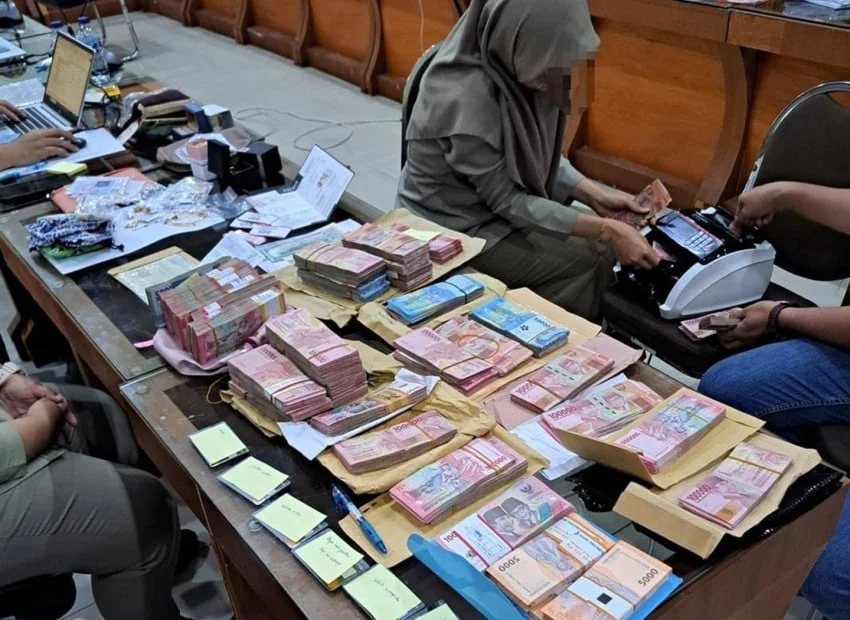
The Corruption Eradication Commission (KPK) of Indonesia has uncovered a sophisticated network of illicit financial transactions linked to the regional office of the National Land Agency (BPN) in East Java. During a high-profile raid conducted on Thursday, September 24, 2026, investigators discovered a collection of bank accounts and ATM cards suspected of serving as conduits for "off-the-books" deposits originating from various land offices (Kantah) across the East Java region. This discovery marks a significant escalation in the ongoing probe into bribery and gratuities within the Ministry of Agrarian Affairs and Spatial Planning/National Land Agency (ATR/BPN), specifically concerning the irregular issuance of Building Rights Titles (HGB) in Bogor Regency, West Java.
The operation, which took place at the East Java BPN Regional Office (Kanwil), represents a concerted effort by the KPK to dismantle systemic corruption that has long plagued land administration in Indonesia. According to the KPK, the seized accounts were allegedly utilized to pool funds collected from local land offices to finance "tactical activities" that fall outside the authorized State Budget (APBN) and the Budget Implementation List (DIPA) of the agency.
Chronology of the Investigation
The investigation into these irregularities gained momentum following public reports and internal audits suggesting that the processing of land titles was being manipulated for personal or institutional gain. By early September 2026, the KPK had gathered sufficient preliminary evidence to justify a coordinated sweep of both the central ministry offices and the regional facilities involved in the suspicious transactions.
On September 24, 2026, KPK investigators descended upon the East Java Kanwil BPN office. The raid lasted for several hours, during which teams secured digital and physical records. It was during this search that investigators found the cache of ATM cards. Following the initial discovery, the KPK conducted follow-up raids, leading to the seizure of cash amounting to hundreds of millions of rupiah and various pieces of jewelry, which are now being processed as material evidence of potential gratification.
On Monday, September 28, 2026, KPK spokesperson Budi Prasetyo officially confirmed the findings during a press briefing at the Merah Putih Building in Jakarta. He emphasized that the funds diverted into these accounts were intended to bypass established budgetary oversight mechanisms, effectively creating a "shadow treasury" used to fund operational costs or discretionary activities that lack transparency and accountability.
The Mechanism of Shadow Finance
The discovery of these accounts sheds light on how systemic corruption can persist within government agencies. By utilizing personal or entity-controlled bank accounts to receive "setoran" (deposits) from subordinate offices, the leadership at the regional level could effectively maintain a slush fund.
In public administration, the DIPA is a vital document that authorizes the disbursement of state funds for specific programs. By siphoning money from local land offices into these unauthorized accounts, the actors involved allegedly bypassed the strict reporting and auditing requirements of the Ministry of Finance and the State Audit Agency (BPK). This practice not only denies the state its rightful revenue but also creates a perverse incentive for officials to prioritize the interests of those who provide "extra" payments over the legitimate administrative needs of the public.
Broader Context of Land Administration Reform
The Ministry of ATR/BPN has long been under pressure to digitize land services and eliminate the "mafia" culture often associated with land title processing. The HGB registration in Bogor, which serves as the epicenter of this current investigation, is notorious for its complexity and the high value of land involved. Bogor, being a satellite region of Jakarta, experiences massive development pressure, which historically drives demand for fast-tracked—and often corrupt—land permit processes.
The KPK’s focus on the East Java branch suggests that the agency believes the pattern of corruption is not isolated to a single region but is part of a broader, systemic failure in internal controls across the national land agency’s hierarchy. If the practice of collecting "tactical" funds from regional offices is a standard operating procedure, the implications for the ministry’s credibility are profound.
Economic and Legal Implications
From a legal standpoint, the possession of these accounts and the accompanying jewelry potentially implicates senior officials in charges of gratification and money laundering. Under Indonesia’s Law Number 31 of 1999 as amended by Law Number 20 of 2001 on the Eradication of Corruption, the acceptance of gifts or unauthorized payments by civil servants is a serious offense that can lead to long-term imprisonment and substantial fines.
The economic impact is equally concerning. When government services are contingent upon under-the-table payments, the cost of doing business rises significantly. For the average citizen, this translates into increased administrative costs and delays in obtaining legal land ownership, which in turn undermines public trust in the state’s ability to protect property rights. Investors also view such systemic corruption as a primary risk factor, potentially deterring capital inflow into the regional property market.
Official Responses and Future Outlook
While the Ministry of ATR/BPN has yet to issue a comprehensive statement regarding the specific findings in East Java, the ministry has previously committed to cooperating with the KPK in its efforts to clean up the institution. Previous attempts at reform, such as the implementation of the electronic land certificate system, have been touted as solutions to minimize physical contact between officers and applicants, thereby reducing opportunities for bribery.
However, the KPK’s findings demonstrate that even with digital advancements, traditional methods of siphoning funds—such as the creation of unauthorized accounts—remain a significant hurdle. Experts suggest that the KPK must now focus on the forensic audit of these accounts to trace the source of the money and identify the beneficiaries.
"This is not just about the money," one analyst noted. "It is about the culture of entitlement that allows a government agency to operate a parallel financial system. The KPK’s success in this case will be measured not just by the arrests made, but by the structural changes that prevent such systems from being established in the future."
The Road Ahead
As the investigation continues, the KPK is expected to summon more witnesses from both the East Java Kanwil BPN and the central ministry. The seized financial data will likely be cross-referenced with bank transaction logs to identify patterns of deposits and withdrawals. This will enable investigators to build a timeline of the alleged corruption and determine whether the practice has been ongoing for years.
The public, meanwhile, remains expectant. The ongoing case has reignited the national conversation regarding the necessity of a total overhaul in how land services are managed in Indonesia. With the KPK maintaining a firm stance on following the evidence wherever it leads, the potential for further high-level investigations remains high.
For the employees of the BPN, the situation has created an atmosphere of uncertainty. Many lower-level staff have expressed concerns that the actions of a few in leadership positions have tarnished the reputation of the entire agency. As the legal proceedings move forward, the challenge for the Ministry of ATR/BPN will be to restore public confidence while simultaneously rooting out the corrupt elements that have allowed this shadow economy to flourish.
The discovery in East Java serves as a stark reminder of the challenges inherent in Indonesia’s ongoing battle against corruption. It underscores the necessity of constant vigilance, robust digital oversight, and a judiciary that is capable of addressing complex financial crimes with transparency and integrity. As the KPK prepares its case, the nation waits to see whether this will be a turning point in the governance of one of the most critical sectors of the Indonesian economy.