
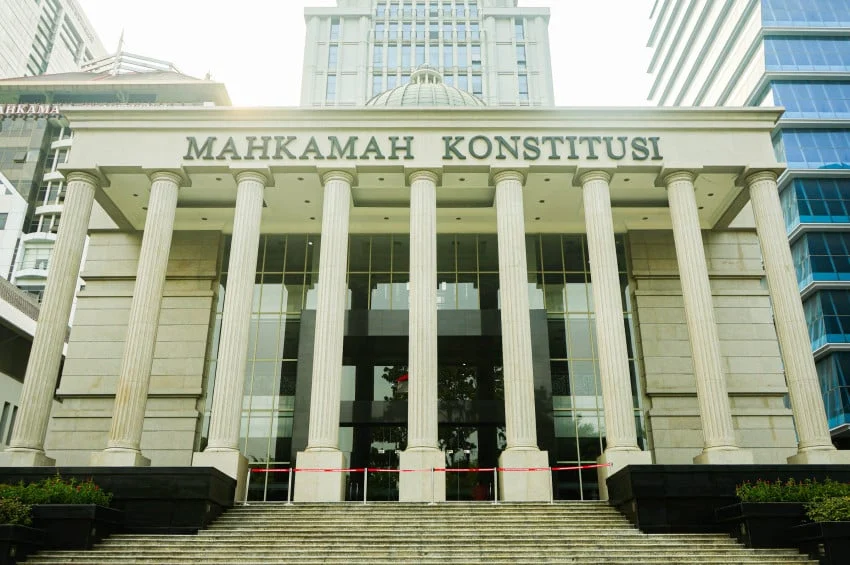
The Constitutional Court of the Republic of Indonesia (Mahkamah Konstitusi or MK) is set to convene a critical evidentiary hearing regarding the 2024 Presidential and Vice-Presidential Election Dispute (PHPU) on Wednesday evening, September 30, 2026. This session, scheduled to begin at 19:00 WIB at the MKRI 1 Building in Jakarta, marks a pivotal moment in the legal challenge filed by a coalition of twelve petitioners, led by legal scholar and former Deputy Minister of Law and Human Rights, Denny Indrayana. The proceeding will focus on the submission of expert testimonies, witness statements, and the formal verification of supplemental evidence presented by the petitioners to substantiate their claims regarding the integrity of the 2024 electoral process.
Background and The Legal Challenge
The legal challenge, registered under case number 01/PHPU.PRES-XXIV/2026, was officially filed on September 10, 2026. The petitioning group consists of a diverse coalition of individuals, including Ansufri ID Sambo, Brahma Aryana, Tiurma M.S. Sihombing, Bonatua Silalahi, M. Subhan, Moeryono, Soenarko MD, Hanafie Asnan, Slamet Soebijanto, Tyasno Sudarto, Fachrul Razi, and Denny Indrayana.
At the core of the petitioners’ argument is a series of allegations concerning procedural irregularities and the legitimacy of candidate eligibility, which the group contends significantly undermined the democratic quality of the 2024 presidential election. One of the more contentious elements of their petition involves the academic credentials of key political figures, including Vice President-elect Gibran Rakabuming Raka. Denny Indrayana has publicly acknowledged his efforts to reach out to educational institutions in Singapore and Australia to verify the validity of these credentials, suggesting that the evidentiary phase will lean heavily on documentation regarding candidate qualifications and administrative compliance.
Chronology of Proceedings
The judicial review process at the Constitutional Court follows a strictly regulated timeline designed to address election disputes within the constitutional timeframe. The progression of this case has been rapid:
- September 10, 2026: Formal filing of the petition by the twelve applicants at the Constitutional Court.
- September 21, 2026: The inaugural session, focusing on Preliminary Examination. During this stage, the petitioners presented their case, outlining the core allegations and the specific legal provisions they believe were violated during the electoral period.
- September 23, 2026: The second session, dedicated to hearing the Respondent’s answer (the General Elections Commission or KPU), statements from relevant parties (including the winning candidate’s legal team), and the official report from the Election Supervisory Body (Bawaslu).
- September 30, 2026 (Tonight): The Evidentiary Hearing for the Petitioners. This phase allows the applicants to present their witnesses and expert testimonies to support their petition, as well as the formal validation of supplementary evidence.
- October 1, 2026: The Evidentiary Hearing for the Respondent, Relevant Parties, and Bawaslu. This session will provide the opposing side an opportunity to counter the evidence presented by the petitioners and offer their own expert testimonies.
Expert Testimonies and Judicial Scrutiny
The session on September 30 is expected to be lengthy and intense. Under Indonesian election law, the role of the Constitutional Court in a PHPU is not merely to conduct a recount of votes, but to assess whether there were structural, systemic, and massive violations that could affect the final tally or the legitimacy of the outcome.
Legal observers note that the inclusion of figures like former high-ranking military officials and experienced legal scholars among the petitioners signals a concerted effort to shift the debate from minor administrative errors to broader constitutional questions. The Court is expected to scrutinize the testimony of experts in election law, public administration, and potentially information technology, as digital integrity remains a focal point of modern election disputes.
Perspectives from the Respondent and Relevant Parties
While the petitioners are focused on highlighting irregularities, the Respondent—the KPU—and the relevant parties involved in the election have maintained that the process was conducted in accordance with prevailing laws and regulations. The KPU is expected to argue that any discrepancies identified by the petitioners are either immaterial to the overall result or have been addressed through internal administrative channels.
Relevant parties, typically representing the victorious presidential ticket, have historically argued that such petitions are a standard part of the democratic process but are ultimately unfounded. They contend that the election was observed by both domestic and international monitors, and that the results reflect the will of the electorate as expressed through the ballot box. Bawaslu, as an oversight institution, serves as a crucial witness, providing the Court with an objective summary of the reports and violations they processed during the election period.
The Broader Implications of the 2026 Dispute
The resolution of this case holds significant implications for the future of Indonesian electoral law. As the Constitutional Court deliberates, the legal community is watching closely to see how the Court interprets the boundaries of "structural and systematic" violations. A ruling in favor of the petitioners could trigger a mandatory re-vote in specific districts or regions, while a rejection would solidify the current results and close the legal avenue for challenging the 2024 outcome.
Furthermore, the public discourse surrounding this case highlights the growing reliance on international verification, as seen in the petitioners’ outreach to foreign educational institutions. This adds a layer of complexity to the judicial review, requiring the Court to determine the relevance of cross-border documentation in a domestic constitutional dispute.
Analytical Perspective: The Burden of Proof
In the context of Indonesian election disputes, the burden of proof rests heavily on the petitioners. According to the Constitutional Court’s procedural rules, the petitioners must provide more than just circumstantial evidence; they must demonstrate a causal link between the alleged violations and the change in the final election results.
The Court’s decision to schedule consecutive nights of hearings—September 30 and October 1—indicates an urgency to conclude the evidentiary phase before moving to the deliberations (Rapat Permusyawaratan Hakim). This suggests that the justices are operating under a tight schedule to ensure that the final verdict is delivered within the statutory limits defined by the Law on the Constitutional Court.
Conclusion and Outlook
As the nation looks toward the Constitutional Court, the atmosphere in Jakarta remains focused on the judicial process. The hearings serve as a litmus test for the independence and efficacy of the judiciary in managing high-stakes political conflicts. Whether the evidence presented by Denny Indrayana and his fellow petitioners will be sufficient to sway the justices remains to be seen.
For now, the focus shifts to the MKRI 1 Building, where the testimonies heard tonight will form the bedrock of the Court’s final determination. The legal teams for both sides are prepared for a rigorous cross-examination, and the outcome of these proceedings will undoubtedly shape the political landscape of Indonesia for the coming years. Following the completion of the evidentiary phase on October 1, the public will await the final verdict, which will represent the ultimate interpretation of the law regarding the 2024 Presidential and Vice-Presidential Election.
As the Constitutional Court process reaches its crescendo, the importance of maintaining public order and respect for the judicial institution is paramount. The judiciary remains the final arbiter in this constitutional dispute, and its eventual ruling will provide the definitive closure required for the country to move forward from the 2024 electoral cycle.
