
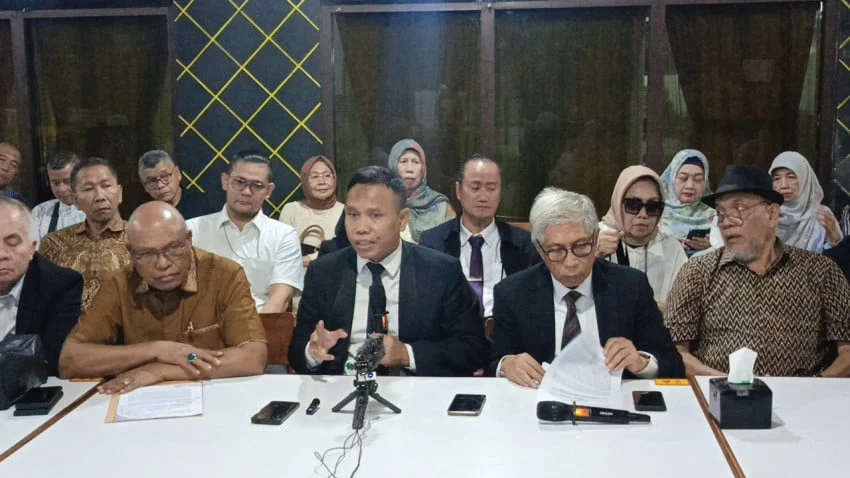
Jakarta, Indonesia – A Jakarta court has ruled in favor of Dr. Tifauzia Tyassuma, widely known as Dokter Tifa, in a defamation and libel case concerning allegations of a forged academic degree belonging to Indonesian President Joko Widodo. The decision by the East Jakarta District Court to accept Dokter Tifa’s preliminary objection, or eksepsi, has led to a declaration by the advocacy group Tim Advokasi Anti Kriminalisasi Akademisi dan Aktivis (TA-AKAA) that the controversy surrounding President Widodo’s diploma has reached a stalemate, with no definitive clarity emerging on the authenticity of the document.
Ahmad Khozinudin, the non-litigation coordinator for TA-AKAA, expressed this assessment during a press conference held on Thursday, July 23, 2026. The court’s decision effectively voids the indictment against Dokter Tifa, meaning the legal proceedings related to the alleged defamation and dissemination of false information regarding President Widodo’s academic qualifications have been halted at this stage.
"We must accept with grace that not all heroes can complete their struggles, and not all fighters reach the finish line," Khozinudin stated, reflecting on the outcome. "Ultimately, this case must conclude with a zero-sum result, meaning there is no clarity regarding this diploma."
The legal battle stemmed from allegations and public discourse questioning the validity of President Widodo’s university diploma, which became a focal point of intense scrutiny and debate in recent years. Dokter Tifa, a vocal critic, had been accused of defamation and spreading libelous information by challenging the authenticity of the President’s academic credentials. The charges brought against her were based on claims that her public statements and actions constituted an attack on President Widodo’s good name and reputation.
Background of the Diploma Controversy
The controversy surrounding President Joko Widodo’s university diploma first gained significant traction in the lead-up to the 2019 presidential election. Several individuals and groups raised questions about the provenance and legitimacy of his Bachelor of Engineering degree from Gadjah Mada University (UGM), obtained in 1985. These questions were often amplified through social media and various online platforms, leading to a polarized public discourse.
Critics pointed to perceived inconsistencies and alleged irregularities in the documentation, fueling speculation that the diploma might be fabricated or that President Widodo may not have completed his studies as claimed. Conversely, supporters and official sources from UGM maintained the validity of the diploma, asserting that President Widodo was a legitimate alumnus. The university itself had, at various points, issued statements and provided documentation to corroborate his academic record.
However, the persistent nature of these allegations and the legal challenges that ensued highlighted a persistent undercurrent of skepticism among certain segments of the population. The case against Dokter Tifa became a prominent legal front in this ongoing public debate, bringing the dispute into the formal judicial system.
Chronology of Legal Proceedings
The legal journey leading to the court’s decision involved several key stages:
- Initial Allegations and Public Discourse: Years of online discussions and public commentary questioning President Widodo’s diploma.
- Formal Complaints and Investigation: Following persistent allegations, formal complaints were lodged against individuals accused of defamation and spreading misinformation, leading to investigations by law enforcement agencies.
- Indictment of Dokter Tifa: Dokter Tifa was formally charged with defamation and libel related to her public statements and actions concerning President Widodo’s diploma.
- Pre-Trial Proceedings and Eksepsi: As the trial commenced, Dokter Tifa’s legal defense team filed an eksepsi, a legal objection to the indictment. This objection typically argues that the charges are legally flawed, that the court lacks jurisdiction, or that the indictment itself is unclear or invalid.
- Court Decision on Eksepsi: The East Jakarta District Court, after reviewing the arguments presented in the eksepsi, ruled to accept it. This acceptance implies that the court found substantial legal grounds to invalidate the indictment.
- Outcome: Case Dismissed at Preliminary Stage: By accepting the eksepsi, the judge declared the indictment null and void, effectively halting the trial before it could proceed to the evidentiary phase. This means the court did not rule on the merits of the defamation charges themselves but rather on the procedural or substantive validity of the indictment.
The acceptance of an eksepsi is a significant procedural development in Indonesian law. It signifies that the court has identified fundamental flaws in the prosecution’s case as presented in the indictment, preventing the trial from moving forward on those specific charges.
TA-AKAA’s Perspective and the "Draw" Outcome
Ahmad Khozinudin, representing TA-AKAA, articulated that the court’s decision, while a victory for Dokter Tifa in terms of avoiding a trial on the current indictment, did not resolve the underlying question of the diploma’s authenticity. He characterized the situation as a "draw" because the legal process, as it unfolded in this specific case, did not yield a definitive answer regarding the diploma itself.
"We have accessed the diploma that has been repeatedly referred to as Jokowi’s," Khozinudin stated. "However, one more step is needed to prove that this diploma does not belong to Jokowi." This suggests that TA-AKAA, while acknowledging the court’s decision, believes that further investigation or a different legal avenue might be required to definitively address the claims.
The implication of Khozinudin’s statement is that while the legal case against Dokter Tifa has been dismissed on procedural grounds, the factual question of the diploma’s authenticity remains, in his view, unaddressed by the court’s ruling. The court’s decision focused on the legal sufficiency of the indictment, not on the truth or falsity of the diploma’s claims.
Broader Implications and Public Reaction
The court’s decision to accept Dokter Tifa’s eksepsi has several potential implications:
- Legal Precedent: The ruling could set a precedent for how similar cases involving defamation related to public figures’ credentials are handled. It underscores the importance of clear and legally sound indictments.
- Public Discourse: While the legal case has been dismissed, the public debate surrounding President Widodo’s diploma is likely to continue. The court’s decision may embolden some to persist in their questioning, while others may see it as an attempt to evade accountability.
- Political Ramifications: In a politically charged environment, such legal outcomes can be interpreted in various ways, potentially influencing public perception and political narratives.
- Focus on Evidence: The case highlights the challenges in substantiating claims related to academic qualifications, especially when they become entangled in political disputes. The burden of proof and the clarity of evidence are paramount in such matters.
Official reactions from the President’s office or the government have not been detailed in the provided information, but such rulings often lead to carefully worded statements emphasizing respect for the judicial process. Meanwhile, civil society groups and political observers will likely dissect the implications of the ruling for freedom of expression, the judiciary’s role, and the transparency of public figures.
The TA-AKAA’s call for further steps suggests a potential for continued engagement with the issue, possibly through different legal channels or public awareness campaigns. The group’s assessment of a "draw" indicates their belief that the core issue of the diploma’s authenticity has not been definitively settled by the court’s procedural ruling.
As Indonesia continues to navigate its democratic processes, the intersection of legal proceedings, public scrutiny, and political discourse remains a dynamic and closely watched area. The outcome of this defamation case, while ending at a preliminary stage, serves as a reminder of the complexities involved in balancing freedom of speech with the protection of reputation and the pursuit of truth in the digital age. The unresolved questions surrounding President Widodo’s diploma, as highlighted by TA-AKAA, suggest that this particular controversy may not be entirely laid to rest, even with the recent judicial development.
