
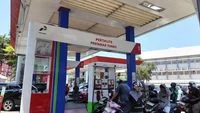
Jakarta, CNN Indonesia — In a decisive move to address mounting congestion at public refueling stations and accommodate a sharp surge in daily energy consumption, PT Pertamina Patra Niaga has officially augmented its infrastructure across the capital of South Sulawesi. The downstream subsidiary of Indonesia’s state-owned oil and gas giant, PT Pertamina (Persero), has increased the total number of fuel nozzles at twelve strategic public refueling stations (SPBU) throughout Makassar. Alongside this physical expansion, the company has executed comprehensive structural adjustments to service capacity configurations, aiming to streamline operations and alleviate the chronic traffic bottlenecks that have recently plagued motorists in the region.
The intervention comes in direct response to shifting consumption patterns and localized logistical pressures that have heightened the demand for subsidized and non-subsidized petroleum products alike. By recalibrating how fuel is dispensed on-site, Pertamina Patra Niaga seeks to transform the efficiency of its retail network in one of Eastern Indonesia’s most economically vibrant metropolitan hubs.
Strategic Infrastructure Overhaul and Operational Adjustments
According to formal statements released by corporate leadership, the latest modifications go far beyond simple hardware additions. The operational overhaul encompasses both quantitative enhancements to physical machinery and qualitative refinements in service delivery protocols.
At the heart of the intervention is the strategic installation of additional fuel nozzles at twelve carefully selected service stations. These locations were chosen based on rigorous internal data analytics that identified high-traffic nodes experiencing the most severe vehicle backups during peak commuting hours. By increasing the number of active nozzles, multiple vehicles can now be serviced simultaneously, fundamentally altering the throughput capacity of each targeted station.
Furthermore, Pertamina Patra Niaga has re-engineered the configuration capacities of these facilities. This technical adjustment involves optimizing the internal flow rates of fuel dispensers, upgrading subterranean storage delivery rhythms, and realigning forecourt traffic management to ensure smoother ingress and egress for commercial drivers, private motorists, and public transportation fleets.
VP Corporate Communication of Pertamina Patra Niaga, Kitty Andhora, emphasized that these adjustments were formulated as a direct, empirical response to real-time observations on the ground.
"We continuously evaluate operational conditions and execute prompt follow-up measures based on actual circumstances observed in the field. The adjustment of capacity configurations and the addition of subsidized fuel nozzles across 12 SPBU locations in Makassar represent crucial steps we are taking to optimize service capacity and ensure the public can obtain fuel smoothly and efficiently," Kitty stated in a written corporate communication.
Chronology of the Crisis and Phased Intervention
The implementation of these twelve new nozzle installations and capacity configurations does not occur in a vacuum; rather, it represents the latest phase in a structured, multi-step escalation of response measures deployed by Pertamina Patra Niaga over recent weeks.
The chronology of the stabilization effort began with early warning indicators flagged by regional logistics monitors, who noted anomalous spikes in fuel uptake across Makassar. These spikes were attributed to a convergence of seasonal economic activity, increased inter-city vehicular mobility, and localized shifts in consumer behavior driven by economic recovery milestones in South Sulawesi.
Phase One of the mitigation strategy involved expanding the 24-hour operational footprint of retail stations. Recognizing that daytime congestion was being exacerbated by drivers rushing to fill tanks within restricted timeframes, Pertamina authorized an expansion of round-the-clock service networks. This brought the total number of SPBU operating 24 hours a day in Makassar to 25 stations. This measure was designed to temporally redistribute demand, offering commuters, logistics operators, and rideshare drivers viable alternatives during off-peak hours, such as late evenings and early mornings.
Despite the success of the extended operating hours, residual bottlenecks persisted at specific high-density locations, particularly those heavily frequented by commercial transport and public minibuses (pete-pete) relying on subsidized fuels like Solar (diesel) and Pertalite.
Phase Two, therefore, transitioned from temporal adjustments to spatial and mechanical enhancements. By mid-month, engineering teams were deployed to retrofit the chosen twelve stations. By increasing the hardware capacity—the nozzles—and modifying the software and mechanical configurations governing fuel flow rates, Pertamina successfully compressed the average transaction time per vehicle. This sequential layering of interventions illustrates a dynamic management approach, moving from broad scheduling shifts to targeted, localized infrastructure reinforcement.
Data-Driven Distribution and Real-Time Monitoring
Beyond the physical upgrades visible to consumers on the forecourt, Pertamina Patra Niaga has intensified its backend monitoring architectures. The company has deployed advanced digital inventory tracking systems that provide real-time visibility into stock levels, stock depletion rates, and replenishment cycles across every single franchise and company-owned station in the Makassar operational area.
This data-driven approach enables a dynamic distribution model. Instead of relying on rigid, static delivery schedules, fuel tankers now dispatch from local fuel terminals based on predictive analytics and live inventory telemetry. If a specific station in an eastern district of Makassar experiences an unexpected surge in demand, central dispatchers can dynamically reroute or accelerate replenishment trucks to forestall dry-run scenarios or critical inventory dips.
Kitty Andhora underscored that this rigorous monitoring is continuous and adaptive. "In addition to adjusting capacity configurations and extending operational hours, we continue to reinforce the monitoring of stock levels and distribution channels throughout the Makassar region. Distribution is executed dynamically, taking into account the unique demand profile of each specific SPBU, ensuring our supply chain remains fully responsive to evolving field conditions," she explained.
Broader Economic Implications and Urban Mobility
The operational adjustments enacted in Makassar carry significant implications for the broader economy of South Sulawesi. As the primary commercial gateway and logistics nexus for Eastern Indonesia, Makassar’s urban mobility directly impacts regional supply chains, agricultural distribution networks, and industrial productivity.
When fuel stations experience prolonged queues, the ripple effects are felt far beyond the immediate forecourt. Commercial freight carriers suffer delivery delays, public transport drivers face diminished daily earnings due to time lost idling in lines, and private motorists experience productivity losses. By reducing queue times through increased nozzle density and 24-hour availability, Pertamina’s interventions help protect the velocity of commerce within the city.
Furthermore, the smooth distribution of subsidized fuels is a cornerstone of social welfare maintenance. Subsidized products such as Pertalite and Solar are critical lifelines for lower-income households, small and medium enterprises (SMEs), and public transport operators. Ensuring equitable, unhindered access to these products without the friction of excessive waiting times prevents inflationary pressures on local transport costs and protects vulnerable economic sectors from supply shocks.
Consumer Guidance and Public Appeal
While state enterprise infrastructure expansions are vital for resolving systemic bottlenecks, corporate stakeholders stress that consumer behavior plays an equally important role in market stability. Panic buying and hoarding behaviors—often triggered by unfounded rumors on social media regarding impending shortages or price hikes—can artificially inflate demand far beyond actual consumption requirements, overwhelming even the most robust supply chains.
In light of this, Pertamina Patra Niaga has issued a formal, widespread appeal to the residents of Makassar. The company urges all motorists and commercial operators to purchase fuel strictly in accordance with their actual, immediate needs and to refrain from panic buying or stockpiling fuel in unauthorized containers, which also poses severe safety and regulatory risks.
To maintain open communication channels and provide immediate assistance, Pertamina has reminded the public of its dedicated customer service infrastructure. Consumers experiencing distribution irregularities, operational issues at local stations, or seeking general information regarding fuel availability can reach out directly to the official Pertamina Contact Center 135, which operates around the clock to field inquiries and coordinate rapid responses.
Looking Ahead: Sustained Commitment to Regional Energy Security
As urban centers across Indonesia continue to grow in population and vehicular density, the pressure on retail energy infrastructure will remain a critical focus for state enterprises. Pertamina Patra Niaga’s multifaceted intervention in Makassar serves as a case study in adaptive retail energy management—combining extended temporal availability, targeted mechanical upgrades, dynamic digital supply chain monitoring, and proactive public communication.
Company representatives have reaffirmed that monitoring and optimization efforts will not cease with the current round of upgrades. Pertamina maintains a forward-looking posture, committed to executing further adjustments, infrastructure investments, and logistical refinements as population growth and commercial expansion dictate. Through these sustained measures, Pertamina Patra Niaga aims to safeguard long-term energy security, maintain public trust, and ensure that Makassar’s economic engine continues to run smoothly, efficiently, and without interruption.
