
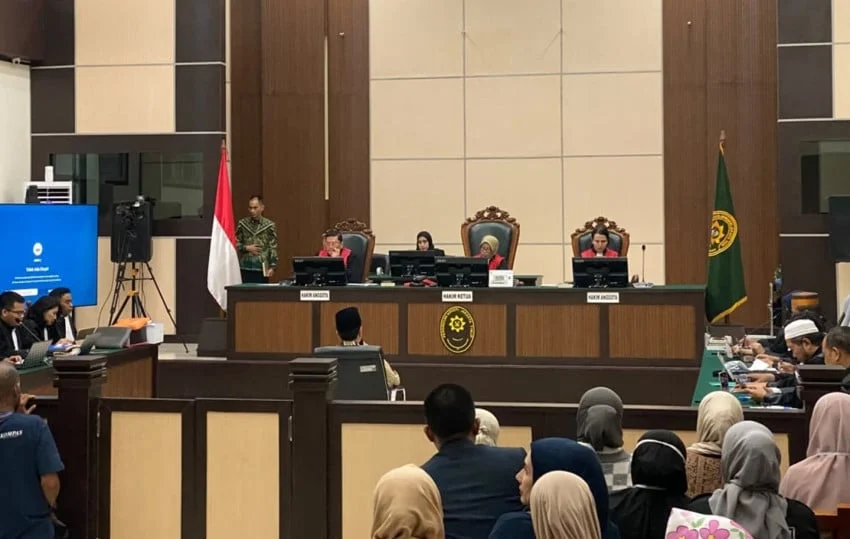
The courtroom atmosphere surrounding the ongoing legal challenge regarding the academic credentials of the seventh President of the Republic of Indonesia, Joko Widodo (Jokowi), reached a boiling point during the latest session in Jakarta. Tensions escalated significantly when representatives for the plaintiff, associated with the activist known as Dokter Tifa, engaged in a heated dispute with the Jaksa Penuntut Umum (JPU) and the presiding panel of judges. The focal point of the contention was the accessibility and handling of forensic laboratory results concerning the authenticity of the former President’s educational documents, a matter that has become the centerpiece of this high-profile litigation.
The Spark of Conflict: Forensic Evidence Handling
The confrontation began when the Public Prosecutor (JPU) presented findings from a forensic laboratory analysis. The prosecution stated that, based on their examination, the ijazah (educational diploma) belonging to Joko Widodo was verified as identical to the official records. Crucially, the JPU emphasized that the documents presented were categorized as "tools of evidence" (alat bukti) rather than physical "items of evidence" (barang bukti) for the purpose of the current hearing. By making this distinction, the prosecution maintained that they were within their procedural rights to present the findings in the courtroom without necessarily handing over the original forensic files to the opposing counsel immediately.
This interpretation of procedural law was met with immediate, vocal opposition from the legal team representing Dokter Tifa. The plaintiffs argued that the denial of direct access to these forensic documents hindered their ability to provide an effective rebuttal or perform an independent verification of the claims. The resulting protest created a chaotic scene in the courtroom, prompting the presiding judge to raise their voice in an attempt to restore order and remind all parties of the established courtroom decorum.
Contextual Background of the Diploma Dispute
The legitimacy of Joko Widodo’s educational history, specifically his undergraduate degree from Gadjah Mada University (UGM), has been a recurring theme in political discourse for years. Despite multiple confirmations from the university administration and the release of original documents by the former President himself, persistent allegations—often referred to as the "Jokowi Ijazah Case"—have periodically resurfaced in both political arenas and judicial settings.
Dokter Tifa, a prominent critic, has been at the forefront of these challenges, consistently questioning the authenticity of the diploma through public statements and legal filings. The current litigation represents a culmination of these efforts, where the legal team seeks to force a forensic audit that they hope will validate their claims. For the judiciary, the challenge lies in balancing the rights of the plaintiffs to access information against the procedural rules of evidence and the need to prevent the court from becoming a forum for unsubstantiated claims.
Chronology of the Current Legal Proceedings
The trajectory of this case has been marked by repeated delays and procedural disagreements. Earlier in the proceedings, the court had already seen friction between the legal teams. In a previous session, the legal counsel for Dokter Tifa filed a protest regarding the limitations placed on the time allowed to question witnesses, including the former President himself. These time constraints, imposed by the court to maintain efficiency, were interpreted by the plaintiffs as an infringement on their ability to thoroughly cross-examine the validity of the testimony provided.
The sequence of events leading to the most recent eruption includes:

- Initial Filing: The plaintiff filed a lawsuit questioning the authenticity of the diploma, citing discrepancies in physical characteristics.
- Forensic Examination: The court permitted a forensic review of the documents, which resulted in the findings currently under dispute.
- The Hearing Session: The JPU attempted to introduce the forensic report, leading to the standoff regarding the "tools of evidence" status.
- Judge’s Intervention: The presiding judge utilized their authority to maintain order, calling for a pause to address the procedural objections raised by the plaintiff’s counsel.
Legal and Procedural Analysis
From a legal standpoint, the term "alat bukti" (tools of evidence) versus "barang bukti" (physical evidence) carries significant weight in Indonesian criminal and civil procedure. In many instances, the prosecution is permitted to display information derived from forensic tests to substantiate their arguments without needing to surrender the original evidence files to the defense team during the presentation phase. However, defense teams frequently argue that "equality of arms"—a principle of fair trial—demands that they have equal access to the materials used against their clients to prepare a proper defense.
Legal experts observing the case suggest that the judge’s frustration stems from the repetitive nature of these objections. In many high-stakes political cases, procedural debates are often used as tactical maneuvers to influence the narrative surrounding the trial, rather than to address substantive legal points. The judge’s high-pitched tone is indicative of a court attempting to navigate a delicate balance between allowing the plaintiff to feel heard and preventing the courtroom from descending into an unproductive political forum.
Broader Implications of the Dispute
The implications of this trial extend beyond the specific documents in question. Firstly, it tests the resilience of Indonesia’s judicial institutions when faced with politically charged allegations involving high-ranking former officials. The outcome of this case will likely serve as a precedent for how the judiciary handles challenges to the credentials of public officials in the future.
Secondly, the case highlights the tension between the digital-era discourse, where allegations spread rapidly through social media, and the rigid, formalistic structure of the Indonesian legal system. While Dokter Tifa and her supporters operate largely within the realm of public opinion and digital advocacy, the courtroom demands adherence to strict rules of evidence that do not always align with the expectations of the public.
Furthermore, the persistent nature of this challenge reflects a wider trend of political polarization in Indonesia. By focusing on the personal integrity and credentials of a former head of state, the plaintiffs are tapping into a segment of the population that remains skeptical of the political establishment. Regardless of the final ruling, the mere fact that these proceedings have reached the courtroom ensures that the narrative will continue to circulate, potentially influencing public perception of institutional integrity.
Expert Perspectives and Official Reactions
While the JPU has remained firm on their procedural stance, legal observers have noted that the court will eventually need to provide a formal ruling on the request for document access to prevent further disruptions. If the court denies access, the plaintiff may use this as a basis for appeals, potentially prolonging the case for months. Conversely, if the court grants access, it would require the JPU to disclose sensitive forensic data, which could lead to further debate over the authenticity of those very findings.
As of the latest reports, there has been no official statement from the former President’s legal representatives beyond their initial defense. However, given the intensity of the latest hearing, it is expected that the court will take measures to tighten security and implement stricter rules for future sessions to ensure that the proceedings can conclude without further escalation.
Conclusion
The courtroom drama surrounding the diploma of former President Joko Widodo is far from resolved. The clash over forensic evidence is emblematic of a larger struggle between the legal system’s desire for finality and the plaintiff’s desire for an exhaustive, public-facing inquiry. As the court moves into the next phase of the trial, the primary challenge for the judiciary will be to maintain the appearance of impartiality while preventing procedural technicalities from overshadowing the core legal questions. The public remains divided, with the proceedings serving as a microcosm of the deeper political fractures within the nation. The coming weeks will be critical in determining whether the court can navigate these tensions or if the legal process will continue to be punctuated by the kind of volatility witnessed in the recent hearing.
