The Indonesian government faces a critical juncture in reforming its national taxation framework as policymakers grapple with an escalating tension between safeguarding state revenue targets and preserving the working capital of domestic business entities. Amid fluctuations in value-added tax (VAT) administration, export performances, and investment trajectories, the management of tax restitution—commonly known as tax refunds—has emerged as a central flashpoint in contemporary economic discourse. To untangle this complex policy challenge, the Program Vokasi and the Faculty of Economics and Business at Universitas Indonesia (PPA FEB UI) have formally proposed a comprehensive package consisting of seven strategic policy recommendations designed to overhaul the national tax restitution mechanism.
The Fiscal Dilemma: Balancing State Budgets and Corporate Cash Flows
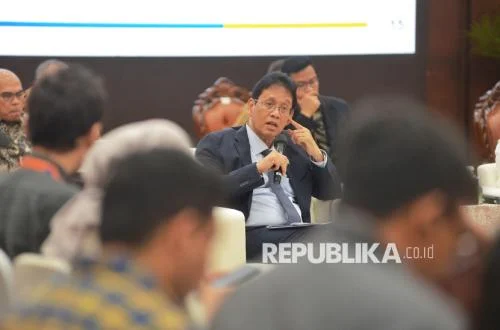
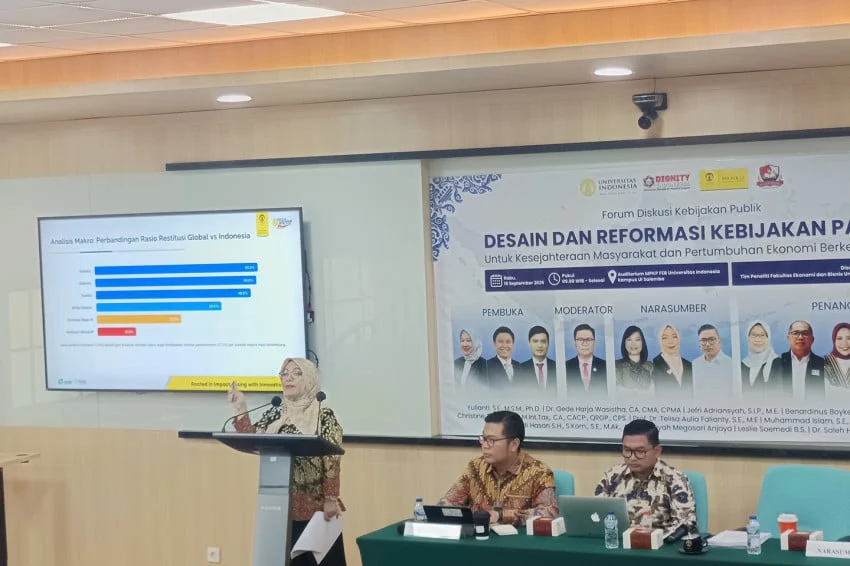
The core of the issue lies in a severe structural dilemma: maintaining adequate fiscal space for state expenditures while preventing corporate liquidity crunches caused by delayed tax refunds. During a public discussion held at the Salemba campus of Universitas Indonesia, prominent economist and FEB UI Professor Telisa Aulia Falianty highlighted the gravity of the situation.
"From this study itself, we are indeed facing a very heavy dilemma, which is the dilemma between fiscal space and business liquidity," Telisa stated.
This friction is driven by a complex interplay of macroeconomic indicators, including shifting economic structures, investment velocities, export fluctuations, taxpayer compliance levels, and the inherent design and administrative capacity of the national VAT system. When tax restitutions—which represent legally owed overpayments by corporations—are delayed due to stringent state budget constraints or administrative bottlenecks, businesses face severe disruptions to their operational cash flows. This friction disproportionately impacts compliant taxpayers who rely on timely refunds to sustain daily operations, pay suppliers, and service commercial debts.
The Chronology and Background of the Tax Restitution Crisis
The debate surrounding delayed tax refunds is not new, but it has gained renewed urgency following recent fiscal pressures. Over the past several fiscal cycles, tightening state budgets have collided with a surge in corporate applications for excess tax payment returns. As the government aggressively pursues ambitious state revenue collection targets to finance national development and social safety net programs, the processing times for tax restitutions have frequently been prolonged.
The timeline of this unfolding crisis highlights growing anxiety among business associations. Industrial stakeholders, including the Indonesian Chamber of Commerce and Industry (Kadin), have repeatedly voiced concerns over how delayed tax disbursements severely constrain corporate cash reserves. With billions—and potentially tens of trillions—of rupiah in legitimate business capital tied up in administrative verification processes, companies find themselves seeking expensive alternative financing to maintain operations. The culmination of these pressures prompted academic institutions like FEB UI to initiate rigorous empirical studies to map out actionable reform pathways.
Seven Risk-Based Policy Recommendations for Tax Reform
To resolve the protracted delays without compromising state revenue integrity, Prof. Telisa Aulia Falianty, speaking on behalf of the research team, introduced a risk-based management approach. The proposed framework advocates for tailored, case-by-case, sectoral, and individual evaluations of tax refund requests. Rather than applying a blanket bureaucratic slowdown, the system would leverage sophisticated risk profiling to determine targeted, measurable processing timelines aligned with the taxpayer’s compliance history.
The core of the proposed reform centers on transparency and operational efficiency within the Directorate General of Taxes (DGT) under the Ministry of Finance. The key pillars of the recommendations include:
- Risk-Tiered Service Level Agreements (SLAs): Establishing transparent, legally mandated processing windows determined by taxpayer risk profiles. Low-risk, highly compliant taxpayers would enjoy expedited processing, while high-risk applications would undergo rigorous yet strictly time-bound audits.
- Enhanced Administrative Transparency and Online Tracking: Implementing digital tracking systems that empower taxpayers to monitor the real-time status of their restitution files, thereby eliminating information asymmetries and reducing opportunities for administrative friction.
- Publication of Backlog Statistics: Regularly disclosing data on accumulated restitution backlogs to maintain institutional accountability and drive internal performance improvements within tax offices.
- Capacity Building and Human Resource Expansion: Significantly increasing the number of active tax auditors and administrative personnel dedicated to processing refund applications to match the rising volume of requests.
- Technological Integration via Coretax: Accelerating the institutionalization of advanced IT infrastructure, notably the Coretax system, to streamline data synchronization across government bodies.
- Mitigation of Fraudulent Tax Invoices: Deploying advanced electronic data integration to close loopholes exploited by bad actors, such as fictitious tax invoices (faktur pajak bodong), invoice value manipulation (under-invoicing), fraudulent reporting, and transactions not based on underlying economic realities (transaksi bukan berdasarkan faktur sebenarnya or TBTS).
- Cross-Sectoral Regulatory Harmonization: Aligning fiscal policies with investment and trade strategies to ensure that tax administration acts as an enabler of economic growth rather than an administrative bottleneck.
Technological Modernization and the Role of the Coretax System
A cornerstone of the PPA FEB UI recommendations is the comprehensive digital transformation of the tax administration apparatus. The ongoing implementation of the core tax administration system, widely known as Coretax, is viewed by economic experts as an indispensable instrument for modernizing Indonesia’s tax architecture.
In the past, manual verification procedures and fragmented databases created vulnerabilities that could be exploited through fraudulent practices. By integrating electronic data across multiple state platforms, the DGT can verify transaction authenticity with unprecedented speed and accuracy. This technological leap is expected to sharply differentiate between malicious tax evaders and legitimate businesses awaiting valid refunds. Consequently, honest taxpayers can anticipate faster disbursements, while enforcement agencies can direct their investigative resources toward genuine anomalies and illicit schemes.
Broader Economic Implications and Future Outlook
The implications of successfully reforming the tax restitution system extend far beyond corporate balance sheets; they directly influence Indonesia’s macro-investment climate and overall economic resilience. In an era of intense global competition for foreign and domestic capital, the ease of doing business—including the predictability and speed of tax administration—serves as a critical differentiator for investors.
When tax refunds are trapped within bureaucratic gridlock, the resulting liquidity squeeze forces companies to curtail expansion plans, delay hiring initiatives, or pass increased financial burdens down the supply chain. Conversely, a streamlined, risk-managed restitution framework injects vital liquidity directly back into the private sector, stimulating productive economic activity, reinforcing investor confidence, and supporting broader fiscal sustainability goals.
As policymakers evaluate the empirical findings and recommendations presented by PPA FEB UI, the challenge ahead lies in execution. Bridging the gap between strict state revenue protection and flexible corporate liquidity management will require sustained political will, continuous technological upgrades within the Ministry of Finance, and a collaborative partnership between the government and the business community. Through the disciplined implementation of these seven recommendations, Indonesia stands to build a more transparent, equitable, and resilient tax ecosystem capable of supporting sustainable long-term economic growth.