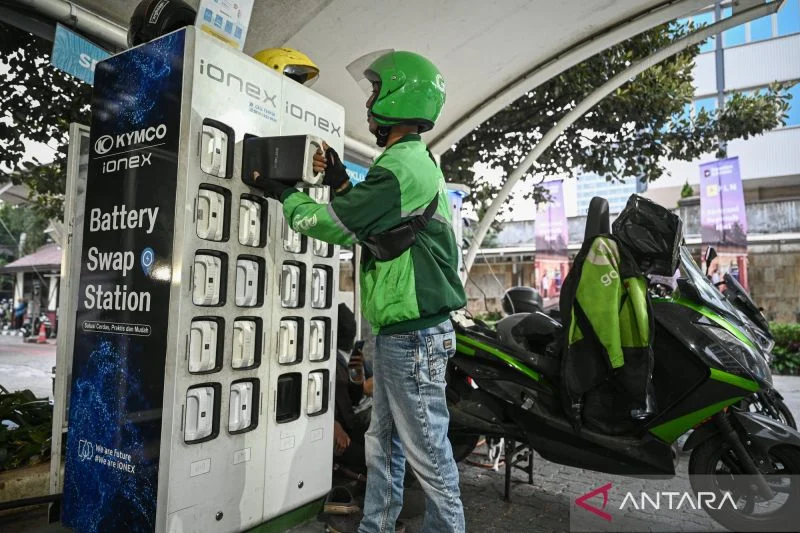
The landscape of personal mobility in Indonesia is undergoing a structural transformation, propelled by a national push toward green energy, carbon neutrality, and a reduction in fossil fuel dependency. At the heart of this evolution is the rapid adoption of electric motorcycles (EV bikes), a sector that has increasingly captured the attention of urban commuters, logistics providers, and government policymakers alike. To address one of the most significant barriers to entry—the high initial acquisition cost driven primarily by the price of lithium-ion battery packs—automotive manufacturers and energy innovators have rolled out innovative ownership models. Among these, the Battery-as-a-Service (BaaS) or battery rental scheme has emerged as a game-changing commercial strategy, allowing consumers to purchase an electric motorcycle chassis at a significantly reduced upfront price while subscribing to a monthly battery rental plan.
As of September 2026, this flexible ownership model has matured considerably across the Indonesian archipelago. Tariffs for battery subscriptions now range dynamically from Rp84,000 to Rp250,000 per month, depending heavily on the brand, vehicle model, the number of batteries required, and the specific terms of the service agreement. This pricing flexibility has not only broadened the consumer base for electric two-wheelers but has also sparked fierce competition among major industry players seeking to capture market share in Southeast Asia’s largest economy.
Background Context and Market Evolution
The introduction of battery rental schemes in Indonesia did not happen in a vacuum. Over the past several years, the Indonesian government has aggressively pursued policies designed to accelerate vehicle electrification. From targeted consumer subsidies and national industrial roadmaps to aggressive calls from legislative bodies such as the DPR RI to fast-track the operationalization of a domestic national battery industry, the ecosystem has been primed for rapid expansion.
Historically, the upfront cost of purchasing an electric motorcycle with the battery included acted as a primary deterrent for price-sensitive Indonesian consumers. Lithium-ion batteries represent up to 40% to 50% of the total manufacturing cost of an electric vehicle. By decoupling the battery from the vehicle purchase price, manufacturers effectively bridged the affordability gap. This mirrors global trends in EV financing, where BaaS models have successfully driven adoption in markets like China and parts of Europe.
Furthermore, the Indonesian Ministry of Industry has reported a soaring national population of electric motorcycles, crossing vital milestones that heavily support the government’s broader green ecosystem objectives. Concurrently, academic and technological institutions, led by figures in the Ministry of Higher Education, Science, and Technology (Mendiktisaintek), have continuously championed vehicle conversion programs to curb heavy state expenditures on energy imports. Within this supportive macroeconomic and regulatory framework, private enterprises have stepped forward with tailored battery rental frameworks to capture a populace eager for affordable, sustainable mobility solutions.
Brand-by-Brand Breakdown of Battery Rental Schemes in 2026
To understand how these commercial frameworks operate on the ground, a comparative analysis of the major automotive brands offering battery subscription models reveals distinct operational strategies and pricing structures.
1. VinFast: Disrupting the Market with Low Entry Barriers
Vietnamese electric vehicle titan VinFast has made aggressive inroads into the Indonesian market by implementing some of the most competitive subscription rates available. The company currently offers its specialized battery subscription program across three prominent urban electric motorcycle models: the Evo, the Feliz II, and the Viper.
Under the VinFast model, consumers who purchase any of these vehicles without owning the battery outright can opt into a flexible monthly subscription. The tariff is structured around the physical volume of power storage units utilized. For models running on a single battery, the monthly subscription fee is set at a highly accessible Rp84,000. For riders requiring enhanced range or performance supported by a two-battery configuration, the rate adjusts to Rp144,000 per month.
Technically, the Evo, Feliz II, and Viper are designed with dual-battery slots neatly compartmented beneath the vehicle seat, fully compatible with swap-and-go infrastructure. By keeping the baseline subscription fee at just Rp84,000, VinFast currently holds the position of offering the lowest entry-level monthly battery overhead in the formalized commercial market, driving significant adoption among price-conscious daily commuters and gig-economy delivery drivers.
2. Polytron: Domestic Manufacturing Coupled with Battery Health Guarantees
Local powerhouse Polytron has similarly embraced the subscription model to bolster its footprint in the national electric two-wheeler market. Polytron’s structured offerings cover several of its flagship models, each tailored to different segments of the riding public.
For the Polytron Fox 200, the monthly battery rental fee is established at Rp125,000. Meanwhile, higher-performance models such as the Fox 500 and the popular Fox R incur a standard monthly rental charge of Rp200,000. Polytron management has consistently emphasized that these programs are engineered specifically to lower the friction of initial capital expenditure, allowing everyday buyers to transition smoothly from internal combustion engine (ICE) motorcycles to electric alternatives.
Crucially, Polytron addresses one of the primary consumer anxieties associated with long-term battery usage: degradation. Under Polytron’s program guidelines, the company guarantees that the leased battery will be replaced free of charge if its operational capacity drops below 85 percent under normal usage conditions. This structural reassurance mitigates concerns over the long-term viability and performance longevity of leased energy storage units.
3. ALVA: Comprehensive Subscriptions via the BEBAS Program
ALVA, a prominent premium electric lifestyle vehicle brand in Indonesia, approaches the market through its proprietary BEBAS program, an acronym translating to Berlangganan Baterai Sewa (Rented Battery Subscription). This program encompasses some of the brand’s most advanced offerings, notably the ALVA N3 and the sporty ALVA CERVO.
The subscription mechanics for ALVA vehicles are tiered based on hardware requirements. For the ALVA N3, consumers utilizing a single-battery configuration pay a monthly rental fee of Rp150,000. For users requiring a dual-battery setup on the N3, the rate increases to Rp250,000 per month. Similarly, the high-performance ALVA CERVO, which natively utilizes a dual-battery architecture, carries a flat monthly subscription rate of Rp250,000. Notably, these figures are structured to be all-inclusive of prevailing government taxes in accordance with corporate service guidelines, ensuring transparency for the consumer.
Through the BEBAS initiative, ALVA ensures that the battery remains an asset maintained and guaranteed under the service umbrella, liberating the consumer from the psychological and financial burden of eventual out-of-pocket battery replacement costs.
Comparative Overview of Monthly Tariffs
To crystallize the financial commitments required across different manufacturers, the current market rates as of September 2026 can be structured as follows:
- VinFast (Evo, Feliz II, Viper): Rp84,000 (1 battery) / Rp144,000 (2 batteries) per month.
- Polytron (Fox 200): Rp125,000 per month.
- Polytron (Fox R & Fox 500): Rp200,000 per month.
- ALVA N3: Rp150,000 (1 battery) / Rp250,000 (2 batteries) per month.
- ALVA CERVO: Rp250,000 (2 batteries) per month.
Industry analysts note that while these subscription fees significantly deflate the point-of-sale price of the motorcycle chassis, they represent an ongoing operational expenditure. Consumers must carefully calculate these recurring overheads alongside standard vehicle ownership costs—such as home electricity charging tariffs, regular mechanical servicing, vehicle registration taxes (PKB), and third-party insurance—to determine the total cost of ownership (TCO) over a multi-year horizon.
Strategic Implications and Consumer Considerations
The proliferation of battery subscription models carries profound economic and environmental implications for Indonesia. From a macroeconomic perspective, BaaS models align closely with national strategic goals. By accelerating the transition to electric mobility, Indonesia can systematically reduce its reliance on subsidized fossil fuel imports, improve urban air quality in dense metropolitan areas like Jakarta, and fortify its burgeoning green economy.
Furthermore, legislative support from bodies such as the House of Representatives (DPR RI) in pushing for local battery processing plants suggests that subscription models may eventually integrate deeper into domestic supply chains. As raw materials like nickel are mined, refined, and manufactured into battery packs locally, the operational costs of these rental schemes could experience further stabilization or downward adjustments.
However, consumers must approach these schemes with a thorough understanding of the fine print. While the reduction in upfront costs is undeniable, the long-term financial arithmetic depends heavily on individual riding habits. High-mileage riders—such as commercial couriers, ride-hailing drivers, and logistics personnel—may find subscription models exceptionally lucrative due to the guaranteed maintenance and replacement of degraded cells. Conversely, low-mileage recreational riders should calculate whether the cumulative monthly subscription fees over a five-to-seven-year vehicle lifecycle might eventually exceed the outright purchase price of an owned battery pack.
Additionally, variations in swap infrastructure, network availability, cancellation policies, and contractual penalties for exceeding mileage caps or damaging hardware require careful scrutiny. As the market continues to evolve through the latter half of the decade, transparency from manufacturers regarding battery health metrics, end-of-life recycling protocols, and contract flexibility will remain critical factors determining consumer trust.
Ultimately, with monthly tariffs ranging tightly between Rp84,000 and Rp250,000, Indonesia’s electric motorcycle market has successfully lowered the barrier to sustainable transportation. By shifting the paradigm from asset ownership to service utilization, manufacturers have unlocked a viable pathway for millions of Indonesians to participate in the green energy transition without compromising their immediate financial liquidity.