
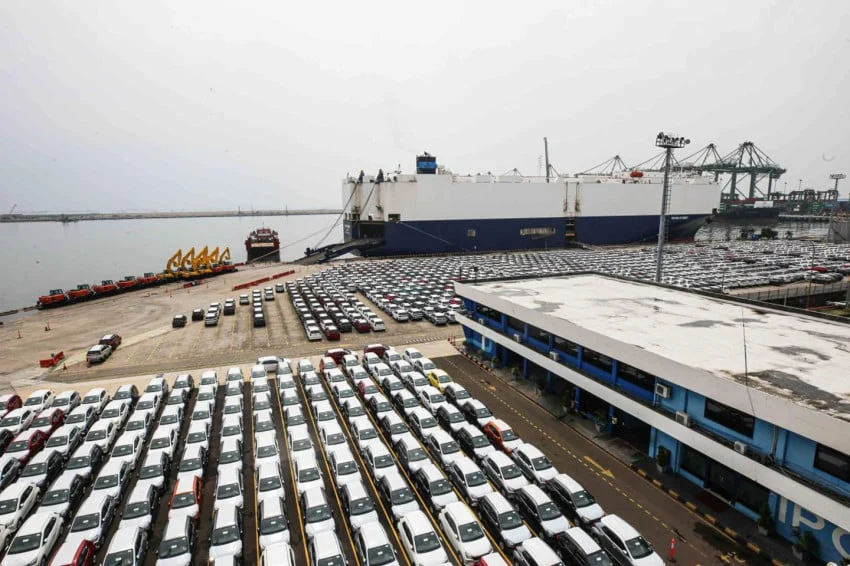
The Indonesian government is aggressively leveraging its network of 25 international trade agreements, spanning both Free Trade Agreements (FTA) and Comprehensive Economic Partnership Agreements (CEPA), to fortify the nation’s industrial standing and aggressively expand the global reach of its automotive manufacturing sector. This strategic pivot comes at a critical juncture for the Indonesian economy, as the nation seeks to transition from a regional manufacturing hub to a central pillar in the global automotive supply chain.
By systematically utilizing these diplomatic and economic frameworks, Jakarta aims to eliminate tariff barriers, harmonize technical standards, and facilitate smoother cross-border logistics for finished vehicles and automotive components. The initiative is not merely about volume; it is a calculated effort to integrate Indonesian production capabilities into the high-value segments of the global market, ensuring that "Made in Indonesia" becomes synonymous with quality and reliability.
The Strategic Importance of Trade Agreements
For an emerging economy like Indonesia, trade agreements serve as the lifeblood of industrial expansion. The 25 active agreements currently under government oversight represent a diverse portfolio of markets, ranging from neighboring ASEAN partners to traditional trade allies in Japan and the emerging corridors of the European Union.
Susiwijono Moegiarso, Secretary of the Coordinating Ministry for Economic Affairs, emphasized that these agreements are not static documents but dynamic tools designed to enhance industrial competitiveness. Following a series of high-level business engagements in Nagoya, Japan—a global epicenter of automotive innovation—Moegiarso highlighted that the future of Indonesia’s industrial sector relies on a trifecta of advancements: state-of-the-art technological mastery, the cultivation of a highly skilled workforce, and the establishment of an ironclad, resilient supply chain ecosystem.
This holistic approach is intended to mitigate risks associated with global market volatility. By diversifying export destinations, Indonesia reduces its reliance on a handful of markets, thereby insulating its domestic automotive industry from localized economic downturns.
The IEU-CEPA: A Gateway to European Markets
Perhaps the most significant development in this timeline is the Indonesia-European Union Comprehensive Economic Partnership Agreement (IEU-CEPA). This agreement has long been a focal point for trade negotiators, representing a gateway to one of the world’s most lucrative and stringent automotive markets.
According to the official schedule, the ratification process is set to commence in November 2026. This is a critical milestone, as it paves the way for a full implementation targeted for January 2027. The IEU-CEPA is expected to catalyze a shift in Indonesia’s export profile, potentially allowing for higher-value automotive parts and electric vehicle (EV) components to enter European markets under preferential tariff arrangements.
The timeline for the IEU-CEPA is as follows:
- Negotiation Phase: Finalization of complex technical chapters.
- November 2026: Commencement of the formal ratification process.
- January 2027: Projected implementation and commencement of trade benefits.
This timeline is deliberately aligned with the government’s 2027 economic outlook, which projects global growth to remain moderate, hovering between 3.2% and 3.3%. By finalizing these agreements, Indonesia is positioning itself to capture market share precisely when global demand is expected to stabilize and potentially surge.
Strengthening the Automotive Manufacturing Ecosystem
The success of these trade agreements hinges on the domestic strength of the automotive industry. Recent data underscores a remarkable, albeit quiet, success story: Indonesia has successfully exported 518,212 vehicles, with a significant 89% of these units manufactured by Japanese-affiliated firms operating within the country.

This statistic is telling. It demonstrates that Indonesia has successfully cultivated an environment where global automotive giants—particularly those from Japan—feel confident enough to use the archipelago as a primary production base for global distribution. The goal now is to leverage this foundation to attract further investment, potentially diversifying the manufacturing base to include European and South Korean automotive interests.
However, the competition is fierce. China’s rapid rise as a global automotive powerhouse, threatening to displace traditional leaders like Japan, serves as a cautionary tale and a competitive benchmark. Indonesia’s strategy, therefore, focuses on high-quality production standards that meet the rigorous requirements of both the European Union and the broader international market.
Economic Implications and Future Outlook
The broader impact of this trade-led strategy is twofold. First, it serves to balance Indonesia’s trade account by increasing the share of high-value manufactured exports relative to raw commodities. Second, it encourages the transfer of technology and technical expertise, which is essential for the long-term sustainability of the domestic workforce.
Analysts note that the integration into global value chains is not without challenges. It requires constant updates to regulatory frameworks to ensure that local industries remain compliant with international environmental and safety standards. Furthermore, the reliance on trade agreements necessitates a proactive stance in trade diplomacy, ensuring that Indonesia’s interests are represented in multilateral forums such as the WTO and various regional blocs.
The government’s decision to focus on 25 specific agreements is a testament to a targeted, rather than scattergun, approach. By prioritizing regions with high consumption potential, Indonesia is ensuring that its industrial policy remains aligned with real-world market demands.
Fact-Based Analysis of the Automotive Sector
As of the third quarter of 2026, the Indonesian automotive sector has demonstrated resilience. The sector is currently serving two distinct functions:
- Domestic Utility: Providing a robust supply of vehicles to meet the growing demands of a burgeoning middle-class population in Southeast Asia’s largest economy.
- Export Hub: Acting as a production base for over 100 countries. This dual-track strategy ensures that even when domestic consumption experiences cyclical cooling, the export sector provides a necessary buffer for manufacturing plants to maintain high capacity utilization rates.
The reliance on Japanese manufacturers is a historical legacy that is now evolving. The current strategy aims to integrate more local content into these vehicles, moving beyond simple assembly to higher-value-added processes such as engine manufacturing, electronics integration, and, eventually, battery production for electric vehicles.
Conclusion: A Path Toward Global Integration
The strategy of utilizing 25 international trade agreements represents a sophisticated evolution in Indonesia’s economic diplomacy. By moving beyond simple trade, the government is fostering an environment where Indonesian industries are forced to compete on a global scale, thereby driving innovation and efficiency.
The upcoming implementation of the IEU-CEPA in 2027 is the next major hurdle and opportunity. If successfully executed, it will provide the blueprint for future agreements and cement Indonesia’s role as a vital cog in the machinery of global trade. The focus on technology, human capital, and supply chain integrity is not just a policy preference; it is a necessity for a nation that aspires to be a top-tier global automotive exporter by the end of the decade.
As the world watches the 2027 economic horizon, Indonesia stands at the threshold of a new era. With a clear roadmap, a focus on high-value sectors, and a commitment to international cooperation, the nation is well-prepared to navigate the complexities of the global market and secure its place as a cornerstone of the future automotive industry. The next 18 months will be critical, as the administrative efforts of today translate into the tangible economic growth of tomorrow.
