
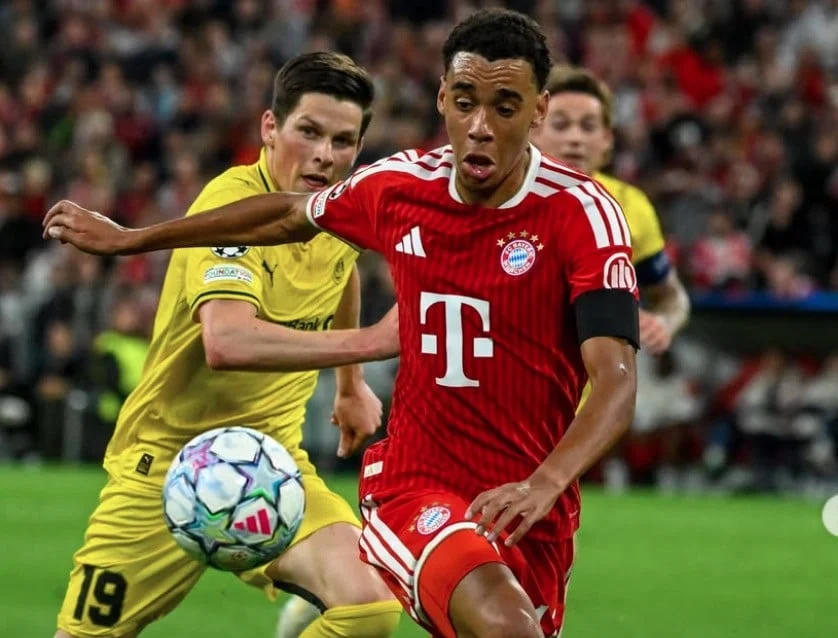
The Allianz Arena bore witness to a commanding display of offensive football on Wednesday evening as Bayern Munich secured their first victory of the current UEFA Champions League campaign, dismantling Norwegian champions FK Bodo/Glimt with a clinical 5-0 scoreline. While the first half presented a tactical stalemate, the German giants transformed their dominance into a relentless assault in the second period, signaling their intent to remain serious contenders for the European crown.
A Tale of Two Halves
The opening 45 minutes suggested a potential upset was brewing in Munich. FK Bodo/Glimt, known for their disciplined low-block and tactical rigidity, executed their game plan with precision. Manager Kjetil Knutsen set up his side to congest the central channels, effectively neutralizing the creative influence of Jamal Musiala and Michael Olise. Bayern Munich controlled possession, dictating the tempo of the game, yet they lacked the final clinical edge required to dismantle the Norwegian defensive structure.
The halftime whistle saw the visitors leave the pitch with their heads held high, having frustrated the Bundesliga heavyweights. However, the tactical adjustment made by the Bayern coaching staff during the interval proved decisive. By increasing the width of their attack and accelerating the transition speed, Bayern forced the Bodo/Glimt defense to shift horizontally, eventually creating the gaps that would prove fatal for the visitors.
The Second-Half Avalanche
The deadlock was shattered just 104 seconds into the second half. A blocked attempt by Harry Kane fell fortuitously into the path of Jamal Musiala. The young playmaker, demonstrating composure beyond his years, unleashed a precise drive into the far corner of the net, leaving goalkeeper Julian Lund motionless. This goal served as a catalyst, dismantling the defensive resolve that had served the visitors so well in the first half.
As the hour mark approached, Harry Kane doubled the lead. A perfectly weighted free-kick from Michael Olise found the English striker, who rose above the defense to power a header beyond the reach of Lund. With the score at 2-0, the floodgates opened. Alphonso Davies, marauding from his left-back position, added a third with a thunderous left-footed strike from the edge of the penalty area that rattled the net, effectively extinguishing any hope of a Bodo/Glimt comeback.
The misery for the Norwegian side was compounded in the final ten minutes. Michael Olise, continuing his stellar form, scored a sublime goal from 20 meters out, curling the ball into the top left corner. Moments later, the situation worsened for Bodo/Glimt when defender Odin Bjortuft was shown a straight red card for a professional foul on a clear goal-scoring opportunity. Capitalizing on the numerical advantage, Olise added his second and Bayern’s fifth of the night, sealing a comprehensive victory.
Statistical Breakdown and Match Context
The match statistics highlight the overwhelming disparity between the two sides as the game progressed. Bayern Munich finished the match with 68% possession and recorded 22 shots, 11 of which were on target. In contrast, FK Bodo/Glimt struggled to maintain forward momentum, failing to register a single shot on target throughout the 90 minutes.
This fixture represents a significant moment for Bayern Munich, who had experienced a stuttering start to their Champions League group phase. By securing three points and significantly improving their goal difference, the Bavarians have stabilized their position in the league table. For Bodo/Glimt, the result serves as a sobering introduction to the elite level of European competition, highlighting the vast gap in resources and experience between a domestic champion from a smaller league and a perennial European powerhouse.
Tactical Implications and Official Commentary
Speaking in the post-match press conference, the Bayern Munich manager emphasized the importance of patience. "We knew that Bodo/Glimt would defend with great discipline. In the first half, we were perhaps too stationary. We adjusted our movement patterns at halftime, and the early goal changed the dynamic of the match entirely. It is vital to show this level of ruthlessness in the Champions League," the manager noted.
On the other side of the tunnel, Kjetil Knutsen acknowledged the difficulty of the task. "We played a very good first half, but against a team of Bayern’s quality, one small lapse in concentration is punished immediately. Once we conceded the first goal, we had to open up, and that played into their hands. It is a harsh lesson, but one that our players will learn from as we continue our journey in this competition."
The Broader Impact of the Result
This match provides a broader insight into the current state of the UEFA Champions League under the new league phase format. The inclusion of smaller, high-performing domestic clubs against traditional European titans often produces these lopsided results, which serve as a litmus test for the parity of the competition.
For Bayern Munich, the victory acts as a psychological boost. After a period of domestic and European instability, the squad appears to be finding a rhythm under their current tactical setup. The partnership between Kane and Olise is beginning to yield consistent results, providing a focal point for the attack that is difficult for even the most disciplined defenses to contain.
Furthermore, the goal difference achieved in this match could prove critical as the league table takes shape. With teams vying for automatic qualification spots in the round of 16, every goal counts. Bayern’s five-goal cushion places them in a strong position, allowing them to approach their next few fixtures with a degree of breathing room.
Looking Ahead
As the tournament progresses, the challenge for Bayern Munich will be to maintain this intensity against more formidable opponents. While the win against Bodo/Glimt was convincing, tougher tests await in the coming weeks. The ability to break down low blocks will be a recurring theme for the team throughout the season, and the tactical flexibility shown in this game will be an essential asset.
For Bodo/Glimt, the focus now shifts to domestic recovery and preparing for their next European encounter. Despite the heavy defeat, the club remains an ambitious project. Their ability to remain organized for 45 minutes against one of the world’s best teams provides a foundation upon which they can build. The coaching staff will likely look to integrate more defensive rotation and faster counter-attacking transitions to avoid the fatigue that clearly hampered them in the final quarter of the match in Munich.
In summary, this fixture was a clinical demonstration of why Bayern Munich remains a feared entity in European football. It was a match defined by patience, technical superiority, and the ability to capitalize on defensive errors—the hallmarks of a true Champions League contender. As the competition moves into the subsequent matchdays, all eyes will be on how Bayern continues to build on this momentum and whether they can sustain this level of offensive output against the continent’s most elite defensive units. The Allianz Arena, for one night, reminded the footballing world of the lethal efficiency that has defined the club’s European identity for decades.
