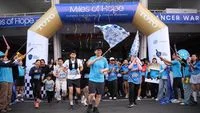
Jakarta, Indonesia — In an inspiring convergence of athleticism, civic engagement, and profound social responsibility, thousands of runners, public figures, and community groups gathered at the Gelora Bung Karno (GBK) Sports Complex in Jakarta for Miles of Hope Vol. 2: Running for Humanity and Cancer Warriors. Operating under the resonant banner of "One Run. One Home. Endless Hope," the event transcended traditional athletic gatherings to function as a large-scale philanthropic engine. By transforming physical endurance into tangible financial support, the initiative successfully raised a preliminary total of Rp315,225,000 to bolster the vital infrastructure required by young cancer patients and vulnerable street children in Indonesia’s capital.
The meticulous design of the charity run fostered an environment where every single stride held immediate economic value for disadvantaged communities. Through a distance-based donation model championed by the primary corporate sponsor, TOTO, every kilometer conquered by registered participants was mathematically converted into a financial contribution of Rp15,000. This innovative mechanism not only incentivized high physical participation but also directly aligned individual effort with philanthropic output, creating a powerful psychological and material connection between the runners and the beneficiaries they sought to support.
Event Mechanics and Chronology of the Day
The morning air at Pintu Merah, GBK Stadion Utama, hummed with energy long before the official flag-off. Participants ranging from seasoned marathoners and casual joggers to prominent social media influencers and families converged on the venue, united by a singular humanitarian objective. The chronology of the day was meticulously structured to maximize both physical engagement and community outreach.
The event commenced in the early morning hours with dynamic group warm-ups, transitioning seamlessly into the flagship distance-based run. As participants navigated the designated routes around the iconic sporting precinct, marshals and digital tracking systems meticulously recorded cumulative distances. Concurrently, non-running attendees and participants finishing their routes engaged in complementary wellness activities, including high-energy Zumba sessions and restorative yoga classes designed to promote holistic health alongside charitable giving.
Educational booths and social exhibition areas dotted the venue perimeter, providing critical awareness regarding pediatric oncology, early detection signs of childhood cancers, and the systemic challenges faced by out-of-school and street youth in urban centers like Jakarta. According to preliminary quick count data tabulated at the venue by organizers, the collective endurance of the running community translated into a monumental milestone: an accumulated donation pool exceeding Rp315 million. This financial injection is slated for immediate deployment toward the Cakra Abhipraya Responsif Humanitarian House project.
Strategic Allocation of Funds and Institutional Objectives
The funds secured through Miles of Hope Vol. 2 are earmarked for a comprehensive, multi-layered social welfare facility managed by the Cakra Abhipraya Responsif Foundation. This initiative addresses several compounding crises confronting marginalized demographics in urban Indonesia, specifically focusing on the intersection of pediatric health emergencies and educational poverty.
Putro Anugrah Lindu, Chairman of the Cakra Abhipraya Responsif Foundation, emphasized during the event that the establishment of this integrated facility is not merely a logistical upgrade, but an urgent humanitarian necessity. He detailed the acute hardships faced by low-income families traveling from regional provinces to Jakarta for specialized medical treatments. For many indigent families, securing a viable diagnosis at major medical centers such as Cipto Mangunkusumo Hospital (RSCM) is only the beginning of an arduous journey complicated by exorbitant urban accommodation costs and prolonged displacement.
"Many families of young cancer fighters coming from outside the region face severe constraints regarding accommodation, as well as access to clean, habitable living spaces while accompanying prolonged medical treatments in Jakarta," Putro explained. "This Humanitarian House exists to answer that crisis. Through Miles of Hope Vol. 2, we want to prove that public empathy can be actively mobilized into real action through every running step."
The overarching facility is structurally divided into three core pillars designed to address distinct socio-economic vulnerabilities:
- The Pediatric Cancer Shelter: A specialized, clean, and completely free temporary residence designed to accommodate young cancer patients and their immediate caregivers during extended therapeutic regimens, shielding them from the financial ruin of commercial urban lodging.
- The Inclusive Learning Space: A dedicated educational hub aimed at restoring access to foundational learning, literacy programs, and personal development for street children, orphans, and impoverished youth who have fallen through the cracks of the formal educational ecosystem.
- The Humanitarian Community Hub: A collaborative incubator envisioned as a physical and intellectual gathering space for youth organizations, student volunteers, and social entrepreneurs to design, prototype, and execute sustainable grassroots community interventions.
Corporate Partnership and the Role of CSR in Social Equity
The resounding success of Miles of Hope Vol. 2 highlights the evolving landscape of Corporate Social Responsibility (CSR) in Indonesia. Modern philanthropic paradigms increasingly demand active consumer and public participation rather than passive corporate grants. By underwriting the financial conversion of the runners’ mileage, TOTO demonstrated a scalable model of corporate engagement that leverages public enthusiasm to maximize social impact.
Putro formally extended his gratitude to the thousands of participating runners whose sweat equity directly generated the protective safety net for children battling oncological conditions. He also commended the corporate backing that seamlessly bridged the gap between civilian goodwill and institutional execution. This synergy underscores a broader trend within Southeast Asia’s largest economy: private enterprises increasingly recognizing that sustainable brand equity is deeply intertwined with measurable contributions to public health and social equity.
Furthermore, the involvement of diverse community groups and influencers helped amplify the reach of the campaign beyond traditional philanthropic circles. In an era saturated with digital content, physical mobilization events serve as powerful counterweights, transforming online awareness into genuine, sweat-induced solidarity.
Broader Socio-Economic Implications and Future Outlook
Public health experts and social policy analysts observing the event have noted the profound systemic implications of grassroots-led humanitarian infrastructure. Pediatric cancer survival rates in developing nations are frequently compromised not solely by the virulence of the disease or lack of clinical expertise, but by treatment abandonment. Financial toxicity—the out-of-pocket costs associated with travel, lodging, and nutritional support—frequently forces impoverished parents to withdraw their children from potentially curative protocols.
By providing free, dignified temporary housing close to major medical hubs, initiatives like the Cakra Abhipraya Responsif Humanitarian House directly mitigate the risk of treatment abandonment. Simultaneously, the inclusion of educational spaces for street children addresses the cyclical nature of poverty, ensuring that marginalization is combated on both health and educational fronts.
Organizers of Miles of Hope Vol. 2 have expressed optimism that the event will serve as a permanent fixture on Jakarta’s civic calendar, establishing a scalable blueprint for future collaborations between non-profit organizations, the corporate sector, and everyday citizens. As urban centers in Indonesia continue to grapple with economic stratification and healthcare disparities, community-driven models of resource mobilization offer a resilient pathway toward inclusive societal development. Through the simple act of running, thousands of individuals in Jakarta have proven that collective physical momentum can indeed reshape the boundaries of hope and healing for society’s most vulnerable members.