
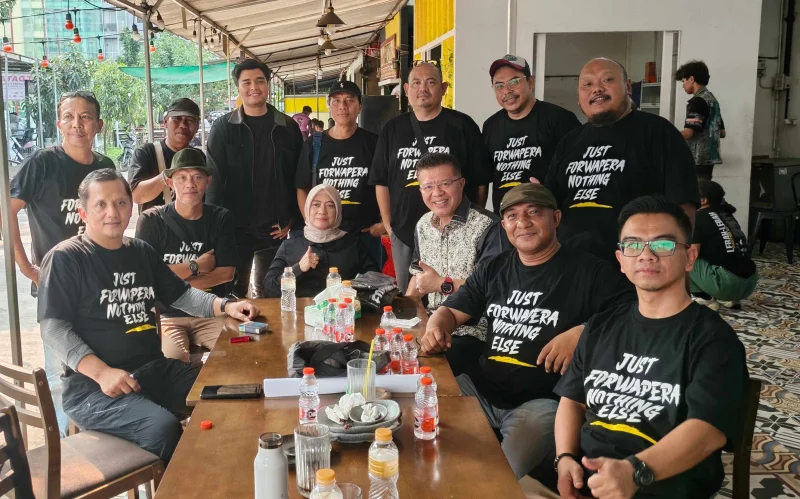
The Housing and Property Journalists Forum (Forwapera) successfully hosted its 18th annual mini-soccer tournament, the Property Cup XVIII, at the Epic Wesoccer facility in Kuningan, Jakarta, on Sunday, September 27, 2026. This year’s milestone event marked a transition from the organization’s traditional futsal format to mini-soccer, drawing enthusiastic participation from housing stakeholders, mortgage lenders, government institutions, and construction material suppliers. Designed to foster camaraderie, corporate wellness, and professional synergy, the tournament underscored the collective commitment of the national housing sector to support ambitious public initiatives, notably the government’s target to build three million homes annually.

A Legacy of Collaboration and Athletic Engagement
Since its inception nearly two decades ago, the Property Cup has evolved from a casual sporting gathering into a cornerstone networking event for Indonesia’s real estate industry. Forwapera Chairman Erfendi Eka Putra emphasized during his opening remarks that the annual championship serves as a vital bridge connecting journalists, developers, financial institutions, and policymakers.

"Forwapera extends its sincere gratitude to all stakeholders who have continuously supported this initiative, enabling us to reach the 18th edition in 2026," Erfendi stated. He noted that shifting to mini-soccer this year injected renewed energy into the competition, aligning with a broader corporate push to promote healthy lifestyles and active workplace cultures across public and private housing institutions. By drawing personnel out of corporate boardrooms and onto the pitch, the tournament effectively breaks down professional barriers, fostering an environment where informal dialogue translates into stronger business collaboration.

Official Endorsements and Strategic Significance
The event attracted high-profile figures from across the Indonesian property landscape, reflecting the strategic importance placed on multi-sectoral cooperation. Budi Santoso, Director of Finance and General Affairs at the Housing Savings Management Agency (BP Tapera), highlighted the intrinsic value of the tournament during the opening ceremony. He commended Forwapera for its unwavering dedication to building solidarity within the housing ecosystem.

"This is a highly positive activity for building collaboration and cohesion among housing stakeholders through sports," Budi remarked. "We also thank Forwapera for maintaining its long-term commitment to nurturing unity within the housing sector, which ultimately supports our shared national objectives."

Echoing these sentiments during the closing ceremony, Indra Utama, President of AREA Indonesia and Vice Chairman of Education at PWI Jaya, pointed out that the Property Cup transcends mere athletic competition.

"I am proud of Forwapera for remaining active and prominent in fostering the cohesion of the national housing ecosystem through extraordinary initiatives like this mini-soccer tournament," said Indra, a senior journalist who also serves as President Commissioner of PT Waskita Beton Precast Tbk. He emphasized that building robust communication channels between industry players and the media is critical for navigating the complexities of the modern property market.

Competitive Intensity and Tournament Results
The one-day tournament featured a fiercely contested battle among 12 elite teams representing various pillars of the property industry, including major developers, mortgage providers, government agencies, and building material manufacturers. Managed professionally by experienced referees, the tournament offered a total prize pool and development fund of Rp27.5 million.

After a rigorous day of group matches and knockout rounds, Bank Syariah Indonesia (BSI) emerged as the undisputed champion of the Property Cup XVIII, claiming the prestigious trophy and a cash prize of Rp12.5 million. The runner-up position went to Pesona Kahuripan Group (PKG), which secured Rp7 million. Meanwhile, Agung Podomoro Land (APL) claimed third place with a Rp5 million prize, followed by Perumda Pasar Jaya in fourth place, taking home Rp2 million. Individual brilliance was also recognized, with Rizki Nanda of Bank Syariah Indonesia capturing the Top Scorer accolade after netting six goals, earning an additional reward of Rp1.0 million.

The smooth execution of the event was made possible through the generous backing of 32 official sponsors representing the upper echelons of Indonesia’s industrial and real estate sectors. Key supporters included the Indonesian Ceramic Industry Association (Asaki), Bank Syariah Indonesia, Metropolitan Land, Sinar Mas Land, Bank Tabungan Negara (BTN), the Indonesian Real Estate Association (REI), Himperra, Appernas Jaya, Apersi, Bank Syariah Nasional, Infiniti Land, Fortress Steel Doors, Astra Property, BP Tapera, Modernland, Pesona Kahuripan, Paramount Land, Agung Podomoro Land, Tata Logam Lestari, Perumda Pasar Jaya, Grand Cikarang City, PT Sarana Multigriya Finansial (SMF), Kawah Anugerah Properti, Siap KPR, Jababeka, ISPI Group, Citra Raya Tangerang, Delta Group, along with regional chapters of REI from Jakarta, West Java, and Banten, alongside AREA Indonesia.

Broader Implications for the National Housing Sector
Beyond the goals scored and trophies lifted, the 18th Property Cup unfolded against a critical backdrop for Indonesia’s real estate industry. The event coincided with ongoing national discourses regarding housing affordability, the acceleration of subsidized housing delivery, and the execution of the government’s massive three-million-home construction program.

Industry analysts point out that achieving such large-scale housing targets cannot rely solely on policy mandates or financial mechanisms alone; it demands a deeply integrated ecosystem where developers, financial institutions, material suppliers, and the media work in absolute alignment. Events like the Property Cup play a subtle yet vital role in this machinery. By humanizing business relationships and fostering high levels of trust and mutual understanding among decision-makers, these gatherings reduce friction in future negotiations and collaborative projects.

Furthermore, the active participation of regulatory bodies like BP Tapera and major financial institutions like BSI and BTN highlights a shared recognition that public-private partnerships must extend beyond formal office settings. As Indonesia continues to address its housing backlog and implement innovative financing strategies, the social capital built on sports fields in venues like Kuningan serves as a foundational element for resilient, long-term industry growth. Forwapera’s sustained success in organizing the Property Cup for nearly two decades demonstrates that journalistic organizations can successfully transcend traditional reporting roles to become active catalysts for community building and national development.
