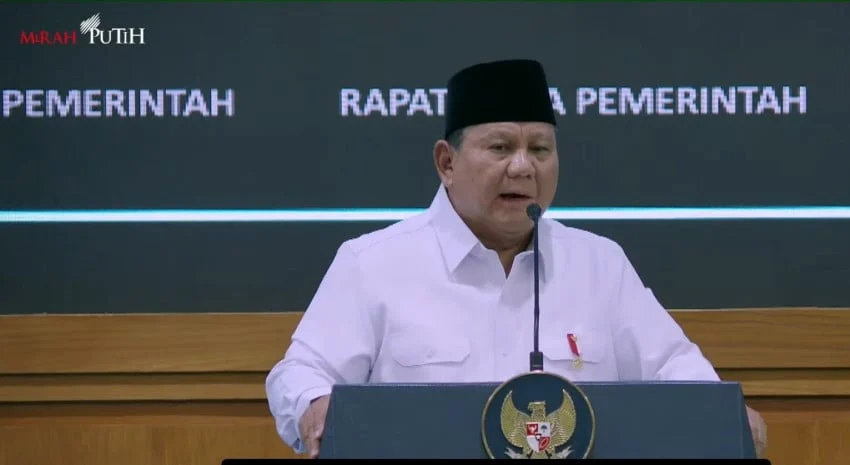
The political landscape in Indonesia remains under intense scrutiny as public policy analyst Said Didu has issued a stark warning to President Prabowo Subianto regarding the volatility of the current socio-economic climate. Speaking at the "Rakyat Bersuara" forum titled "Bisik-Bisik Percepatan Pemilu, Siapa Mengusik?" broadcast on iNews on Tuesday, September 15, 2026, Didu outlined a framework of six specific areas of public discontent that he argues could be weaponized by political actors seeking to destabilize or seize power from the current administration.
Didu’s assessment highlights a growing apprehension among political observers that the administration’s honeymoon period is rapidly drawing to a close, replaced by the realities of governance and economic pressure. By citing the governing style of Russian President Vladimir Putin as a potential model for maintaining order, Didu has sparked a debate on the balance between assertive leadership and the democratic mandate in a modern Indonesian context.
The Six Pillars of Public Discontent
According to Said Didu, the vulnerability of any administration lies in its ability to manage the "collectible anger" of its populace. He explicitly identified two primary triggers during his address, while noting that the broader list of six involves deep-seated systemic issues.
The first, and arguably most potent, is the frustration among the impoverished segments of society who currently perceive no tangible improvements or "light at the end of the tunnel" under the Prabowo administration. In many emerging economies, the inability of a new government to deliver immediate economic dividends often serves as the catalyst for organized opposition.
The second factor identified is the erratic supply and distribution of subsidized fuel (BBM). Energy security remains a cornerstone of the Indonesian economy; when fuel scarcity occurs, it triggers a domino effect of rising logistical costs, increased inflation, and public anxiety. Didu argues that these two factors, when combined with four other underlying grievances—which typically include corruption perception, job market stagnation, educational inequality, and regional development disparities—create a fertile ground for power-hungry factions to mobilize public sentiment against the palace.
Contextualizing the Call for "Putin-Style" Governance
The mention of Vladimir Putin in the Indonesian political discourse is inherently provocative. Historically, the Russian president is viewed by proponents as a figure of "strongman" stability, capable of consolidating power to protect national interests against internal and external threats. Conversely, international observers often view the Putin model as synonymous with the erosion of democratic institutions and the suppression of political dissent.
Didu’s suggestion that Prabowo should "imitate" certain aspects of the Russian leadership style implies an urgent need for the administration to tighten internal security, centralize decision-making, and perhaps adopt a more hardline approach toward opposition figures who are deemed to be exploiting public anger. However, this advice stands in stark contrast to the democratic principles that have guided Indonesia since the Reformasi movement of 1998. The administration faces a delicate tightrope: maintaining stability without alienating the very democratic process that brought it to power.
Chronology of Political Tensions
The current political atmosphere has been marked by several key events leading up to this warning:

- January 2026: The Prabowo administration officially sets its legislative agenda, focusing on large-scale infrastructure projects and energy self-sufficiency.
- April 2026: Initial reports of fuel shortages in outer islands emerge, leading to minor regional protests.
- June 2026: Economic indicators suggest a slowdown in household consumption, fueling rumors of a potential cabinet reshuffle.
- August 2026: Public discourse regarding the "acceleration of elections" begins to circulate in social media and political circles, suggesting that some factions are eager to test the administration’s durability.
- September 15, 2026: Said Didu issues his public warning, framing the administration’s survival as a battle against the "capitalization of anger."
The Economic Reality and Data Analysis
To understand the weight of Didu’s warning, one must look at the macro-economic data. Inflation rates, particularly concerning food and energy, remain the most significant drivers of public satisfaction in Indonesia. According to recent economic bulletins, the cost of living has outpaced wage growth for the lower-middle-class demographic. When the price of commodities rises, the trust in government policy typically declines in inverse proportion.
Furthermore, the "fuel scarcity" issue is not merely a logistical failure; it is a political liability. Historically, the Indonesian government has been highly sensitive to fuel prices. Any disruption in supply is immediately interpreted by the public as a sign of institutional incompetence. If these inefficiencies persist, the "six angers" described by Didu could coalesce into a broader protest movement, providing a platform for political rivals to capitalize on the administration’s perceived inability to manage basic utilities.
Official Responses and Political Implications
While the Presidential Palace has not issued a formal rebuttal to Said Didu’s specific remarks, government spokespeople have consistently maintained that the administration is focused on "down-to-earth" policies. Government officials have argued that the current economic challenges are global in nature and that the state is taking necessary steps to reform subsidy distribution to ensure it reaches the intended beneficiaries rather than being leaked through systemic inefficiencies.
However, political analysts argue that the government’s response has been too slow. There is a growing sentiment that the time for "political accommodation"—the process of bringing various political factions into the ruling coalition to ensure peace—has passed. Didu’s warning serves as a signal that the current coalition, while appearing strong on paper, may be internally fractured and susceptible to external pressures.
The Risk of Political Destabilization
The primary risk identified by analysts is the "capitalization" of discontent. In a digital age, anger can be organized, weaponized, and disseminated rapidly. When political actors identify that a large segment of the population is dissatisfied, they can frame their own political agenda as the "solution" to that anger, regardless of the feasibility of their policies.
If President Prabowo follows the path of consolidating power through stricter oversight, he may mitigate the risk of immediate disruption. However, he risks creating a "pressure cooker" environment where dissent is suppressed rather than addressed, potentially leading to a more explosive reaction in the future. Conversely, if he chooses a more liberal approach, he risks appearing weak in the eyes of those who prioritize order and economic stability.
Looking Forward: A Call for Strategic Communication
As the administration navigates this period, the recommendation from observers like Said Didu serves as a cautionary tale about the importance of narrative management. The government must move beyond mere policy implementation and engage in proactive, transparent communication.
The "six angers" are not just potential points of failure; they are diagnostic tools. By addressing the root causes of the fuel crisis, the poverty trap, and the lack of hope among the youth, the administration can neutralize the tools used by their detractors. The call to look toward international models, regardless of how controversial, highlights a growing consensus that the status quo is insufficient for the challenges facing the nation in the latter half of the 2020s.
Ultimately, the stability of the Prabowo administration will likely depend on its ability to reconcile the necessity of order with the demands of a modern, democratic, and increasingly vocal Indonesian society. Whether the administration chooses to follow a path of centralized control or one of inclusive reform remains the central question for the remainder of the year. The political stakes are high, and as Didu suggests, the window for effective, proactive governance is closing rapidly.