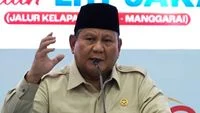
President Prabowo Subianto has officially signaled a paradigm shift in Indonesia’s environmental governance by initiating the formation of the National Peat and Mangrove Management Agency (BPGMN). This strategic move, which follows extensive consultations with the nation’s leading scientists and environmental academics, marks a significant departure from previous institutional frameworks. By placing the new body directly under the President’s office, the administration aims to elevate the urgency of ecosystem restoration and fire prevention to the highest level of national policy.
Minister of Forestry Raja Juli Antoni confirmed that the agency’s creation was a direct response to data-driven advocacy from the scientific community. During a series of high-level meetings at the Presidential Palace, experts presented compelling evidence regarding the critical role of peatlands and mangroves in achieving Indonesia’s climate targets, particularly in mitigating the recurring threats of forest and land fires (Karhutla).
The Evolution of Institutional Governance
The decision to establish the BPGMN is not merely a rebranding exercise but a fundamental restructuring of environmental authority. While Indonesia previously operated the Peat and Mangrove Restoration Agency (BRGM), which was formed in 2016 and dissolved in late 2024, the BPGMN is designed to be more robust and autonomous.
Unlike its predecessor, which operated under the administrative umbrella of the Ministry of Forestry, the BPGMN will function as a presidential-level entity. This structural change is intended to provide the agency with greater political leverage, streamlined decision-making processes, and direct access to state budgetary allocations. According to Minister Raja Juli, the agency will be staffed by professionals and scientists rather than career bureaucrats alone, ensuring that policy decisions are rooted in technical expertise and scientific rigor.
Chronology of Strategic Consultations
The move toward BPGMN began in earnest during the third week of September 2024. The chronology of the policy’s development highlights a deliberate attempt by the Prabowo administration to bridge the gap between academic research and executive action:
- September 24, 2024: President Prabowo hosted 22 prominent environmental experts and researchers at the Merdeka Palace. The meeting centered on the systemic failures in previous fire mitigation strategies and the potential for large-scale mangrove and peatland restoration.
- September 25-29, 2024: Internal discussions within the Ministry of Forestry were held to synthesize the input provided by the experts, focusing on the legal framework and the necessary institutional mandates for the new agency.
- September 30, 2024: Minister Raja Juli Antoni formally announced that the government would proceed with the drafting of a Presidential Regulation (Perpres) to solidify the existence and operational authority of the BPGMN.
The Science of Restoration: The Riau Model
A core component of the BPGMN’s operational strategy will be the replication of successful grassroots practices, specifically those observed in Desa Tanjung Leban, Bengkalis, Riau. This region has emerged as a "living laboratory" for sustainable peatland management.
In this model, the local community, private sector, and government agencies have collaborated to implement a water-sharing system through canal blocking. This technique maintains the hydrological balance of the peatlands—keeping them sufficiently moist to prevent combustion while allowing for necessary human and economic activity.
Minister Raja Juli emphasized that the "Riau model" proves that conservation and economic development are not mutually exclusive. The BPGMN is expected to formalize these best practices and apply them across six priority provinces identified as the most vulnerable to forest fires. This shift toward a localized, community-engaged model reflects a broader move away from top-down enforcement toward collaborative landscape management.
Data and Environmental Urgency
The necessity of the BPGMN is underscored by the ecological importance of Indonesia’s peatlands. Indonesia holds one of the world’s largest tropical peatland areas, which acts as a massive carbon sink. When these lands dry out due to improper drainage or land-use changes, they become highly flammable, releasing massive amounts of greenhouse gases into the atmosphere.
Supporting data from recent environmental assessments indicates that the degradation of mangrove ecosystems has also accelerated coastal erosion and diminished the natural barrier protections against rising sea levels. By integrating the management of peat and mangroves, the BPGMN aims to address two critical fronts of the climate crisis simultaneously: carbon sequestration via peatlands and coastal protection via mangroves.
Operational Framework and Future Challenges
As the government moves to draft the Perpres, the Ministry of Forestry is organizing a specialized workshop involving the 22 experts who first proposed the agency. The scope of these deliberations includes:
- Mandate Clarification: Defining the jurisdictional boundaries of the BPGMN, particularly its coordination with regional governments and the Ministry of Environment and Forestry.
- Standard Operating Procedures (SOPs): Establishing clear protocols for emergency fire response and long-term land restoration.
- Organizational Structure: Creating an efficient hierarchy that avoids the redundancy that plagued previous inter-agency collaborations.
However, analysts note that the success of the BPGMN will depend heavily on the agency’s ability to navigate the complex socio-political landscape of the palm oil and pulp and paper industries. Historically, the interests of large-scale plantations have often conflicted with peatland conservation efforts. The agency will need to demonstrate strong enforcement capabilities to ensure that private sector actors adhere to the new sustainability standards mandated by the presidential body.
Economic and Diplomatic Implications
The creation of the BPGMN also serves as a strategic signal to the international community. As Indonesia seeks to position itself as a global leader in climate action, the establishment of a dedicated, high-level agency reinforces the country’s commitment to the Paris Agreement and other international climate pledges.
By providing a transparent, scientifically backed framework for land management, Indonesia may also find it easier to access international climate financing, such as carbon credit markets and REDD+ (Reducing Emissions from Deforestation and Forest Degradation) funding. International observers have long argued that Indonesia’s ability to manage its peatlands is the single most important factor in the country’s ability to curb its national carbon footprint.
Conclusion: A New Chapter for Indonesian Conservation
The transition from a ministerial-level agency to a presidential-level body represents a significant gamble by the Prabowo administration. It acknowledges that the environmental challenges of the coming decade—exacerbated by climate change—cannot be managed through traditional, siloed bureaucratic structures.
While the administrative details are still being finalized, the consensus among stakeholders is one of cautious optimism. The involvement of the scientific community in the early stages of policy design suggests that the BPGMN will prioritize evidence-based outcomes over political optics.
As the agency moves toward full operational status, the challenge will be to maintain the momentum of the initial consultations and translate the "Riau model" into a national reality. If the BPGMN succeeds in bridging the gap between scientific expertise, community participation, and executive power, it could fundamentally change the trajectory of Indonesia’s environmental health, turning one of the nation’s most vulnerable landscapes into its most valuable asset in the fight against global climate change. The upcoming months, marked by the finalization of the Presidential Regulation, will be critical in determining whether this new agency has the institutional teeth to deliver on its ambitious mandate.