
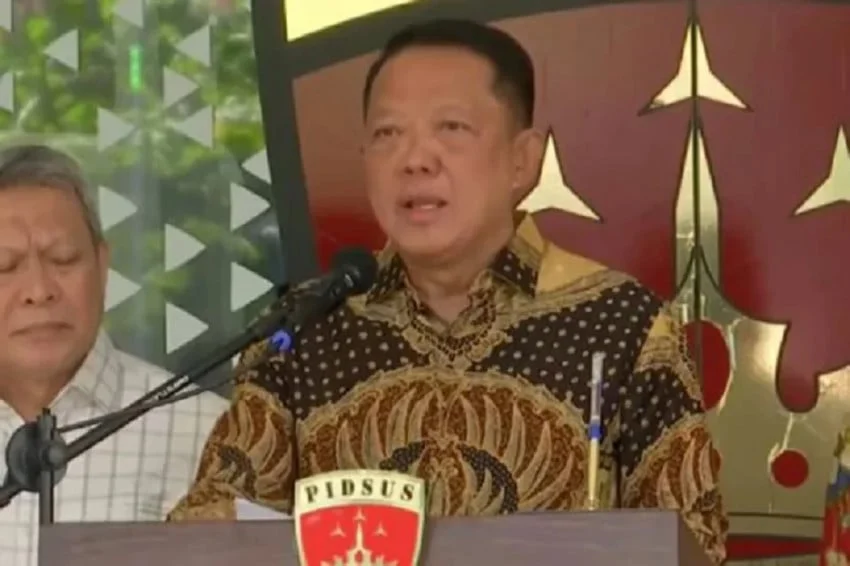
The Indonesian National Police have officially designated the former Junior Attorney General for Special Crimes (Jampidsus), Febrie Adriansyah, as a suspect in three separate high-profile corruption and money laundering cases, sparking a significant legal debate over procedural integrity. The cases involve alleged irregularities in coal procurement for the state electricity company PT PLN, financial mismanagement at the military insurer PT Asabri, and procurement discrepancies at the state-owned steelmaker PT Krakatau Steel. However, the move has drawn sharp criticism from legal scholars and practitioners because the designation was reportedly made without prior examination or clarification from Adriansyah, a step many argue is a mandatory requirement under Indonesian constitutional law.
The decision to name Adriansyah a suspect marks a dramatic turn in the nation’s legal landscape, given his previous role as one of the country’s most powerful prosecutors in the fight against graft. The controversy centers not only on the gravity of the charges—which include violations of the Anti-Corruption Law and the Law on the Prevention and Eradication of Money Laundering (TPPU)—but also on the methods employed by law enforcement. Legal experts suggest that bypassing the preliminary examination phase could jeopardize the validity of the entire prosecution and set a precarious precedent for the due process of law in Indonesia.
Constitutional Challenges and Legal Expert Analysis
Professor Suparji Ahmad, a prominent legal scholar from Al Azhar University Indonesia (UAI), has voiced serious concerns regarding the procedural shortcuts allegedly taken by investigators. According to Professor Ahmad, if it is proven that Adriansyah was named a suspect without being summoned or examined as a witness first, the police’s actions would stand in direct contradiction to the standards established by the Constitutional Court (Mahkamah Konstitusi or MK).
The cornerstone of this legal argument is Constitutional Court Decision Number 21/PUU-XII/2014. In this landmark ruling, the court reinterpreted the requirements for designating a suspect. The court determined that the phrases "preliminary evidence," "sufficient preliminary evidence," and "sufficient evidence" as used in the Criminal Procedure Code (KUHAP) must be interpreted as requiring at least two valid pieces of evidence accompanied by a prior examination of the prospective suspect.
"If it is true that someone is designated as a suspect without ever being summoned and examined first regarding the alleged criminal acts attributed to them, then that designation potentially contradicts MK Decision Number 21/PUU-XII/2014 and the principles of due process of law adhered to by the New KUHAP," Professor Ahmad stated during an interview on Saturday, July 18, 2026. He emphasized that strong law enforcement is not merely about identifying perpetrators but ensuring that every step of the process aligns with the constitution and the principles of a state governed by the rule of law.
Deep Dive into the Three Major Corruption Cases
The investigation into Febrie Adriansyah spans three distinct sectors of the Indonesian economy, each involving massive state-owned enterprises (BUMN) and significant potential losses to the state treasury.
1. The PT Asabri Corruption Scandal
The PT Asabri case is one of the largest financial scandals in Indonesian history. Asabri, an insurance company serving members of the Indonesian National Armed Forces (TNI) and the National Police (Polri), suffered losses estimated at over Rp 22.7 trillion due to mismanagement and fraudulent investment schemes. While the Attorney General’s Office (AGO) previously led the prosecution of various figures in this case during Adriansyah’s tenure, the current police investigation seeks to uncover whether the former Jampidsus himself was involved in illicit activities or money laundering related to the recovery or handling of the stolen assets.
2. PT PLN Coal Procurement
The second case involves alleged corruption in the procurement of coal for PT PLN. As the primary provider of electricity in Indonesia, PLN’s supply chain is a matter of national security. Investigators are looking into allegations of "coal games" involving intermediaries and pricing manipulations that allegedly benefited private interests at the expense of the state. The inclusion of money laundering charges suggests that the police believe the proceeds from these procurement irregularities were funneled through complex financial networks to conceal their origin.
3. PT Krakatau Steel Procurement
The third pillar of the investigation concerns PT Krakatau Steel, the nation’s largest steel producer. Historically, Krakatau Steel has faced challenges regarding its blast furnace projects and various procurement contracts. The specific allegations against Adriansyah in this context involve his oversight or involvement in legal processes related to the company’s past controversies, with investigators claiming to have found evidence of transactional irregularities that cross the threshold into criminal corruption.
Timeline and Chronology of the Investigation
The trajectory of this case has been rapid, leading to friction between the National Police and the Attorney General’s Office.
- Early 2026: Internal investigations within the National Police’s Criminal Investigation Department (Bareskrim) began intensifying regarding asset management in the wake of several major BUMN scandals.
- May 2026: Reports surfaced of surveillance and potential friction between personnel from the AGO and the Police, though both institutions officially denied any rift at the time.
- June 2026: Leaks from the investigation indicated that several high-ranking former officials were under scrutiny for their roles in "clearing" or managing legal cases in exchange for financial gain.
- July 2026: The National Police officially announced the suspect status of Febrie Adriansyah. The announcement was met with immediate pushback from his legal team, who noted that their client had not been afforded the opportunity to provide a statement or clarify the allegations before the status was finalized.
Institutional Implications and the "New KUHAP"
The debate over Adriansyah’s suspect status comes at a critical time for Indonesian jurisprudence. The "New KUHAP" (Law Number 1 of 2023), which seeks to modernize the Indonesian criminal justice system, places a high premium on human rights and procedural fairness. Professor Suparji Ahmad noted that the spirit of the New KUHAP is to prevent "law enforcement by surprise," where individuals find themselves embroiled in the criminal justice system without the ability to defend their rights at the earliest stages of an investigation.
The Constitutional Court’s 2014 ruling was intended to be "final and binding." By requiring the examination of a potential suspect, the court aimed to prevent the misuse of power by investigators who might otherwise rely on flimsy evidence or political motivations. In the case of a high-profile figure like a former Jampidsus, the stakes are even higher, as the case carries significant political weight and impacts public trust in the integrity of both the police and the prosecution.
Responses from the Defense and Law Enforcement
In a surprising development, Adriansyah’s legal counsel reportedly resigned shortly after the suspect designation. Sources close to the matter suggest that the resignation was a strategic move or a reflection of the client’s desire to be cooperative without traditional legal representation during the initial stages of the fallout. "The fact that the legal counsel has stepped down indicates a level of cooperativeness from the client’s side, as he is not looking to create a prolonged legal battle over representation at this moment," a source familiar with the defense strategy commented.
Despite the lack of a formal arrest, the police have imposed travel bans and are continuing to trace assets linked to Adriansyah. The National Police spokesperson stated that the evidence gathered—which reportedly includes digital forensics and financial records—was sufficient to move forward. However, the spokesperson did not provide a detailed explanation as to why the mandatory examination of the suspect was bypassed, other than citing the "complexity and urgency" of the three interconnected cases.
Fact-Based Analysis of the Broader Impact
The designation of a former Jampidsus as a suspect in such wide-reaching cases has several profound implications for Indonesia:
- Institutional Rivalry: The case risks reigniting the "Cicak vs Buaya" (Gekko vs Crocodile) style tensions that have historically plagued Indonesian law enforcement agencies. If the AGO perceives the police’s move as an attack on their institution, it could hinder future joint efforts to combat corruption.
- Pretrial Potential: Adriansyah’s legal team (or future counsel) has strong grounds to file a pretrial motion (praperadilan). Based on Professor Suparji’s analysis, a judge could potentially annul the suspect status if it is proven that the mandatory examination was skipped, citing the 2014 MK ruling.
- Public Perception of the Anti-Graft Fight: While the prosecution of a high-ranking official can be seen as a sign that "no one is above the law," procedural flaws can lead to the perception that the case is a form of "legal engineering" or political maneuvering.
- BUMN Reform: The involvement of PLN, Asabri, and Krakatau Steel underscores the ongoing vulnerability of state-owned enterprises to systemic corruption. This case may trigger a new wave of audits and oversight reforms within the Ministry of State-Owned Enterprises.
Conclusion
As the legal proceedings against Febrie Adriansyah continue, the focus remains firmly on the balance between aggressive anti-corruption efforts and the protection of constitutional rights. The Indonesian public and legal community are watching closely to see if the National Police will rectify the procedural concerns raised by experts or if the case will head toward a contentious pretrial battle.
The outcome will likely define the boundaries of investigative power in the "New KUHAP" era and determine whether the fight against corruption can be conducted with both the strength of the law and the precision of the constitution. For now, the three cases—PLN, Asabri, and Krakatau Steel—remain a stark reminder of the challenges inherent in cleaning up the nation’s largest institutions and the complexities of holding those who once led that very fight accountable.
