September 9th serves as a pivotal date in the Indonesian calendar, marking the annual celebration of Hari Olahraga Nasional (National Sports Day). Far more than a ceremonial observance, this day encapsulates the resilience, identity, and aspirations of a nation that has utilized sports as a fundamental tool for state-building and international diplomacy. From the humble beginnings of the first Pekan Olahraga Nasional (PON) in 1948 to the modern-day vision of a physically active and high-achieving nation, the history of Indonesian sports is deeply intertwined with the country’s journey toward sovereignty and global recognition.
The Genesis of a Movement: The 1948 PON Legacy
The roots of National Sports Day trace back to one of the most challenging periods in Indonesian history. In 1948, the fledgling republic was grappling with the complexities of post-independence life, facing both internal struggles and the constant pressure of international non-recognition. Amidst this uncertainty, the Indonesian government took a bold step to assert its existence by organizing the first Pekan Olahraga Nasional (PON) in Surakarta, Central Java, held from September 9 to 12, 1948.
The decision to host the event was largely a strategic response to the political roadblocks faced by Indonesian athletes. When the country attempted to participate in the XIV Olympic Games in London that same year, it was met with administrative barriers stemming from the lack of international recognition of its sovereignty. Undeterred, the Indonesian leadership, including figures instrumental in the development of the national sports infrastructure, pivoted toward domestic engagement. By hosting the PON in Solo, the nation demonstrated that it could organize complex, large-scale events, effectively signaling its status as an independent entity through the language of competition and fair play.
The Chronology of Formalization: From Stadium Grounds to Presidential Decree
While the spirit of sports was ignited in 1948, the formalization of September 9 as a national holiday did not occur until decades later. The turning point came in 1983. During the inauguration of the renovated Sriwedari Stadium in Surakarta—the very site that hosted the inaugural 1948 PON—President Soeharto officially declared September 9 as Hari Olahraga Nasional.
This declaration was not merely a nostalgic gesture; it was a policy directive aimed at institutionalizing sports as a pillar of national development. The momentum generated by this announcement led to the issuance of Presidential Decree (Keppres) Number 67 of 1985. This legal instrument cemented the date in the national consciousness, establishing a framework for government bodies to promote athletic participation, infrastructure development, and the cultivation of elite talent.
Bridging History and Modernity: The 2026 Milestone
As Indonesia marks the 43rd anniversary of the official Haornas designation in 2026, the occasion serves as a moment to assess the evolution of the national sports landscape. Since 1983, the country has navigated various shifts in sporting priorities, moving from basic participation to a sophisticated focus on sport science, talent scouting, and high-performance training centers.
The 2026 commemoration, falling on a Wednesday, highlights the longevity of the event. Today, the focus of the Ministry of Youth and Sports (Kemenpora) has shifted toward the "Sport Tourism" and "Sport Industry" paradigms. The integration of major events like the upcoming PON cycles with regional development goals—such as transforming Sumba Timur into a hub for sports tourism—demonstrates that sports are now viewed as a critical economic engine.
Statistical Context and Resource Allocation
The growth of Indonesian sports is reflected in the scale of current financial and infrastructural commitments. Recent reports from the Ministry of Youth and Sports indicate that the government is seeking approximately IDR 1.5 trillion to establish state-of-the-art academies and regional training centers. This budgetary requirement underscores the realization that to compete at the Olympic level—a dream that sparked the 1948 PON—the nation must move beyond ad-hoc training and toward a systematic, professionalized pipeline.
Furthermore, the diversification of the sports calendar is evident in initiatives such as the "Beach PON" scheduled for late 2026 in Ancol. By expanding the variety of sporting disciplines, the government aims to increase public participation, ensuring that the benefits of an active lifestyle reach diverse demographics, from coastal communities to urban centers.
The Socio-Economic Implications of an Active Nation
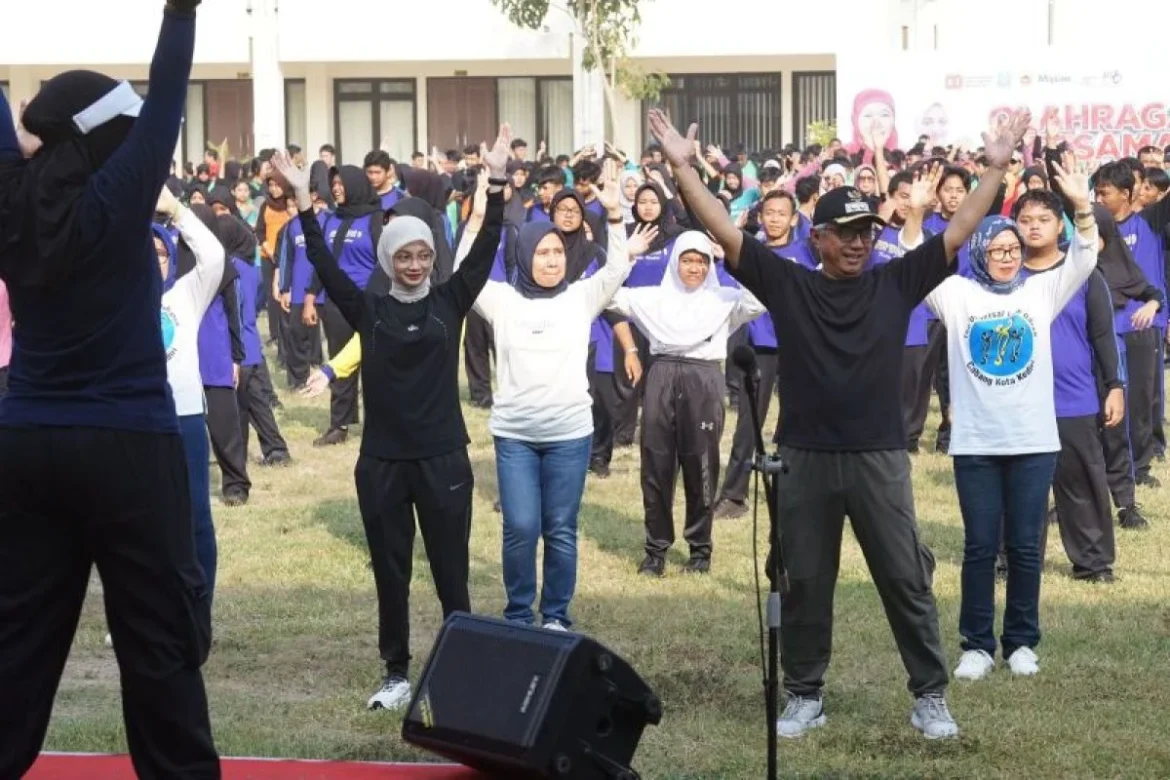
Beyond the medal tallies and infrastructure projects, the core mission of Hari Olahraga Nasional remains the cultivation of a "Sporting Culture" (Budaya Olahraga). The Ministry of Youth and Sports has emphasized that the celebration is intended to act as a catalyst for public health. In an era where non-communicable diseases associated with sedentary lifestyles are rising, the government views the promotion of physical activity not just as a leisure pursuit, but as a public health imperative.
The pedagogical impact of sports is also a central theme. Sports are increasingly framed as a tool for character development, fostering traits such as discipline, teamwork, and resilience. In the current educational landscape, the integration of sports into the daily routine of the youth is seen as a safeguard against social malaise and a bridge toward achieving national unity. By engaging in collective sporting activities, citizens from different backgrounds find common ground, echoing the original spirit of the 1948 PON, which brought together athletes from across the archipelago during a time of fragmentation.
Official Perspectives and Future Challenges
Government officials have consistently underscored that the future of Indonesian sports lies in the synergy between public health, economic output, and elite performance. Minister-level discourse suggests that the "Sporting Industry" is poised to become a significant contributor to the GDP, provided that the current momentum in facility development is maintained.
However, challenges remain. Critics and experts point to the need for decentralized development. While cities like Jakarta and Solo have historically served as the epicenter of sporting activity, there is a growing demand for rural and outer-island regions to receive equal access to high-quality training facilities. The success of the 2028 PON projections, which target Sumba Timur as a new destination for international sports events, is viewed as a litmus test for this decentralized strategy.
Analytical Outlook: Sustaining the Momentum
The historical trajectory of Hari Olahraga Nasional reveals a progression from a survival mechanism to a national identity marker, and finally, to a pillar of economic and social policy. As Indonesia approaches the middle of the decade, the implications of these policies will be measured by two primary metrics: the success of the national contingent in international arenas and the improvement of health indicators within the general population.
The anniversary on September 9 serves as an annual audit of these goals. It is a day to acknowledge the athletes who represent the nation, but also to recognize the everyday citizens whose commitment to physical activity maintains the vitality of the state. The legacy of the 1948 PON, which was born out of a desire for dignity and recognition, continues to resonate in the modern era. The challenge for the coming years will be to ensure that the spirit of that inaugural event—which prioritized national participation and unity—is not lost in the push for professionalization and commercial success.
Celebrating the 43rd Anniversary: A Call to Action
As the nation celebrates the 43rd anniversary of the official Haornas in 2026, the call to action remains consistent: to make sports an inseparable part of daily life. This involves a multi-pronged approach:
- Grassroots Participation: Encouraging families and local communities to organize recurring athletic events, thereby normalizing physical fitness as a community value.
- Support for Elite Development: Ensuring that the proposed IDR 1.5 trillion investment in academies is utilized with transparency and long-term strategic vision, prioritizing talent from all regions of Indonesia.
- Integration of Technology: Embracing modern sport science to monitor athlete performance and public health trends, ensuring that Indonesia remains competitive on the global stage.
- Sustainability: Focusing on "Sport Tourism" as a means to ensure that sports facilities remain economically viable, preventing the issue of "white elephant" stadiums that fall into disrepair after major events.
In conclusion, Hari Olahraga Nasional is a testament to the fact that Indonesia’s sporting journey is far from over. From the makeshift fields of 1948 to the modern, high-tech facilities envisioned for the future, the narrative of Indonesian sports is one of continuous adaptation and growth. Every September 9, the nation is reminded that whether through the pursuit of a gold medal or the simple act of taking a daily walk, the practice of sport is a vital expression of national pride and personal well-being. By honoring its past, Indonesia prepares itself to face the challenges of the future, ensuring that the legacy of those early pioneers in Solo remains a guiding light for generations of athletes to come.