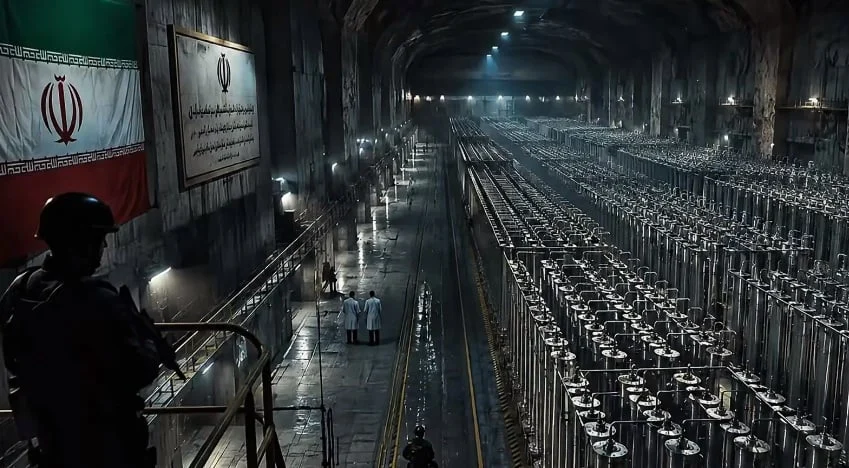
RIYADH – The administration of former U.S. President Donald Trump reportedly signaled its readiness to endorse a nuclear energy cooperation pact with Saudi Arabia, a move that would permit the Kingdom to enrich uranium and reprocess spent atomic fuel. This development, confirmed by two sources familiar with the discussions, carries significant implications for regional stability and global non-proliferation efforts, raising concerns among various nations about the potential for an arms race in an already volatile Middle East. The proposed agreement departs from the "gold standard" safeguards typically sought by Washington, which explicitly prohibit such capabilities, thus marking a controversial shift in U.S. nuclear policy.
The potential for Saudi Arabia to develop indigenous uranium enrichment and spent fuel reprocessing capabilities — both pathways to producing material for nuclear warheads — has ignited a fierce debate among policymakers, security analysts, and non-proliferation advocates. This waiver of strict safeguards, which has been a cornerstone of U.S. nuclear cooperation agreements with other nations, particularly in sensitive regions, underscores the complex geopolitical tightrope the United States has walked in its engagement with key allies.
The "Gold Standard" Debate: Safeguards and Proliferation Risks
For decades, the United States has advocated for and, where possible, implemented stringent non-proliferation safeguards in its nuclear cooperation agreements, often referred to as "123 Agreements" after Section 123 of the U Atomic Energy Act. A core component of this policy has been the "gold standard," which mandates that recipient nations refrain from enriching uranium or reprocessing spent nuclear fuel. These activities are particularly sensitive because they involve technologies and processes that can be diverted to produce fissile material for nuclear weapons. Enrichment increases the concentration of uranium-235, while reprocessing separates plutonium from spent reactor fuel, both critical components for weapon production.
The decision to potentially waive this "gold standard" for Saudi Arabia represents a significant policy departure. Previous U.S. nuclear deals, notably with the United Arab Emirates (UAE) in 2009, included explicit commitments by Abu Dhabi not to pursue enrichment or reprocessing, setting a precedent for robust non-proliferation controls in the Gulf. This "gold standard" was viewed as essential for preventing the spread of nuclear weapons technology in a region already rife with tension and mistrust. By not including these prohibitions in a potential pact with Riyadh, the Trump administration’s reported stance raised questions about consistency in U.S. non-proliferation policy and its potential to encourage other nations to seek similar concessions.
Historical Context: Saudi Arabia’s Nuclear Ambitions and Vision 2030
Saudi Arabia’s interest in nuclear energy is not new, but it has gained significant momentum under Crown Prince Mohammed bin Salman’s ambitious Vision 2030 economic diversification plan. The Kingdom, the world’s largest oil exporter, aims to reduce its reliance on hydrocarbons for domestic power generation, freeing up more crude oil for export and simultaneously lowering carbon emissions. Nuclear power is seen as a key component of this strategy, alongside significant investments in renewable energy sources like solar.
The Kingdom initiated its national atomic energy program in 2009, with plans to build up to 16 nuclear power reactors over the next 20 to 25 years. This ambitious program is projected to cost upwards of $80 billion and would significantly alter Saudi Arabia’s energy mix. Currently, the U.S. Energy Information Administration (EIA) reported that in 2022, 68% of Saudi electricity was generated by burning natural gas and 32% by burning oil, with an average of 1.4 million barrels of crude oil per day consumed for power generation during peak summer months. Diversifying this energy matrix is crucial for long-term economic sustainability and environmental goals.
However, Saudi Arabia’s nuclear ambitions have always been viewed through a geopolitical lens. Crown Prince Mohammed bin Salman has publicly stated that if Iran were to develop a nuclear weapon, Saudi Arabia would follow suit. This declaration, made in a 2018 interview, underscored the Kingdom’s strategic calculus and its determination to maintain a regional balance of power, even if it means pursuing nuclear weapon capabilities. This context adds another layer of complexity to any nuclear cooperation agreement, particularly one that grants access to sensitive fuel cycle technologies.
Over the years, Riyadh has engaged in discussions with multiple international partners, including South Korea, France, China, and Russia, to develop its civilian nuclear program. The prospect of U.S. involvement, however, holds particular weight due to America’s advanced nuclear technology, regulatory expertise, and strategic alliance with Saudi Arabia. For American companies, securing contracts for Saudi Arabia’s multi-billion-dollar nuclear infrastructure represents a lucrative opportunity, creating a tension between commercial interests and non-proliferation imperatives.
The Middle East’s Volatile Geopolitical Landscape
The Middle East is arguably one of the most conflict-prone regions globally, and the introduction of advanced nuclear capabilities without the strictest safeguards could profoundly destabilize it further.
-
Iran’s Nuclear Program: A central concern is Iran’s nuclear program. The U.S. withdrawal from the Joint Comprehensive Plan of Action (JCPOA) in 2018 and the subsequent re-imposition of sanctions have led to Iran’s scaling back of its commitments, including increasing uranium enrichment levels. The U.S. justification for its tough stance on Iran has consistently been the imperative to prevent Tehran from acquiring nuclear weapons. Granting Saudi Arabia enrichment and reprocessing capabilities without strict prohibitions, while simultaneously pressuring Iran on its nuclear activities, is seen by critics as a contradictory and potentially hypocritical policy that could undermine U.S. credibility on non-proliferation. Iran’s official response would likely highlight this perceived double standard, potentially using it to justify further advancements in its own nuclear program.
-
Israel’s Security Concerns: Israel, widely believed to possess an undeclared nuclear arsenal, maintains a policy of nuclear ambiguity and has consistently opposed the proliferation of nuclear weapons to any other state in the Middle East. It has historically taken military action to prevent adversaries from acquiring such capabilities, notably against Iraq’s Osirak reactor in 1981 and a suspected Syrian reactor in 2007. The prospect of Saudi Arabia, a powerful regional actor, gaining the ability to enrich uranium or reprocess spent fuel would undoubtedly trigger alarm bells in Jerusalem. Israeli officials and defense strategists would likely view such a development as a direct threat to their national security, potentially leading to strong diplomatic opposition and calls for international intervention to impose stricter safeguards.
-
Regional Arms Race: The absence of robust non-proliferation clauses in a Saudi-U.S. nuclear deal could ignite a regional nuclear arms race. Other regional powers, such as Egypt and Turkey, which also have nascent nuclear energy programs or have expressed long-term interest in them, might feel compelled to pursue similar capabilities to maintain a strategic balance. This "cascade" effect of proliferation would dramatically heighten regional tensions, increase the risk of miscalculation, and complicate any future efforts at arms control.
The Non-Proliferation Treaty (NPT) and International Oversight
Saudi Arabia is a signatory to the Nuclear Non-Proliferation Treaty (NPT), which entered into force in 1970. The NPT is the cornerstone of the international non-proliferation regime, resting on three main pillars: non-proliferation, disarmament, and the peaceful use of nuclear energy. As an NPT signatory, Saudi Arabia has committed not to develop nuclear weapons and has agreed to international inspections by the International Atomic Energy Agency (IAEA) to verify the peaceful nature of its nuclear activities.
However, the NPT’s framework has limitations, particularly concerning the dual-use nature of certain nuclear technologies. While standard IAEA safeguards provide a measure of oversight, they are not always sufficient to detect the diversion of sensitive materials from a civilian program to a military one, especially if a state has indigenous enrichment and reprocessing capabilities. This is where "additional protocols" come into play. An Additional Protocol to an IAEA safeguards agreement grants the agency broader inspection rights and access to information, significantly enhancing its ability to detect undeclared nuclear activities. The original article notes that the proposed pact also did not include an "additional protocol," further weakening the international oversight mechanisms.
Non-proliferation experts argue that without both the "gold standard" prohibition on enrichment/reprocessing and the adoption of an Additional Protocol, any nuclear cooperation agreement in a sensitive region like the Middle East carries inherent proliferation risks. The ability to control the entire nuclear fuel cycle grants a state a significant degree of strategic autonomy and reduces its dependence on external suppliers, but it also shortens the "breakout time" should it decide to pursue a nuclear weapon.
Domestic U.S. Congressional Opposition and Challenges
Any U.S. nuclear cooperation agreement requires Congressional review under the Atomic Energy Act. Historically, members of Congress, spanning both Republican and Democratic parties, have expressed significant concerns about nuclear proliferation, particularly in the Middle East. There has been bipartisan support for robust safeguards in such deals.
During the Trump administration, reports of the potential waiver of the "gold standard" met with strong opposition in Congress. Lawmakers from both sides of the aisle demanded strict safeguards on any deal with Saudi Arabia, citing concerns over the Kingdom’s human rights record, its involvement in the Yemen conflict, and the murder of journalist Jamal Khashoggi. Furthermore, the strategic implications of empowering Saudi Arabia with sensitive nuclear technology without stringent controls were a major point of contention. Congress has the power to block such agreements through legislation or by withholding funding. The legislative process for reviewing 123 Agreements allows Congress to pass a joint resolution of disapproval, which can prevent the agreement from taking effect. This mechanism provides a crucial check on executive authority in nuclear diplomacy.
Economic and Commercial Dynamics
Beyond the geopolitical and security considerations, the potential U.S.-Saudi nuclear deal also involves significant economic and commercial interests. The multi-billion-dollar Saudi nuclear program represents a substantial opportunity for American nuclear energy companies, which face stiff competition from state-backed enterprises in Russia (Rosatom), China (CNNC), South Korea (KEPCO), and France (EDF). These international competitors often offer attractive financing packages and less stringent non-proliferation conditions, making them appealing to countries seeking nuclear technology.
For the United States, securing these contracts would not only bolster its nuclear industry but also allow it to exert greater influence over the design, construction, and operation of Saudi nuclear facilities, potentially providing a degree of oversight that might not exist with other suppliers. However, this economic imperative must be carefully balanced against the overriding objective of preventing nuclear weapons proliferation. The tension between these competing interests lies at the heart of the debate surrounding the proposed pact.
Broader Implications and the Path Forward
The potential U.S.-Saudi nuclear energy pact, particularly one without the "gold standard" safeguards, carries profound implications for regional and global security.
- Regional Security Dilemma: It risks intensifying the existing security dilemma in the Middle East, compelling other regional actors to re-evaluate their own nuclear postures.
- U.S. Credibility: It could significantly damage U.S. credibility as a champion of non-proliferation, especially given its long-standing efforts to curb Iran’s nuclear program.
- Strategic Autonomy for Saudi Arabia: While granting Saudi Arabia greater strategic autonomy in its energy and security policies, it also places immense responsibility on the Kingdom to adhere strictly to its NPT obligations.
- Future of Non-Proliferation: The precedent set by such a deal could weaken the international non-proliferation regime, making it harder to enforce strict safeguards in future agreements worldwide.
The ongoing discussions and the ultimate outcome of any nuclear cooperation agreement with Saudi Arabia will be closely watched by the international community. It necessitates a careful weighing of strategic alliances, economic interests, and the paramount goal of preventing the spread of nuclear weapons in an already turbulent world. The path forward will likely involve continued intense diplomatic negotiations, robust Congressional oversight, and persistent pressure from non-proliferation advocates to ensure that any deal prioritizes safety, security, and the long-term stability of the Middle East.