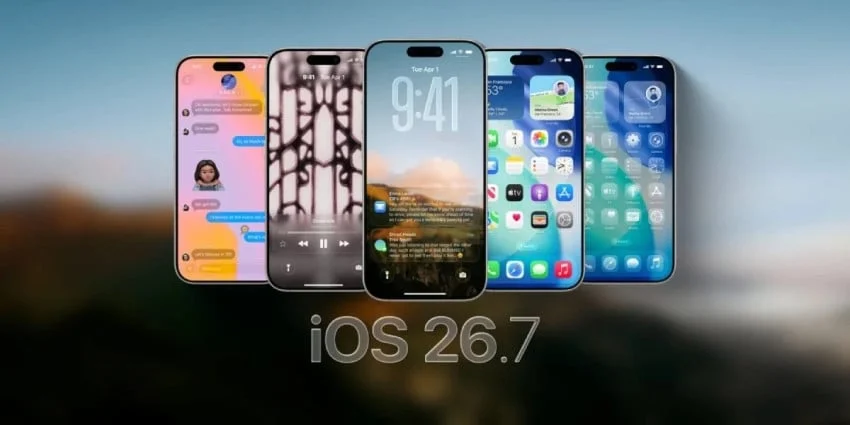
TEXAS — In a strategic move running parallel to the highly anticipated global rollout of the iPhone 18 lineup, Apple Inc. has officially released iOS 26.7. This targeted software update focuses extensively on patching critical security vulnerabilities, providing a stable, highly secure environment for millions of iPhone users worldwide who have not yet transitioned to the newer iOS 27 architecture. While global attention within the technology sector remains heavily fixated on the debut of the latest hardware flagships and the headline features of the newest operating system generation, the deployment of iOS 26.7 underscores Apple’s long-standing institutional commitment to maintaining the operational integrity, security, and longevity of legacy and current-generation devices whose owners prioritize absolute reliability over cutting-edge interface modifications.
Rather than introducing sweeping aesthetic overhauls or resource-intensive feature additions, iOS 26.7 is engineered from the ground up to serve as a fortress against emerging digital threats. Cybersecurity analysts and industry observers have noted that this maintenance release specifically targets recently identified zero-day exploits and core system flaws. By dedicating its engineering resources entirely to threat mitigation, Apple aims to prevent unauthorized data intrusion, safeguard sensitive corporate and personal information, and ensure uninterrupted daily operations for enterprise environments, government agencies, and everyday consumers alike.
Background Context: The Dual-Track Update Strategy
The launch of iOS 26.7 against the backdrop of the iPhone 18 release highlights a sophisticated software lifecycle management model that Apple has refined over recent years. Historically, the debut of a major operating system update—such as iOS 27—triggers a massive migration wave across the global user base. However, enterprise clients, software developers, and users of older hardware compatibility tiers frequently exercise caution before adopting a fresh major OS version. These groups often wait for initial stabilization patches to clear before migrating their daily drivers.
Recognizing this operational reality, Apple has maintained a dual-track update strategy. By continuing to service the previous major software branch, the company bridges the security gap for millions of devices. This ensures that users who require time to test application compatibility, verify enterprise workflow stability, or simply hold off on adopting new user interface paradigms are not left digitally exposed to sophisticated cyber threats. The release of iOS 26.7 serves as a vital bridge, maintaining robust defense mechanisms while the broader ecosystem gradually adapts to the paradigm shifts introduced by iOS 27 and the hardware capabilities of the iPhone 18 series.
Anatomy of a Security-First Release
A deep dive into the release architecture of iOS 26.7 reveals a distinct absence of customer-facing visual alterations. Unlike previous iterative updates that may have introduced subtle tweaks to control centers, notification management, or application programming interfaces (APIs), iOS 26.7 is entirely devoid of user-facing aesthetic changes.
According to preliminary software teardowns and vulnerability intelligence reports, the payload consists almost entirely of low-level kernel adjustments, memory corruption fixes, and cryptographic verification enhancements. Security researchers have emphasized that maintaining an updated kernel is paramount in preventing privilege escalation attacks—a vector where malicious actors attempt to gain unauthorized root-level access to an operating system. By neutralizing these pathways, the patch significantly hardens the iOS architecture against remote code execution and sophisticated spyware campaigns that frequently target mobile devices.
For professionals handling sensitive communications, financial transactions, and proprietary corporate assets on their mobile handsets, the application of such patches is non-negotiable. Cybercriminals frequently weaponize zero-day vulnerabilities during transitional hardware and software cycles, capitalizing on the window of vulnerability before users migrate to updated systems. iOS 26.7 effectively slams the door on these exploit vectors for the expansive user base remaining on the 26.x branch.
Interface Refinement: Guiding User Choice via Software Settings
Beyond the underlying code, Apple has implemented a notable change in how the update architecture is presented to users within the iOS Settings application. This deliberate interface design choice reflects a nuanced approach to user experience and operating system adoption governance.
When a compatible iPhone user navigates to the Software Update section within the system settings menu, iOS 26.7 is prominently displayed as the default, highly recommended upgrade path. This default positioning is designed to steer everyday users toward stability and immediate security fortification.
Conversely, the major operating system upgrade—iOS 27—is consciously positioned further down the interface hierarchy as an alternative, secondary choice. This UI layout prevents accidental migrations by users who may not be prepared for the substantial design shifts, hardware-resource demands, or application compatibility adjustments associated with a major generational leap. By democratizing the choice and prioritizing security continuity at the top of the menu, Apple empowers consumers to dictate their own upgrade timelines without sacrificing device safety.
Chronology of Deployment and Global Rollout
The rollout of iOS 26.7 follows a tightly coordinated deployment schedule aligned with the commercial availability of the iPhone 18. Following standard industry protocols, Apple initiated the distribution of the update through its over-the-air (OTA) distribution channels, reaching compatible devices across North America, Europe, Asia, and other key global markets simultaneously.
- Initial Developer Previews and Candidate Builds: In the weeks preceding the public launch, Apple circulated internal candidate builds to select enterprise partners and security auditors to verify that the patch did not inadvertently disrupt legacy application dependencies.
- Official Public Release: Synchronized with the global retail and shipping commencement of the iPhone 18 hardware lineup, iOS 26.7 became globally accessible to all eligible devices spanning multiple previous iPhone generations.
- Automated Security Enforcement: For devices configured with automatic updates enabled, the system prioritizes the installation of iOS 26.7 security definitions, ensuring rapid mitigation across the active installed base.
Implications for the Broader Tech Ecosystem
The simultaneous introduction of a cutting-edge hardware flagship, a major software generation, and a dedicated security patch for a legacy OS branch has profound implications for the mobile technology landscape.
First, it demonstrates Apple’s mature approach to software support lifecycles. As mobile devices increasingly function as primary computing hubs, digital wallets, identity verifiers, and professional workstations, the expectation of long-term security support has intensified. By providing robust support patches for previous generations of software while rolling out next-generation platforms, Apple mitigates the fragmentation risks that historically plagued mobile operating systems.
Second, the move reinforces consumer trust. In an era marked by rising concerns regarding data privacy, state-sponsored cyber espionage, and commercial spyware, hardware manufacturers are increasingly judged not merely by the innovation of their latest devices, but by the rigor of their defensive posture. Ensuring that users who delay major OS upgrades are not left unprotected is a critical component of maintaining ecosystem health and brand loyalty.
Fact-Based Analysis of Enterprise and Consumer Impact
For enterprise mobility management (EMM) administrators and corporate IT departments, the arrival of iOS 26.7 is a welcome development. Enterprise environments notoriously struggle with the immediate deployment of major OS updates due to the extensive internal testing required for proprietary line-of-business applications. The availability of a stable, secure iteration on the established branch allows IT administrators to maintain strict security compliance without risking operational downtime caused by application incompatibilities in newer operating systems.
On the consumer front, the update alleviates the anxiety often associated with the launch of new hardware and software iterations. Many smartphone users experience apprehension that older devices will be intentionally slowed down or left vulnerable when a new generation of hardware hits the market. By proactively servicing the older operating system branch with critical patches, Apple actively counteracts the narrative of planned obsolescence, reinforcing the long-term viability and residual value of iPhones currently in circulation.
Conclusion and Future Outlook
As the technology community continues to analyze the performance benchmarks of the newly launched iPhone 18 and explores the advanced capabilities integrated into iOS 27, the quiet deployment of iOS 26.7 remains an essential pillar of Apple’s operational strategy. By balancing the pursuit of future innovation with an uncompromising dedication to present-day security and stability, the company ensures that its vast global user base remains protected against sophisticated digital threats.
Users seeking to secure their devices without immediate transition to a major software overhaul are strongly encouraged to verify their system settings, navigate to the Software Update panel, and apply iOS 26.7 promptly to safeguard their personal and professional data against evolving cyber risks.