
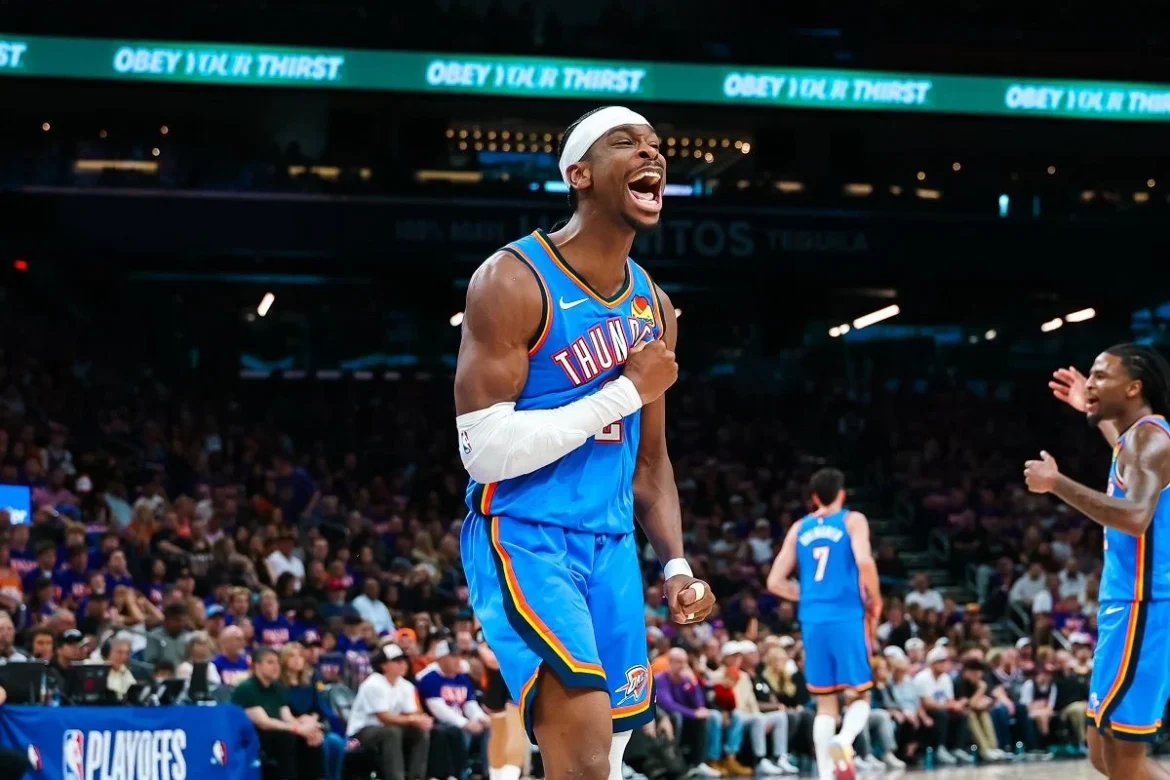
The Oklahoma City Thunder enters the 2026/2027 NBA season not merely as a contender, but as a team fueled by the bitter memory of a championship defense that ended in heartbreak. Following their triumphant title run in 2025, the Thunder experienced the volatile nature of the league, finishing the 2025/2026 regular season as the undisputed kings of the Western Conference with a commanding 64-18 record. However, their trajectory was abruptly halted in the Western Conference Finals by a resurgent San Antonio Spurs squad, which eliminated them in a grueling seven-game series. As the new season tips off on Tuesday, October 20, 2026, at the Frost Bank Center in San Antonio, the Thunder find themselves face-to-face with the ghosts of their past, seeking to validate their status as the league’s premier powerhouse.
A Legacy of Excellence and the Weight of Expectations
The 2025/2026 season for Oklahoma City was a masterclass in basketball efficiency. Under the guidance of head coach Mark Daigneault, the team established a defensive identity that stifled opponents while maintaining an offensive output that ranked among the league’s historical elite. The Thunder concluded the regular season with a net rating that underscored their dominance, averaging 119 points per game while limiting opponents to a mere 107.9 points. This +11.1 point differential was not just a statistic; it was a testament to the tactical discipline installed by Daigneault.
Despite these accolades, the postseason narrative shifted. While the Thunder steamrolled through the first two rounds of the playoffs with clean 4-0 sweeps against the Phoenix Suns and the Los Angeles Lakers, the Western Conference Finals exposed structural vulnerabilities. The absence of Jalen Williams for significant stretches due to injury stripped the team of its primary secondary playmaker, forcing an over-reliance on Shai Gilgeous-Alexander. When the final buzzer sounded on their 111-103 loss in Game 7 against the Spurs, the reality was clear: the path back to the NBA Finals would require more than just regular-season consistency—it would demand resilience in the face of elite defensive adjustments.
The Tactical Burden on Shai Gilgeous-Alexander
At the heart of the Thunder’s ambitions remains Shai Gilgeous-Alexander, the Canadian guard whose ability to dictate tempo and dismantle defenses is arguably unmatched in the current NBA landscape. As he enters the 2026/2027 campaign, Gilgeous-Alexander faces a dual mandate: maintain his status as an MVP-caliber scorer and evolve as a facilitator capable of breaking down the sophisticated defensive schemes that stifled the Thunder in the previous playoffs.
NBA analysts note that as defenses become increasingly comfortable "building a wall" against his drives, Gilgeous-Alexander’s role must pivot toward creating gravity for his teammates. During the 2026 offseason, the coaching staff focused heavily on high-pressure decision-making exercises to prepare him for the inevitable double-teams he will encounter. His ability to draw fouls and control the game from the free-throw line remains his greatest asset, but for the Thunder to secure another championship, they require his playmaking to elevate the surrounding roster, particularly when the game slows down in the postseason.
Jalen Williams and the Quest for Offensive Equilibrium
The return of Jalen Williams is widely considered the "x-factor" for Oklahoma City’s 2026/2027 prospects. His mid-season absence in the previous year was the missing link that allowed opponents to collapse on Gilgeous-Alexander. Williams provides a dimension of versatility that is essential in the modern era: he is a legitimate threat in transition, a reliable shooter from the mid-range, and an adept secondary creator.
From a medical and athletic standpoint, the Thunder’s training staff has implemented a strictly monitored workload for Williams to ensure he remains at peak capacity for the postseason. The organization recognizes that the marathon of 82 games is a test of attrition. If Williams can maintain his health and rhythm, the Thunder possess a dual-threat backcourt that forces opposing defenses to make impossible choices. The objective is clear: decentralize the offense enough to remain unpredictable while ensuring the primary stars are fresh enough to carry the load when the intensity spikes in May and June.
Defensive Stability and the Role of Chet Holmgren
While the offense generates the headlines, the bedrock of the Thunder’s success is their rim protection and perimeter versatility. Chet Holmgren continues to evolve as a modern defensive anchor, providing the team with a unique combination of shot-blocking prowess and the mobility to switch onto smaller, quicker guards. His presence allows the Thunder to maintain a top-tier defensive rating even when the offense hits a lull.
The addition of new roster pieces—including Aday Mara, Otega Oweh, and Bennett Stirtz—is designed to bolster this depth. These acquisitions are not intended to replace the core but to provide Daigneault with more flexible rotation options. The challenge for these newcomers will be integrating into a high-IQ system where communication is paramount. The Thunder’s success in recent years has been built on the premise that no single player is more important than the defensive system; maintaining this chemistry will be the ultimate litmus test for the 2026/2027 roster.
Mark Daigneault’s Strategic Reconfiguration
Head coach Mark Daigneault faces his most significant challenge since taking the reins in Oklahoma City. The failure to overcome the Spurs in the 2026 Western Conference Finals was, in part, a failure of tactical variation. In the four losses of that series, the Thunder’s offensive efficiency plummeted to 95.8 points per 100 possessions. This indicates that their standard offensive sets were successfully countered by the Spurs’ defensive discipline.
During the 2026 training camp, Daigneault emphasized "off-ball movement" and "perimeter spacing" as the pillars for the upcoming season. The coaching staff is reportedly experimenting with more complex off-ball screen actions and increased frequency of motion-based sets to prevent the ball-watching tendencies that slowed them down last spring. For Daigneault, the goal is to create a system that is robust enough to withstand deep playoff pressure, ensuring that when the star players are contained, the team’s collective basketball IQ compensates for the lack of individual scoring lanes.
The Landscape of the Western Conference
The Thunder are entering a Western Conference that is arguably the most competitive it has been in the last decade. The San Antonio Spurs, led by the generational talent of Victor Wembanyama and the emergence of Stephon Castle, have signaled that their 2026 championship run was merely the beginning of a dynasty. The Denver Nuggets, with Nikola Jokic remaining the ultimate floor general, continue to pose a threat to any team aiming for the summit.
Furthermore, the physical presence of the Minnesota Timberwolves and the rising consistency of the Houston Rockets mean there are no "nights off" in the Western Conference. For the Thunder, the implications are clear: the regular season is not merely about seeding; it is about building the mental fortitude and physical endurance required for a deep run. The opening night matchup against the Spurs serves as a barometer for both teams. While an early-season game cannot dictate the entire trajectory of the season, it serves as a psychological marker. A win would signal that the Thunder have learned from their tactical shortcomings, while a loss would force an immediate, perhaps uncomfortable, introspection.
The Path Forward: Can the Thunder Reclaim the Throne?
The identity of the 2026/2027 Oklahoma City Thunder is one of controlled intensity. They have the pedigree of a champion, the experience of a deep playoff run, and a roster that is ostensibly in its prime. However, the margin for error in the NBA is razor-thin. The organization is acutely aware that the "championship window" is a fleeting concept, and the pressure to deliver is amplified by the presence of hungry rivals who are no longer intimidated by the Thunder’s regular-season dominance.
As they prepare for the 2026/2027 tip-off, the atmosphere in Oklahoma City is one of quiet determination. The team is no longer the "young, up-and-coming" squad that catches the league by surprise; they are now the hunted. They must navigate a grueling 82-game schedule, manage the health of their core, and solve the tactical puzzles presented by the league’s best defensive coaches.
The question looming over the team is simple yet profound: Was the 2025 title a singular moment of brilliance, or is it the foundation of a sustained era of success? The answer begins to take shape on Wednesday, October 21, at 08:30 WIB. For Gilgeous-Alexander, Williams, Holmgren, and the entire Thunder organization, the journey back to the top is not just about winning games—it is about proving that they have the adaptability and the heart to reclaim their throne in an increasingly crowded Western Conference. The mission is clear, the stakes are high, and the 2026/2027 season promises to be a defining chapter in the history of the franchise.
