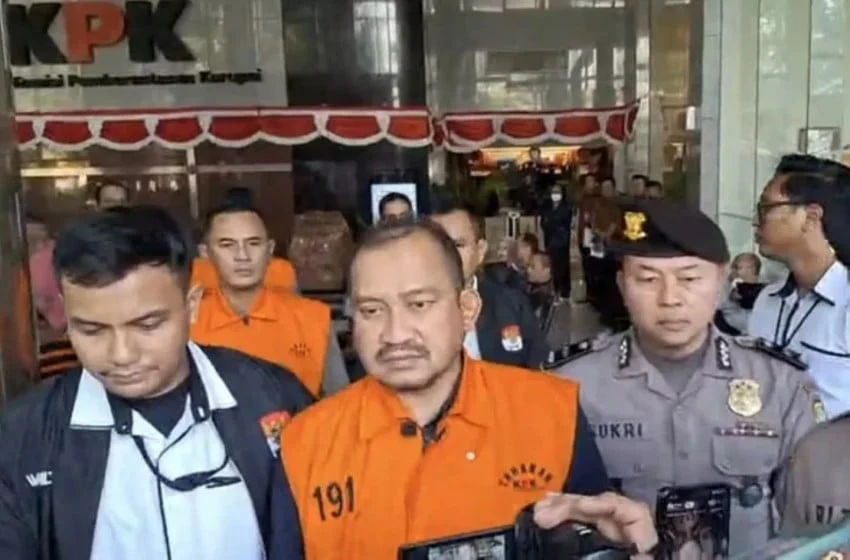
The Corruption Eradication Commission (KPK) has officially seized a Jaecoo J5 luxury vehicle from Tri Budi Ambarsari, a witness currently under scrutiny in the ongoing investigation into alleged extortion involving the non-active Regent of Pemalang, Anom Widiyantoro. This latest development marks a significant escalation in the anti-graft agency’s pursuit of financial assets linked to the widespread corruption scandal that has paralyzed the local government of Pemalang, Central Java.
The Seizure and Judicial Context
The seizure was confirmed by KPK spokesperson Budi Prasetyo on Thursday, September 17, 2026. According to official reports, the vehicle was recovered from Ambarsari—identified in documents as "AB"—following extensive investigative work by the KPK’s task force. While Ambarsari was initially apprehended during the same sting operation (Operasi Tangkap Tangan or OTT) that led to the detention of Anom Widiyantoro, she has not been formally named a suspect.
The legal status of the vehicle is currently categorized as "evidence," implying that investigators believe the asset was acquired through or used in the commission of the alleged extortion activities. Under Indonesian anti-corruption law, specifically the provisions governing money laundering and asset recovery, the state is authorized to seize any property suspected of being tied to illicit gains while the investigation is ongoing.
Background of the Pemalang Corruption Scandal
The Pemalang scandal first made national headlines when the KPK launched a series of investigations into systemic bribery and extortion within the regional government. Anom Widiyantoro, the Regent of Pemalang, is accused of orchestrating a scheme that demanded payments from civil servants in exchange for career advancements, promotions, and the maintenance of their positions.
The investigation has revealed a complex web of influence peddling, often referred to locally as "jual beli jabatan" (the buying and selling of bureaucratic positions). This practice involves high-ranking officials extracting funds from subordinates, which creates a toxic environment of corruption that ripples through public service delivery. The KPK’s intervention aims to dismantle the infrastructure of these "shadow budgets" that bypass official state channels.
Chronology of the Investigation
The trajectory of this case began with intelligence reports regarding irregularities in the Pemalang regional budget and human resources management.
- Initial Intelligence Gathering: KPK investigators tracked financial transactions linking municipal officeholders to illicit cash flow.
- The Sting Operation (OTT): The KPK successfully executed an operation that caught key figures, including Regent Anom Widiyantoro, in the act of facilitating or receiving illicit funds.
- Witness Interrogations: Following the initial arrests, the KPK expanded its scope to include close associates, family members, and individuals who acted as intermediaries. Tri Budi Ambarsari was brought in during this phase due to her proximity to the Regent during the time of the arrest.
- Asset Tracing: Post-arrest, the investigation pivoted toward "follow the money" tactics, leading to the seizure of various assets, including the recent confiscation of the Jaecoo J5.
- Expansion of Inquiries: Recent reports indicate that the KPK has also begun questioning the wife of the Regent, focusing specifically on the tariff structures for rotations and mutations within the local government’s hierarchy.
The Role of Witnesses and Asset Recovery
The fact that Ambarsari is a witness rather than a suspect underscores the KPK’s strategy of using "leverage" to secure cooperation. By seizing luxury assets, the agency not only preserves evidence but also puts pressure on those who may have been involved in the laundering or holding of funds on behalf of the principal suspects.
In the Indonesian legal system, witnesses are obligated to provide full disclosure regarding the origin of their wealth if it intersects with a criminal investigation. If Ambarsari cannot provide proof of legitimate income to justify the ownership of such a high-end vehicle, the state may pursue permanent forfeiture of the asset under the Law on the Eradication of Corruption Crimes.
Broader Implications: The Crisis of Regional Governance
The case of Anom Widiyantoro is symptomatic of a larger issue facing decentralized governance in Indonesia. Experts note that when regional heads treat public office as a business venture, the primary victims are the citizens of Pemalang, who suffer from poor infrastructure, inadequate public services, and the demoralization of the civil service.

The prevalence of "mutation fees"—where civil servants must pay to be transferred to "lucrative" departments—erodes the meritocracy that is vital for a functioning democracy. When positions are auctioned rather than earned, the quality of public policy suffers. The KPK’s focus on the financial mechanics of these transactions, such as the seizure of the Jaecoo J5, is intended to send a deterrent message to other regional heads who may be operating similar schemes.
Official Responses and Transparency
The KPK remains tight-lipped regarding the specific details of the relationship between Ambarsari and Widiyantoro, citing the ongoing nature of the investigation. However, Budi Prasetyo emphasized that every piece of evidence, regardless of how small it may seem, is vital to building a watertight case.
"We are tracking every cent and every item that has been purchased with funds diverted from the public purse," Prasetyo noted during the press briefing. "The seizure of this vehicle is part of a broader effort to ensure that the state recovers as much of the stolen assets as possible for the benefit of the people of Pemalang."
Legal analysts have suggested that this investigation could be one of the most significant in the region for the current decade. If the KPK succeeds in proving the nexus between the seized assets and the extortion scheme, it will set a precedent for future prosecutions involving regional heads who use intermediaries to mask their illegal activities.
Analysis: Why Asset Seizure Matters
Asset seizure is a cornerstone of effective anti-corruption work. It strikes at the core motivation for corruption: financial enrichment. When a corrupt official knows that not only their freedom but also their luxury lifestyle and assets are at risk, the cost-benefit analysis of engaging in corruption shifts.
The inclusion of luxury vehicles in the evidence pile also highlights the lifestyle of those involved in the scandal. The Jaecoo J5, a vehicle known for its modern design and significant market value, serves as a visual marker of the disparity between the modest salaries of public servants and the wealth accumulated by those involved in systemic extortion.
Conclusion and Future Outlook
As the investigation into Anom Widiyantoro continues, the public and legal observers alike are waiting to see if the KPK will widen the net further. The recent questioning of the Regent’s wife and the continued focus on financial records suggest that more assets are likely to be seized in the coming months.
The case serves as a stark reminder of the risks associated with the misuse of executive power in regional administrations. As the KPK prepares to bring the case to the Corruption Court, the evidence gathered—from testimonies to physical assets like the Jaecoo J5—will be scrutinized to ensure that justice is served. For the residents of Pemalang, the hope is that this investigation marks the beginning of a cleaner, more accountable local government that prioritizes public service over personal gain.
The KPK has reaffirmed its commitment to seeing the investigation through to completion, promising that no individual, regardless of their role or proximity to the accused, will be spared if they are found to have facilitated the corruption of the regional government.