
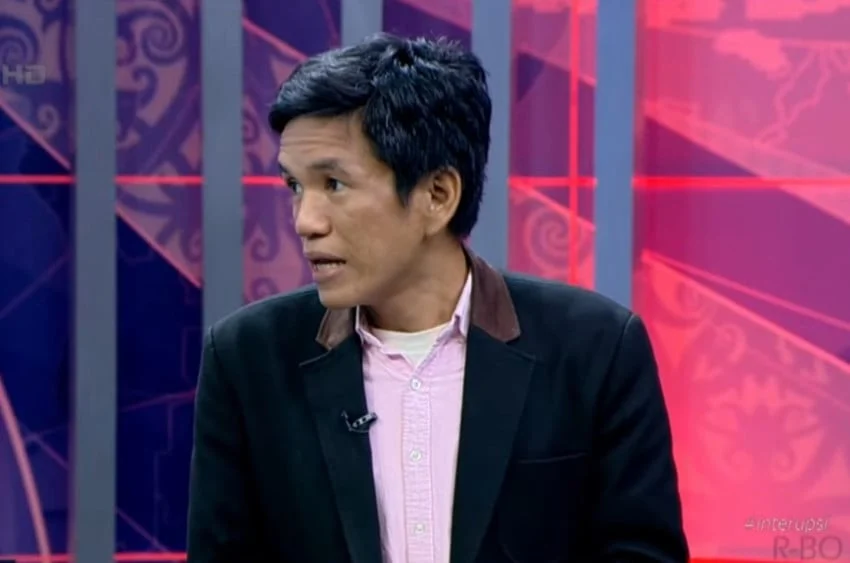
The legal battle surrounding the academic credentials of Vice President Gibran Rakabuming Raka has reached a critical juncture at the Jakarta State Administrative Court (PTUN), as the legal counsel for the plaintiffs, Heriyanto, publicly questioned the commitment of the defendants—specifically the Ministry of Basic and Secondary Education—to provide transparent evidence. During a televised appearance on iNews’ Interupsi program on Thursday, October 29, 2026, Heriyanto signaled a growing frustration with the judicial process, characterizing the government’s approach to discovery as non-serious and obstructive.
At the heart of the dispute is a request for specific documentation regarding the Vice President’s past educational journey, specifically his time at UTS Insearch in Sydney, Australia. The plaintiffs contend that without the production of primary source documents, the legitimacy of the administrative certificates issued regarding his education remains under a cloud of doubt.
The Core of the Dispute: Documents in Question
The legal team representing the plaintiffs has maintained a consistent demand for three specific categories of documents that they argue are essential to verify the academic history of the Vice President. These include the official Certificate of Attendance from UTS Insearch, a comprehensive academic transcript detailing the coursework completed, and formal proof of enrollment that links the individual to the institution during the specified period.
Heriyanto argued that the absence of these documents in the courtroom is not merely a procedural delay but a fundamental failure of the defendants to meet their burden of proof. "We have repeatedly stated that we are witnessing a distinct lack of seriousness in the evidentiary process by the defendants," Heriyanto stated during the broadcast. He further questioned the viability of continuing the litigation if the state authorities continue to withhold evidence that is supposedly central to the defense of the certificates.
Chronology of the Legal Challenge
The challenge against the validity of the educational credentials is part of a broader, ongoing narrative that has shadowed the Vice President’s political trajectory since his candidacy in the 2024 general election. The case at the PTUN is one of several legal avenues pursued by various civil society groups and individuals seeking clarity on the academic qualifications required for high office.
Earlier this week, the legal landscape surrounding this issue shifted when another key figure in the challenge, Mercy Sihombing, announced the withdrawal of her specific lawsuit at the PTUN. While the withdrawal was presented as a tactical pivot—with Sihombing suggesting that her team is preparing alternative legal strategies—the move has created a ripple effect. Observers note that such withdrawals often signal either a lack of confidence in the specific court’s jurisdiction or a shift toward different investigative avenues, such as administrative appeals to the Ministry or public information requests through the Information Commission.
The case involving Heriyanto’s clients remains distinct, as they continue to press the court to compel the Ministry to produce records that they believe will either validate or invalidate the claims of academic completion.
The Role of the Ministry of Basic and Secondary Education
The Ministry of Basic and Secondary Education stands as a primary defendant in these proceedings because it is the state body responsible for verifying and issuing equivalency certificates for foreign education. In the context of the Vice President’s credentials, the Ministry has previously maintained that all administrative requirements were met in accordance with existing regulations.
However, the plaintiffs argue that the Ministry’s process of "verification" was cursory. By demanding the original Certificate of Attendance and detailed transcripts, the plaintiffs are attempting to establish whether the Ministry conducted a rigorous audit of the Vice President’s academic records or if they relied solely on declarations provided by the applicant. From a legal standpoint, this places the Ministry in a difficult position: they must balance the protection of a high-ranking official’s privacy with the public’s right to transparency regarding the qualifications of its leaders.
Fact-Based Analysis: Why Academic Verification Matters
In democratic systems, the educational qualifications of candidates for high office are considered a matter of public interest. This is not necessarily due to the belief that a specific degree is required to perform the duties of a Vice President, but rather to ensure the integrity of the electoral process. If a candidate claims credentials that are found to be fraudulent or misrepresented, it raises questions regarding the candidate’s honesty and the government’s vetting mechanisms.

The reliance on foreign education, particularly in countries like Australia, adds a layer of complexity to the discovery process. International verification often requires cooperation between the Indonesian government and foreign academic institutions. The Ministry of Basic and Secondary Education typically relies on the "Certificate of Equivalency" (Surat Keterangan Penyetaraan Ijazah), which acts as a bridge between the foreign qualification and the Indonesian national education system.
If the plaintiffs can prove that the documents underpinning the Ministry’s equivalency certificate are missing or non-existent, the administrative act itself could be declared invalid by the PTUN. Such a ruling would not necessarily remove the Vice President from office, but it would create a significant political crisis and further damage public trust in the state’s administrative institutions.
Broader Implications for Administrative Law
The case at the Jakarta PTUN is a litmus test for the independence and efficacy of the Indonesian judiciary. State Administrative Courts are designed to resolve disputes between citizens and government bodies. By questioning the "seriousness" of the defendants, the plaintiffs are effectively accusing the state of utilizing the judiciary to shield the executive branch from accountability.
Legal experts observing the case point out that the burden of proof in administrative law is shared. While the plaintiff must provide initial evidence of a potential error, the government agency—as the creator of the disputed administrative document—is often expected to provide the files that justify their decision-making process. If the Ministry fails to present the requested enrollment and attendance data, the court may eventually have to make a ruling based on the limited evidence available, which could potentially favor the plaintiffs if the court decides the government failed to prove the legitimacy of its own administrative act.
Perspectives on the Litigation
While the government has remained largely silent regarding the specific details of the court proceedings, official spokespeople for the administration have previously characterized these legal challenges as politically motivated attempts to undermine the Vice President. They maintain that all educational requirements were scrutinized by the General Elections Commission (KPU) during the nomination phase and that the legal status of the Vice President is settled.
Conversely, the plaintiffs and their legal teams, including Heriyanto, maintain that their interest is purely procedural. They argue that the law applies to everyone equally, and if a document has been issued by a state body, that body must be prepared to defend the accuracy of the records it holds. The frustration expressed by Heriyanto is symptomatic of a broader societal demand for accountability in the digital age, where citizens have unprecedented access to information and a growing expectation that public officials should be transparent about their backgrounds.
Future Outlook: What to Expect in the Courtroom
As the trial progresses, the court will likely face increased pressure to decide whether to compel the Ministry to release the specific documents requested. If the court denies the request, it may provide grounds for the plaintiffs to appeal the decision, thereby extending the litigation into 2027. If the court grants the request, it will set a precedent for future cases involving the verification of academic records for public officials.
The strategy of "withdrawing and refiling" or "challenging the process" suggests that this legal battle is far from over. With the plaintiffs hinting at alternative legal steps—including potential criminal reports if they believe falsification of documents is involved—the focus may soon shift from the PTUN to the police or other oversight bodies.
For now, the legal team representing the plaintiffs remains firm. The question posed by Heriyanto—"For what reason should we continue if there is no seriousness?"—serves as both a warning to the court and a declaration of intent. They are prepared to see the process through to the end, provided that the judiciary ensures the rules of discovery are enforced with the same rigor for the powerful as they are for the ordinary citizen.
Ultimately, the resolution of this case will be significant, regardless of the outcome. Whether it results in the confirmation of the Vice President’s academic credentials or reveals systemic failures in the Ministry’s certification process, the proceedings underscore the evolving nature of public accountability in Indonesia. As the hearings continue, the eyes of the public remain fixed on the Jakarta PTUN, waiting to see if the requested documents will finally be brought to light or if the debate over the Vice President’s education will remain a permanent fixture of his tenure.
