
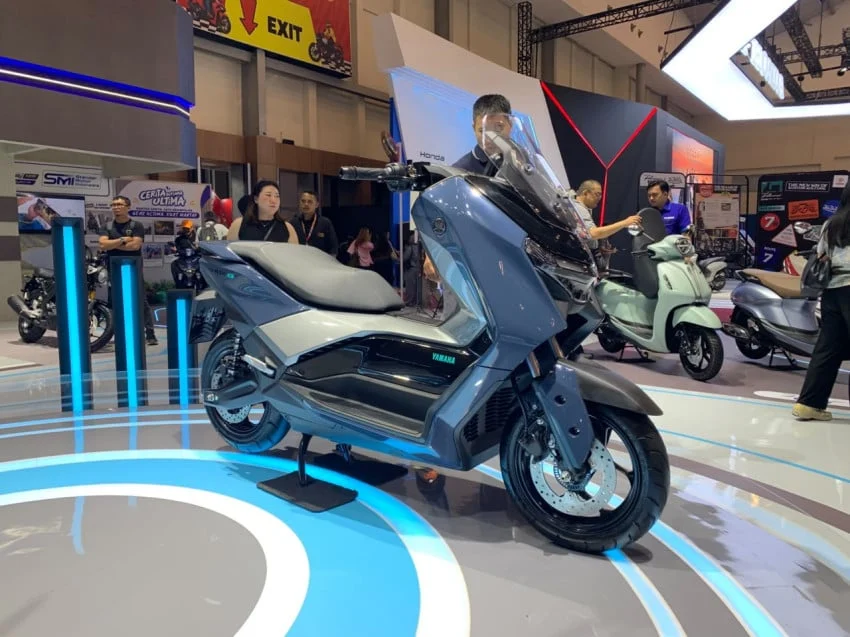
The Indonesian Motorcycle Show (IMOS) 2026 reached a pivotal moment this week in Tangerang as Yamaha Indonesia officially unveiled the NMax E, the long-awaited electric iteration of its flagship Maxi scooter line. As the automotive industry shifts aggressively toward decarbonization, the arrival of the NMax E represents more than a mere product launch; it signifies a strategic alignment of one of the world’s most popular scooter platforms with global sustainability goals. The vehicle, which draws its technical foundation from the variant recently introduced in the European market, commanded the attention of thousands of attendees, signaling a potential paradigm shift in the premium commuter segment.
Technical Specifications and Performance Metrics
At the heart of the Yamaha NMax E lies a robust powertrain engineered to bridge the gap between traditional internal combustion engine (ICE) reliability and modern electric efficiency. The scooter is powered by a 7.5 kW electric motor, a configuration that Yamaha engineers have calibrated to mirror the performance characteristics of a conventional 125cc combustion engine. This decision is crucial for market adoption, as it ensures that current NMax users—accustomed to the torque and handling of the petrol-powered versions—find a familiar, albeit refined, experience.
The energy storage system consists of a 3.5 kWh battery pack, which serves as the backbone of the scooter’s operational range. According to official performance data verified during European testing cycles and mirrored in the Indonesian launch specifications, the NMax E is capable of covering a distance of 104 kilometers on a single full charge. This range is specifically optimized for urban commuting, where the average daily distance traveled by metropolitan residents typically falls well within the 40 to 60-kilometer bracket. By providing a 104 km threshold, Yamaha addresses the "range anxiety" that has historically hindered the widespread adoption of electric two-wheelers in emerging markets.
The Evolution of the Maxi Lineage
The history of the Yamaha NMax is a testament to the company’s dominance in the "Maxi" scooter category. Since its introduction, the NMax has been synonymous with comfort, ergonomics, and power. The transition to an electric powertrain did not occur overnight; it is the culmination of a decade-long research and development phase focusing on modular electric platforms.
The chronology of this development began with early prototype testing in Japan, followed by the integration of battery-swapping technologies and the refinement of liquid-cooled electric motor designs. In late 2025, Yamaha Motor Europe began the initial rollout of the NMax E, testing the infrastructure and consumer reception in major cities like Rome and Paris, where regulations on emissions are becoming increasingly stringent. The decision to bring this model to the IMOS 2026 stage in Tangerang highlights the importance of the Indonesian market as a secondary pillar for Yamaha’s global electrification strategy.
IMOS 2026: A Hub for Sustainable Mobility
The Indonesia Motorcycle Show (IMOS) 2026 has served as the definitive platform for this launch. As the nation’s premier motorcycle exhibition, IMOS provides a unique environment for manufacturers to gauge public sentiment toward electric vehicles (EVs). Industry analysts at the event noted that the booth housing the NMax E remained the most crowded throughout the opening days, reflecting a high level of consumer interest.
The exhibition is currently serving as a microcosm of the global shift in transportation. With the Indonesian government’s aggressive push to provide subsidies for electric motorcycles and the expansion of charging infrastructure across major cities, the debut of a brand as established as Yamaha provides a much-needed "seal of approval" for cautious buyers. Many attendees at the show expressed that the primary barrier to purchasing an electric motorcycle was the lack of confidence in new, unknown brands; the NMax E effectively bypasses this concern by leveraging the established NMax brand equity.
Strategic Implications and Market Analysis
The introduction of the NMax E is expected to trigger a significant ripple effect in the domestic motorcycle market. Currently, the Indonesian market is dominated by internal combustion engines, but the presence of a premium, brand-recognized electric scooter forces competitors to accelerate their own electric roadmaps.
From a manufacturing standpoint, the production of the NMax E represents a shift in supply chain logistics. Yamaha Indonesia has signaled that local production capabilities are being adapted to accommodate battery assembly and high-voltage electrical systems. This move is projected to lower costs over the long term, making the NMax E more competitive against both premium ICE scooters and lower-tier electric competitors.

Furthermore, the integration of 7.5 kW power output suggests that Yamaha is targeting the "mid-to-premium" consumer. Unlike entry-level electric scooters that prioritize simplicity and low costs, the NMax E maintains the premium chassis, sophisticated suspension, and advanced braking systems that define the NMax family. This creates a distinct market segment: users who want the environmental benefits of electric power without sacrificing the comfort and performance expected from a Maxi scooter.
Perspectives from Industry Experts
During a panel discussion at IMOS 2026, automotive analyst Dr. Hendra Wijaya remarked on the significance of the launch: "The entry of a legacy manufacturer like Yamaha into the electric segment with a platform as iconic as the NMax is a watershed moment. It signals to the consumer that electric mobility is no longer an experiment; it is the next standard. The 104 km range is the ‘sweet spot’ for city dwellers, and the 7.5 kW motor ensures that the scooter remains a viable choice for those who occasionally use highways or require quick acceleration for city safety."
While Yamaha representatives have remained measured in their public statements, focusing on the technical prowess of the machine, insiders suggest that the NMax E is designed to be the "gateway" vehicle for millions of loyal Yamaha customers. The company is reportedly working closely with local stakeholders to ensure that the charging ecosystem—whether through home-based chargers or public battery-swapping stations—is ready to support the influx of these vehicles into the Indonesian traffic grid.
Challenges and Future Considerations
Despite the enthusiasm surrounding the NMax E, the transition is not without challenges. The primary hurdle remains the cost-benefit analysis for the average consumer. While the NMax E offers lower running costs—citing reduced maintenance requirements as a key benefit compared to oil changes and transmission service for ICE engines—the upfront cost of the vehicle remains higher than its combustion counterparts.
Additionally, the development of a nationwide, standardized charging infrastructure is a task that requires collaboration between private manufacturers and the public sector. Yamaha’s strategy appears to rely on a mix of domestic charging solutions and potential partnerships for battery infrastructure, a multi-pronged approach that reflects the complexities of the Indonesian archipelago’s geography.
Environmental impact assessments are also being prioritized. As Yamaha moves to mass-produce the NMax E, the lifecycle management of the 3.5 kWh battery packs—including recycling and second-life applications—will become a critical talking point for regulators. Yamaha has already begun outlining a "cradle-to-cradle" battery initiative to address concerns regarding the long-term ecological footprint of their electric fleet.
The Road Ahead
As IMOS 2026 draws to a close, the consensus among industry stakeholders is clear: the Yamaha NMax E is a well-timed, strategically sound addition to the market. By balancing the performance requirements of a 125cc-equivalent motor with a practical 104 km range, Yamaha has created a product that satisfies the immediate needs of the modern commuter.
The success of the NMax E in the coming months will likely be measured by its penetration into the ride-sharing and delivery sectors, as well as its adoption by private commuters who are increasingly sensitive to fluctuating fuel prices. If the initial reception at IMOS is any indication, the NMax E is poised to become the standard-bearer for electric mobility in Indonesia, effectively transitioning the nation’s largest motorcycle brand into the electric era.
For the consumer, the choice is becoming increasingly clear. With the NMax E, the trade-off between performance and sustainability has been largely eliminated. The vehicle stands as a robust, reliable, and technologically advanced successor to a legendary line of scooters, proving that the future of motorcycling does not have to compromise on the spirit of the ride. As global trends continue to favor electrification, Yamaha has demonstrated that it is not merely reacting to the market, but actively shaping the landscape of urban mobility for the next decade.
