
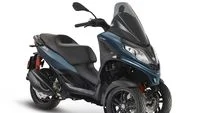
Jakarta, CNN Indonesia — The revolutionary Piaggio MP3 is officially celebrating two decades of cutting-edge engineering, market leadership, and unmatched urban mobility since it first made its global debut in 2006. Over the course of its twenty-year journey within the fiercely competitive global automotive sector, this pioneering three-wheeled scooter has consistently redefined and elevated the industry benchmarks for safety, stability, mechanical ingenuity, and rider comfort in congested metropolitan landscapes.
From its inception two decades ago, the Piaggio MP3 emerged as a visionary breakthrough that successfully carved out an entirely unprecedented market segment. Rather than competing directly with traditional two-wheeled motorcycles or four-wheeled automobiles, the MP3 bridged a critical gap in personal transportation. Its primary technical marvel lies in its sophisticated, proprietary front-end architecture: an independent dual-wheel tilting mechanism paired with an exclusive quadrilateral articulated parallelogram suspension system. This ingenious design empowers the vehicle to lean dynamically into corners just like a conventional motorcycle while offering the extraordinary stability, traction, and physical reassurance of a multi-track vehicle.
According to official corporate statements released by the Piaggio Group, the unique appeal of this hybrid-concept scooter has successfully captivated an impressively diverse demographic of global consumers. Over the past twenty years, the user base has expanded far beyond traditional motorcycle enthusiasts to include everyday commuters, automobile drivers seeking a practical, nimble alternative to navigating traffic-choked urban centers, and safety-conscious riders of all experience levels who previously felt intimidated by the inherent balance requirements of standard two-wheeled scooters.
Global Phenomenon and Impressive Sales Milestones
While the Piaggio MP3 has established a notable presence across multiple continents, its reception in select European markets has been nothing short of phenomenal. In countries such as France, where congested city streets and liberal traffic regulations make urban commuting a daily challenge, the popularity of the MP3 has reached staggering heights. Cumulative sales in France alone have comfortably surpassed the 150,000-unit threshold, accounting for nearly 60 percent of the scooter’s total global production output.
On a broader scale, the total worldwide cumulative sales figures for the Piaggio MP3 family have officially breached the milestone of 250,000 units sold. This robust commercial performance underscores the enduring appeal of a vehicle that initially faced skepticism from traditionalists but ultimately proved its worth through real-world utility, continuous technological refinement, and uncompromising safety features. Industry analysts frequently point to the MP3 as one of the most successful niche vehicle experiments in modern automotive history, transitioning from a bold design concept into a mainstream urban staple.
Two Decades of Powertrain Evolution and Environmental Compliance
Throughout its twenty-year lifecycle, the Piaggio MP3 has undergone continuous and significant mechanical evolution, ensuring it remains at the absolute forefront of internal combustion efficiency and environmental compliance. When the scooter first rolled off the assembly line in 2006, it debuted with a modest yet capable 250 cc powerplant. As urban transit demands shifted and global environmental regulations tightened, Piaggio steadily expanded and refined the vehicle’s engine lineup.
Today’s modern iterations of the MP3 feature advanced high-performance engines (hpe) that comply strictly with stringent Euro 5+ emissions standards, significantly reducing carbon footprints and particulate emissions without sacrificing the dynamic performance expected by riders. The contemporary portfolio offers a versatile range of displacements tailored to diverse riding needs, spanning from efficient 310 cc variants and robust 400 cc models to the flagship, high-displacement 530 cc configuration designed for long-distance touring and highway cruising.
Furthermore, the technological ambition of the Piaggio Group was clearly demonstrated as early as 2009, when the company etched its name into automotive history books by introducing the world’s first hybrid scooter. The Piaggio MP3 Hybrid combined a traditional internal combustion engine with an electric motor, foreshadowing the green mobility revolution that would dominate the transportation sector decades later. Although the market at the time was perhaps premature for widespread hybrid adoption, the endeavor showcased Piaggio’s unwavering commitment to sustainable engineering and alternative energy solutions.
Cutting-Edge Safety Features and Technological Integration
Safety has always remained the cornerstone of the Piaggio MP3 engineering philosophy. Over the decades, the manufacturer has systematically integrated automotive-grade safety systems into its flagship scooter line. Modern iterations of the MP3 boast comprehensive safety suites, including a sophisticated three-channel Anti-lock Braking System (ABS) and Acceleration Slip Regulation (ASR) electronic traction control. These systems work in tandem to prevent wheel lockups during panic braking on slippery road surfaces and mitigate rear-wheel spin during aggressive acceleration on wet or uneven tarmac.
In addition to foundational safety electronics, contemporary models feature modern creature comforts designed to enhance the daily commuting experience. These include full-LED lighting assemblies for superior night visibility, keyless ignition systems for enhanced convenience, and high-resolution, full-color TFT instrument panels that present vital telemetry data with crystal clarity.
At the pinnacle of the lineup sits the Piaggio MP3 530 hpe Exclusive, a technological tour de force that incorporates automotive-derived Advanced Rider Assistance Systems (ARAS). Powered by cutting-edge 4D Imaging Radar technology, the vehicle features intelligent safety applications such as Blind Spot Information System (BLIS) and Lane Change Decision Aid System (LCDAS). To further elevate the riding experience, the flagship model includes electronic cruise control for fatigue-free highway cruising and a dedicated reverse gear accompanied by a rear-facing parking camera to simplify maneuvering in tight parking spaces.
Connectivity has also become a defining characteristic of the modern MP3 experience. Through the proprietary Piaggio MIA multimedia platform, riders can seamlessly integrate their smartphones with the vehicle’s onboard computer. This allows operators to manage phone calls, stream music, and utilize turn-by-turn GPS navigation directly through the handlebar controls and instrument cluster, ensuring that connectivity never compromises road safety.
Regulatory Advantages and Future Outlook
Beyond its technical specifications and safety innovations, the Piaggio MP3 has long enjoyed a unique regulatory advantage in numerous European jurisdictions. Thanks to its specific track width and integrated braking system architecture, the MP3 qualifies in many countries to be ridden with a standard automobile driver’s license (Class B) rather than requiring a dedicated motorcycle endorsement. This regulatory classification has unlocked an enormous demographic of urban professionals who require swift, nimble transportation through congested metropolitan corridors without the administrative hurdle of obtaining a motorcycle license.
As the Piaggio MP3 enters its third decade of production, industry experts and automotive analysts project that the vehicle will continue to serve as a vital benchmark in the evolution of micro-mobility. In an era where urban centers face unprecedented challenges regarding traffic congestion, parking shortages, and carbon emissions, versatile multi-wheeled solutions like the MP3 offer a pragmatic, highly secure bridge between traditional automobiles and two-wheeled transit.
By relentlessly pushing the boundaries of mechanical stability, integrating state-of-the-art digital infrastructure, and adhering strictly to environmental sustainability goals, Piaggio has ensured that the MP3 is not merely a product of its time, but an enduring icon of modern urban engineering. As the next chapter of its journey unfolds, the Piaggio MP3 stands firmly positioned as a testament to visionary design, proving that true innovation possesses the resilience to shape the future of global mobility for generations to come.
