JAKARTA – A recent survey conducted by Parameter Politik Indonesia has identified Taj Yasin Maimoen, the former Deputy Governor of Central Java for the 2018-2023 term, as the most popular figure among potential candidates for the upcoming Central Java gubernatorial election (Pilkada Jateng). The data collection, carried out between May 15 and May 21, 2024, places Maimoen at the forefront, signaling an early indication of public recognition in one of Indonesia’s most electorally significant provinces.
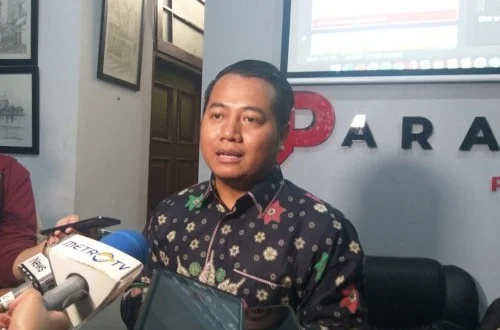
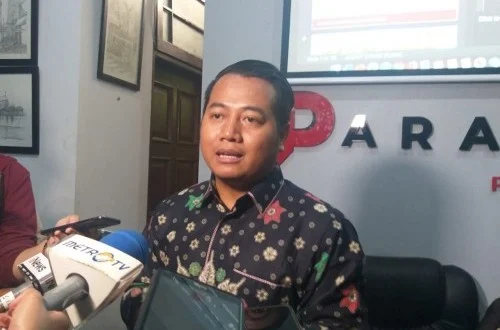
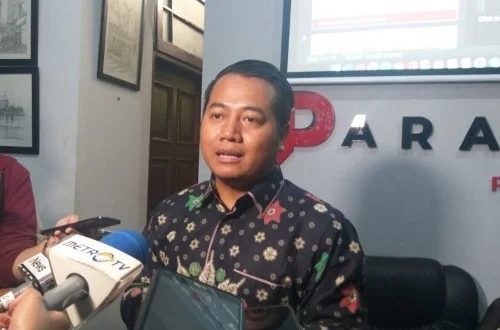
Adi Prayitno, Executive Director of Parameter Politik Indonesia, announced the findings in an online release observed from Jakarta on Wednesday, May 29, 2024. He detailed the methodology, explaining, "We asked respondents one by one, ‘Sir, Madam, are you familiar with the following figures?’ So, we questioned respondents individually, and approximately 52.1 percent stated they were familiar with the name Taj Yasin." This direct approach aimed to gauge raw public recognition, a crucial initial metric in assessing a candidate’s potential reach.
Following Maimoen, Hendrar Prihadi, the current Head of the Government Goods and Services Procurement Policy Institute (LKPP) and former Mayor of Semarang, secured the second position with a 40 percent recognition rate. Bupati (Regent) of Kendal, Dico Ganinduto, rounded out the top three, achieving 38.1 percent popularity. Prayitno underscored the rationale behind selecting these particular figures for the survey, stating, "These individuals are those whom we believe possess potential, are frequently discussed, or are consistently linked to the possibility of advancing in the Central Java Pilkada. Thus, when we tally them one by one, this is the general snapshot of their popularity."
Despite these initial popularity figures, Prayitno cautioned that none of the surveyed figures could yet be described as "outstanding" or overwhelmingly dominant in terms of public recognition. This observation suggests a fluid political landscape in Central Java, where no single candidate has yet captured a decisive majority of public awareness, leaving ample room for strategic maneuvering and public engagement as the election cycle progresses.
Central Java’s Pivotal Role in Indonesian Politics
Central Java is not merely one of Indonesia’s 38 provinces; it is a political powerhouse, often considered a crucial battleground in both national and regional elections. With a population exceeding 37 million people, it is the third most populous province in Indonesia, contributing a significant number of votes to the national tally. Historically, Central Java has been a stronghold for the PDI-P (Indonesian Democratic Party of Struggle), the party of former President Megawati Sukarnoputri and current President-elect Prabowo Subianto’s coalition partner. The province’s political leanings and voter behavior often mirror or influence national trends, making the gubernatorial race a highly anticipated event for political observers and parties alike.
The upcoming Pilkada Jateng, scheduled for November 27, 2024, will elect a new governor and vice governor for a five-year term. This election comes on the heels of the intensely contested 2024 presidential and legislative elections, where political alliances were forged and tested. The results of the national elections are expected to cast a long shadow over the regional contests, with national parties seeking to consolidate their power at the local level. The race for Central Java is particularly significant as it represents a significant political prize, offering control over vast resources and influence in a region central to Javanese culture and economic activity.
Understanding the Survey Methodology and Its Implications
Parameter Politik Indonesia’s survey, conducted through face-to-face interviews with respondents, is a common methodology employed in Indonesian political polling. While the specific sample size, margin of error, and confidence level were not explicitly detailed in the initial report, reputable survey institutions typically aim for a sample size of 1,000 to 1,200 respondents, distributed proportionally across various demographic segments and geographic regions within the province. Such a sample usually yields a margin of error of approximately ±2.8% to 3.1% at a 95% confidence level. These parameters are crucial for assessing the reliability and generalizability of the survey results.
The focus on "popularity" in this early stage of the election cycle is a standard initial metric. Popularity, or public recognition, indicates how many people are aware of a candidate. It is distinct from "electability," which measures how many people would actually vote for a candidate, often involving a deeper assessment of their qualities, programs, and party affiliation. While high popularity is a prerequisite for electability, it does not guarantee it. A candidate might be widely recognized but not necessarily preferred over others when voters consider their final choice. Conversely, a less popular candidate with a strong platform and effective campaign could gain ground rapidly.
The survey’s timing (mid-May 2024) is significant. It falls within the period immediately following the national elections and before the formal registration of candidates for the regional elections, which is typically set for late August. This makes the results an early snapshot of public sentiment, primarily driven by existing public profiles and media exposure rather than active campaigning for the gubernatorial post.
Profiles of Leading Contenders: Background and Potential
Taj Yasin Maimoen (52.1% Popularity)
Taj Yasin Maimoen, often referred to as Gus Yasin, brings a powerful combination of political experience and strong religious lineage to the Central Java political scene. As the son of the late K.H. Maimoen Zubair (Mbah Moen), a revered cleric and leader of the Nahdlatul Ulama (NU) organization, and former head of the Sarang Islamic boarding school in Rembang, Gus Yasin inherits significant moral and political capital. NU is Indonesia’s largest Islamic organization, with a massive following in Central Java, making his family name a considerable asset.
His tenure as Deputy Governor of Central Java from 2018 to 2023, serving alongside Governor Ganjar Pranowo, provided him with direct experience in provincial governance. During this period, he was actively involved in various policy initiatives, particularly those related to education, social welfare, and religious affairs. His background as a religious scholar and his connections within the NU community position him uniquely to appeal to a broad spectrum of voters, particularly those in traditional Islamic constituencies and rural areas. His challenge will be to translate this widespread recognition and traditional support into a compelling modern gubernatorial platform that appeals to all segments of Central Java’s diverse electorate.
Hendrar Prihadi (40% Popularity)
Hendrar Prihadi, commonly known as Hendi, boasts a strong track record in local governance, having served as the Mayor of Semarang, the provincial capital, for two terms (2013-2022). During his mayoral tenure, Semarang underwent significant urban development and infrastructural improvements, earning him a reputation as an effective administrator focused on tangible results. His experience in managing a major urban center provides him with practical insights into the complexities of regional development and public service delivery.
Currently, as the Head of the LKPP (Government Goods and Services Procurement Policy Institute), a national-level position, Hendi has gained exposure to broader national policy frameworks and administrative reforms. This role, while less directly political than his mayoral post, positions him as a figure with experience at both local and national administrative levels. Hendi’s political affiliation is with the PDI-P, which traditionally holds significant sway in Central Java. His challenge lies in expanding his appeal beyond Semarang to the entire province and articulating a vision that resonates with both urban and rural voters, building on his record of pragmatic leadership.
Dico Ganinduto (38.1% Popularity)
Dico Ganinduto, the current Regent of Kendal, represents a younger generation of political leaders. Elected as Regent in 2021, Dico quickly gained recognition for his energetic approach to local governance and his focus on economic development and youth engagement in Kendal. His relative youth, combined with his modern communication style, positions him as a potentially refreshing choice for voters seeking new leadership.
Dico also has connections to national political figures, being the son-in-law of former Golkar Party chairman Aburizal Bakrie, which could provide him with crucial party backing and resources. His political party affiliation is with Golkar, another major player in Indonesian politics, often forming coalitions with the PDI-P or other parties. For Dico, the challenge will be to overcome his relatively shorter political career and less extensive provincial-level experience compared to his counterparts. He will need to demonstrate a comprehensive understanding of Central Java’s diverse needs and articulate a compelling vision for the entire province, leveraging his dynamism and fresh perspective.
The Broader Political Landscape and Potential Candidates
Beyond the top three identified by Parameter Politik Indonesia, Central Java’s gubernatorial race is likely to attract other prominent figures. The PDI-P, as the dominant party, will certainly field a strong candidate, possibly from its existing provincial leadership or national figures with roots in Central Java. Speculation often includes figures like the current acting Governor of Central Java, or other senior PDI-P politicians who have served in the legislature or national government.
The Gerindra Party, now the party of President-elect Prabowo Subianto, will also be keen to establish a stronger foothold in Central Java. They might seek to nominate their own candidate or form a coalition with other parties to challenge the PDI-P’s traditional dominance. Similarly, the National Awakening Party (PKB), with its strong ties to NU, could also put forward a candidate, potentially leveraging the same religious demographic that supports Taj Yasin Maimoen. Other parties like NasDem, Demokrat, and PKS will also be strategizing, either by nominating their own strong local figures or by joining coalitions.
The dynamic interplay between national political alliances forged during the presidential election and local political realities will heavily influence candidate nominations and coalition formations. Parties will weigh a candidate’s electability, their ability to secure coalition partners, and their alignment with national party agendas.
From Popularity to Electability: The Road Ahead
Adi Prayitno’s remark that none of the candidates are yet "outstanding" underscores the critical journey from early popularity to actual electability. The coming months will be crucial for these potential candidates and their respective political parties. They must:
- Translate Popularity into Substance: Candidates need to move beyond mere name recognition to articulate clear, actionable programs and policies that address the pressing issues faced by Central Java’s citizens, such as economic development, job creation, education quality, healthcare access, and environmental sustainability.
- Build Strong Coalitions: Given Indonesia’s multi-party system, it is rare for a single party to meet the threshold (typically 20% of seats in the provincial legislature or 25% of popular votes in the previous election) to nominate a candidate independently. Forming broad and stable coalitions will be essential for candidate registration. This involves intense negotiations and horse-trading among parties.
- Mobilize Grassroots Support: Beyond elite-level popularity, candidates must activate their political machinery at the grassroots level. This involves engaging with local communities, religious leaders, youth groups, and women’s organizations to build a strong base of committed voters.
- Effective Campaigning: As the election nears, candidates will launch full-fledged campaigns utilizing traditional media, social media, public rallies, and door-to-door visits. The ability to communicate their vision effectively and resonate with voters’ aspirations will be paramount.
- Address Critical Issues: Central Java faces various challenges, from rural poverty and agricultural development to industrialization and environmental concerns. Candidates who can demonstrate a deep understanding of these issues and propose credible solutions will gain an edge.
The Central Java gubernatorial election is not just a local contest; it is a barometer of national political sentiment and a significant test for the country’s major political parties. The early popularity survey provides a valuable starting point, but the true race for leadership in Central Java has only just begun. As the political calendar progresses towards candidate registration and active campaigning, the focus will inevitably shift from mere recognition to a more profound assessment of leadership qualities, policy proposals, and the ability to inspire trust and confidence among the electorate. The coming months promise a dynamic and closely watched political contest in the heart of Java.