The persistent threat of prolonged droughts and climate variability has continually driven agricultural communities and urban populations alike to seek spiritual interventions alongside practical mitigation strategies, bringing the traditional Islamic ritual known as Sholat Istisqo into sharp public focus as meteorological agencies report extended dry spells across various regions.
Sholat Istisqo is a special sunnah (recommended) congregational prayer performed by Muslims to implore Almighty Allah to send down rain during times of severe drought, water scarcity, or when the expected rainy season experiences critical delays. While modern climatology attributes these dry spells to complex atmospheric phenomena such as El Niño, Indian Ocean Dipole patterns, and broader anthropogenic climate change, Islamic traditions offer a structured communal framework for spiritual reflection, repentance, and petition during ecological crises.
Understanding the precise jurisprudence, chronological steps, and specific supplications associated with this prayer is essential for religious leaders, communities, and scholars organizing collective invocations for water security.
Historical Context and Chronological Origins of Istisqo
The practice of praying for rain traces its origins back to the prophetic traditions (Hadith) of the Prophet Muhammad. Historical Islamic jurisprudence records multiple instances where the Prophet and his companions gathered in open fields during periods of famine and parched earth to perform structured prayers and deliver sermons requesting divine relief.
Over centuries, Islamic scholarly consensus—including schools of thought represented by major institutions such as Nahdlatul Ulama (NU) and the National Zakat Amil Agency (BAZNAS)—has formalized the step-by-step methodology for executing Sholat Istisqo. The ritual bridges community solidarity with environmental stewardship, emphasizing that prolonged droughts should prompt introspection regarding human interactions with nature, resource conservation, and spiritual alignment.
Detailed Step-by-Step Procedure of Sholat Istisqo
Executing Sholat Istisqo involves a specific series of rituals that distinguish it from standard daily prayers or the Eid prayers. According to authoritative guidelines from Islamic clerical bodies, the procedure follows a precise sequence:
1. Gathering in an Open Field (Tanah Lapang)
Unlike regular prayers typically conducted inside mosques, Sholat Istisqo is traditionally performed in an expansive, open-air location such as a public square, sports field, or wide clearing. This open setting symbolizes humility before the vastness of creation and the Creator.
2. Absence of Adhan and Iqamah
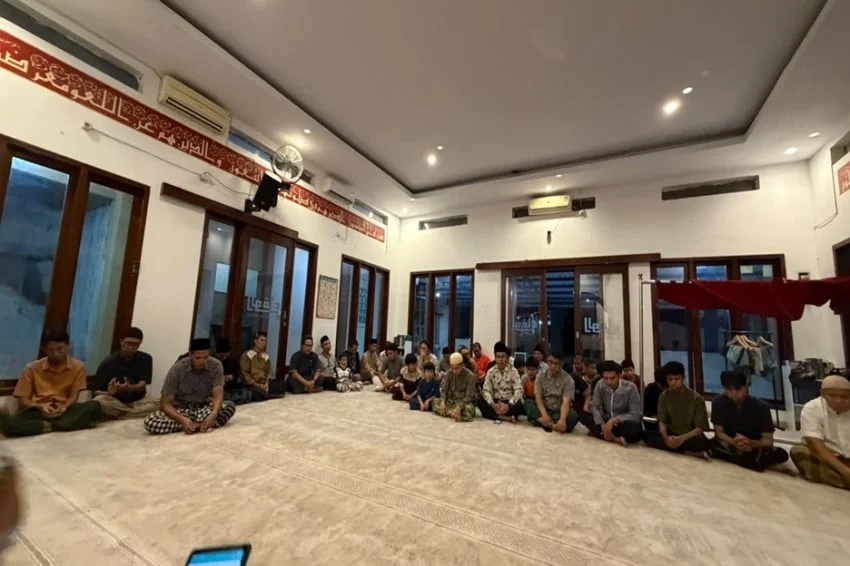
The congregational prayer commences without the traditional call to prayer (adhan) or the secondary call (iqamah). Once the congregation is assembled behind the designated imam, participants mentally establish their intention (niat).
The prescribed intention in Arabic transliteration is:
Ushalli sunnatal istisqai, rak’ataini mustaqbilal qiblati (imaman/makmuman) lillahi ta’ala.
(Translation: "I intend to perform the sunnah prayer of Istisqo two units, facing the qibla, as an imam or follower, because of Allah the Almighty.")
3. Takbir Sequence in the First Rak’ah
Following the opening Takbiratul Ihram, the imam and the congregation recite an additional series of seven takbirs (takbir sebanyak tujuh kali) before moving into the recitation of Surah Al-Fatihah.
4. Recitation of Al-Fatihah and Short Chapters
The imam recites Surah Al-Fatihah audibly, followed by a short chapter from the Quran, ensuring the congregation can clearly hear the recitation.
5. Completion of Standard Prayer Postures
The first rak’ah proceeds with standard Islamic prayer movements, including bowing (ruku), standing upright (itidal), prostration (sujud), and sitting between the two prostrations.
6. Takbir Sequence in the Second Rak’ah
Upon rising for the second rak’ah, the imam and followers perform five additional takbirs (takbir sebanyak lima kali) prior to reciting Al-Fatihah and another Quranic selection.
7. Conclusion of the Prayer
The prayer concludes with the standard sequence of ruku, sujud, the final Tashahhud, and the traditional final salutations (salam) turning the head to the right and left.
The Khutbah and Supplications for Rain
Upon completing the two-unit prayer, the proceedings transition into a specialized sermon (khutbah) delivered by the khatib. The sermon structure differs from Friday sermons by incorporating two distinct segments separated by a brief sitting period.
During the khutbah, religious leaders heavily emphasize communal repentance (tawbah), the seeking of forgiveness (istighfar), and the redirection of human behavior toward ecological and moral responsibility. The sermon serves as both a spiritual exhortation and a social reminder of the interconnectedness of human actions and environmental stability.
Following the sermon, the khatib leads the congregation in profound supplication (dua), raising hands high in supplication to request life-giving precipitation. Several authentic prophetic prayers are recited during this phase:
Primary Supplication for Beneficial Rain
Allahummasqina ghaitsan mughaitsan hani’an mari’an, ghadaqan mujallalan ‘amman thabaqan sahhan da’iman. Allahummasqina l-ghaitsa, wa la taj’alna minal qunithin.
(Translation: "Ya Allah, send down upon us rain that aids us, easy, nourishing, abundant, widespread, encompassing, continuous, and perpetually beneficial. Ya Allah, send down upon us rain. Do not make us among the despondent.")
Supplication for Agricultural and Livestock Prosperity
Allahumma anbit lanaz zar’a, wa adirra lanad dhar’a, wasqina min barakatis sama’i, wa anbit lana min barakatil ardhi.
(Translation: "Ya Allah, cause our crops to grow, make the milk of our livestock flow abundantly, send down upon us rain from the blessings of Your heaven, and cause plants to grow for us from the blessings of Your earth.")
Supplication for General Forgiveness and Downpour
Allahumma inna nastaghfiruka, innaka kunta ghaffara, fa arsilis sama’a ‘alainna midrara.
(Translation: "Ya Allah, truly we seek Your forgiveness, for You are the Most Forgiving. So send down upon us heavy rain from Your sky in abundance.")
Socio-Economic Implications and Modern Context
The resurgence of public interest in Sholat Istisqo highlights the intersection of faith and environmental policy during severe droughts. Meteorologically, extended dry periods disrupt national food security, reduce agricultural yields, threaten livestock populations, and deplete municipal water reservoirs, leading to increased economic strain on vulnerable rural communities.
While government agencies deploy technical interventions—such as cloud-seeding operations, the construction of deep wells, and the distribution of water tankers—societal responses frequently incorporate spiritual dimensions. Sociologists and environmental analysts note that rituals like Sholat Istisqo serve dual purposes: they foster deep psychological resilience and community solidarity during natural disasters, while simultaneously reinforcing public consciousness regarding water conservation, reforestation, and sustainable land management.
Ultimately, religious authorities maintain that while Sholat Istisqo is a vital spiritual obligation during times of hardship, it must be accompanied by practical measures of environmental preservation, efficient water usage, and proactive adaptation to shifting global climate patterns.