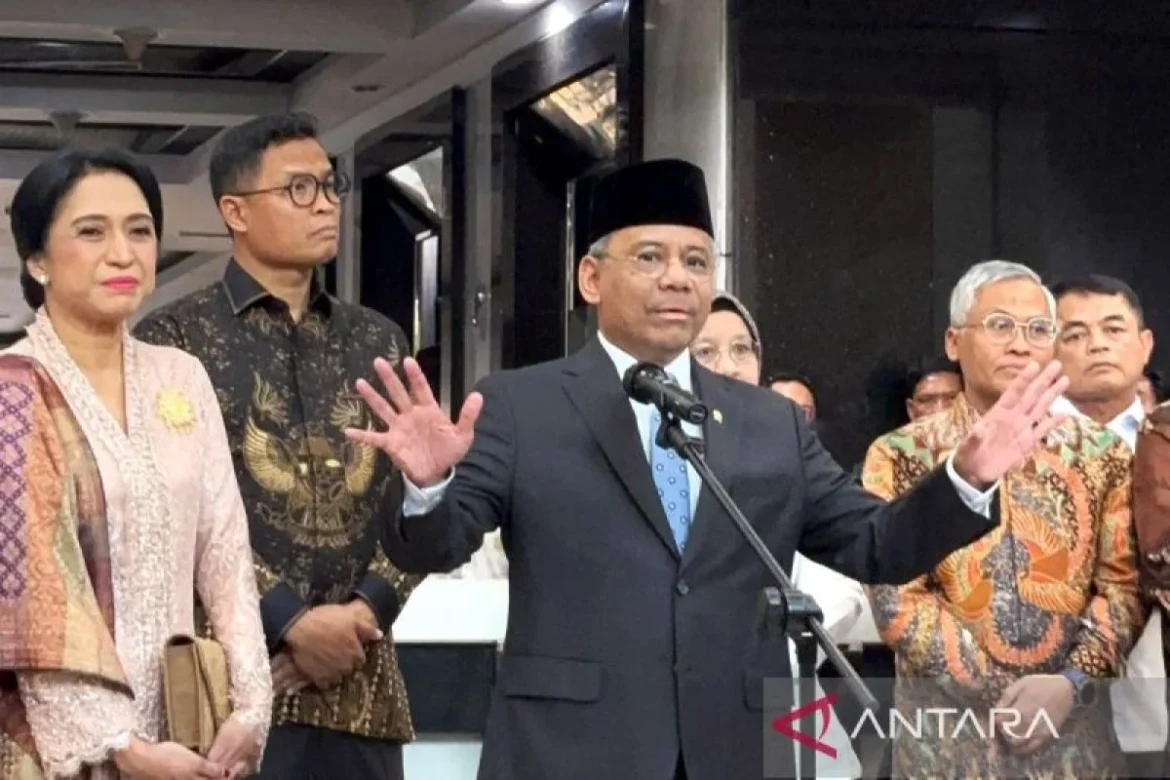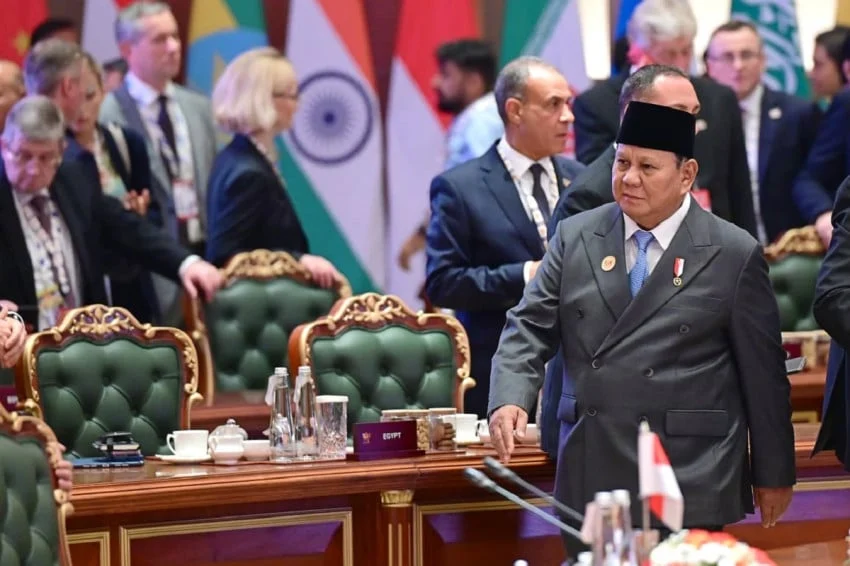
Jakarta, Indonesia — In a decisive push toward national energy independence and the systematic reduction of fossil fuel dependency, President Prabowo Subianto has officially instructed Minister of Energy and Mineral Resources (ESDM) Bahlil Lahadalia to spearhead the comprehensive development of a 50 percent bioethanol fuel blend, widely designated as E50.
The directive was issued during the inaugural Plenary Session of the National Energy Council (Dewan Energi Nasional – DEN) for the year 2026, held at the historic Merdeka Palace in Jakarta. The high-level meeting convened key economic and energy ministers to address pressing domestic energy challenges against a backdrop of volatile global geopolitics and shifting supply chain dynamics.
According to Minister Bahlil, the strategic framework for developing E50 is directly modeled on the successful implementation and scaling of the nation’s 50 percent biodiesel (B50) program for diesel fuel, which has been in mandatory national circulation since July 1, 2026. By replicating the regulatory, industrial, and logistical triumphs of the B50 initiative, the Indonesian government aims to fast-track the transition toward high-percentage biofuel blends for gasoline-powered vehicles.
"Learning and moving forward from this success, the President instructed us today to immediately formulate identical, systematic steps to build out our E50 capabilities," Bahlil stated following the conclusion of the plenary session.
The Strategic Scale of Indonesia’s Fuel Consumption
To contextualize the monumental shift ordered by the administration, energy experts point to the sheer scale of Indonesia’s domestic fuel consumption. National demand for diesel hovers at approximately 39 million kiloliters annually. Concurrently, domestic consumption of gasoline ranges between 39 million and 40 million kiloliters per year, presenting an almost identical volume challenge that has historically necessitated massive, costly crude oil and refined product imports.
The ESDM Ministry has previously reported that the implementation of the B50 mandate successfully eliminated the need to import specific grades of diesel, notably CN 48. Government officials are operating on the premise that a successful rollout of E50 can replicate this domestic substitution effect for gasoline, neutralizing the heavy foreign exchange outflows currently tied to gasoline imports. While the administration views E50 as a critical instrument for dramatically curbing fuel imports, the Ministry of ESDM has yet to publish a definitive, binding timeline for the nationwide commercialization of the E50 blend.
The Phased Regulatory Roadmap for Bioethanol
The journey toward E50 does not happen in a vacuum; it is part of a meticulously mapped regulatory trajectory designed to gradually acclimate Indonesia’s automotive infrastructure, agricultural supply chains, and refining sectors to higher biofuel integration.
Historically, the commercialization of bioethanol-blended gasoline in Indonesia has experienced a slow introduction. The primary pioneering product in this category has been Pertamax Green 95, a commercial offering retailed by state-owned downstream oil and gas giant PT Pertamina Patra Niaga, which features a modest 5 percent bioethanol blend (E5). However, prior to recent regulatory actions, this product operated purely on a commercial, non-mandatory basis.
The legal foundation for scaling bioethanol utilization was formally established through the issuance of Ministerial Decree of ESDM Number 113.K/EK.05/MEM.E/2026. Signed on March 3, 2026, the decree outlines a clear, phased implementation timeline for plant-based fuel integration:
- 2026 to 2027: Mandatory utilization and scaling of the E5 blend across designated markets.
- 2028 to 2030: A mandatory step-up to a 10 percent bioethanol blend (E10).
Beyond this formal ministerial roadmap, the Ministry of ESDM has signaled even more aggressive mid-term ambitions. During a joint working hearing with Commission XII of the House of Representatives (DPR RI) on September 8, 2026, the Director General of New, Renewable Energy and Energy Conservation (EBTKE), Eniya Listiyani Dewi, elaborated on the government’s acceleration targets.
"In accordance with the directives of the Minister of ESDM, the implementation of E20 [a 20 percent bioethanol blend] is officially targeted for realization by 2028," Eniya informed lawmakers during the parliamentary session.
The progression from E5 to E10, the intermediate leap to E20 by 2028, and the ultimate horizon of E50 ordered by President Prabowo represent one of the most ambitious biofuel scaling programs globally.
Navigating Global Geopolitical Pressures and Fuel Reserves
Beyond the mandate for long-term biofuel transitions, the inaugural 2026 plenary session of the National Energy Council also placed heavy emphasis on immediate macroeconomic vulnerabilities, specifically focusing on national resilience against global geopolitical friction.
During the deliberations, government evaluations placed Indonesia’s current national strategic fuel reserves at approximately 18 to 20 days of supply. In response to unpredictable geopolitical flashpoints that threaten international maritime trade routes and crude oil pricing stability, President Prabowo issued a strict operational instruction: existing emergency and operational buffer stocks must be rigorously maintained at no less than the current 18-to-20-day threshold.
Minister Bahlil emphasized that accelerating the development of domestic substitutes like E50 is fundamentally intertwined with this national security objective. By lessening reliance on internationally traded crude oil and leveraging domestic agricultural products—such as sugarcane and cassava, which serve as primary feedstocks for bioethanol—Indonesia insulates its economy from external supply shocks.
"This is fundamentally about driving and securing the availability of domestic fuel supplies," Bahlil remarked, underscoring the dual socio-economic and security benefits of the policy.
Implications for Agriculture, Industry, and the Economy
The pivot toward high-blend bioethanol carries sweeping structural implications across multiple sectors of the Indonesian economy, extending far beyond the energy ministry and fuel pumps.
First, for the agricultural sector, the E50 mandate creates a massive, guaranteed domestic market for bioethanol feedstocks. Indonesia possesses vast tracts of agricultural land suitable for cultivating crops rich in biomass and sugar, such as sugarcane and sweet sorghum. Agricultural economists note that scaling bioethanol production to meet E50 demands will require a monumental revitalization and expansion of domestic plantations and processing mills. This agricultural scaling has the potential to generate hundreds of thousands of rural jobs, boost farmer incomes, and stimulate regional economic development outside of traditional industrial centers.
Second, for the automotive and manufacturing sectors, the introduction of high-octane, oxygenated fuel blends like E50 necessitates significant technical adaptations. Modern internal combustion engines can generally handle low-blend fuels like E5 or E10 without modification. However, transitioning to E50 requires rigorous testing regarding material compatibility—particularly concerning fuel lines, gaskets, and engine components susceptible to the corrosive properties of high-concentration alcohol. Automotive associations and manufacturers operating in Indonesia will need to coordinate closely with the government to ensure vehicle compatibility, prevent engine degradation, and educate consumers on the proper utilization of high-bioethanol fuels.
Third, from a fiscal and macroeconomic perspective, the long-term implications are profound. Indonesia’s current account balance has historically been strained by the massive importation of refined petroleum products to meet surging domestic transportation needs. By substituting up to half of the gasoline barrel with domestically produced bioethanol, the government can preserve critical foreign exchange reserves, stabilize the rupiah against global currency fluctuations, and redirect state subsidies toward more productive, long-term national development goals.
Furthermore, the environmental dividends align tightly with Indonesia’s international commitments to greenhouse gas emission reductions. As a signatory to various global climate accords, Indonesia has pledged to achieve net-zero emissions by 2060 or sooner. Because bioethanol is derived from plant matter that absorbs carbon dioxide during its growth cycle, its widespread adoption as a transportation fuel significantly lowers the carbon intensity profile of the nation’s transport sector compared to 100 percent fossil-derived gasoline.
Challenges Ahead: Infrastructure and Feedstock Supply
Despite the strategic clarity of President Prabowo’s directive, energy analysts caution that realizing the E50 vision will not be without hurdles.
The primary challenge lies in scaling feedstock production. Currently, Indonesia’s domestic bioethanol production capacity is relatively modest and largely geared toward industrial alcohol and limited blending trials. Expanding output to satisfy the baseline requirements of a nationwide E50 program requires massive capital investments in agricultural infrastructure, distillation plants, and supply chain logistics. Coordinating large-scale land use policies to ensure that bioethanol feedstock cultivation does not compete with food crop production will also be a critical regulatory balancing act for the administration.
Additionally, downstream infrastructure—including dedicated storage tanks, separate blending facilities at refineries, and specialized distribution networks—must be systematically upgraded to handle high-concentration ethanol safely, given its affinity for water absorption and specific chemical handling requirements.
Conclusion
President Prabowo Subianto’s directive to Minister Bahlil Lahadalia to formulate an E50 bioethanol roadmap marks a watershed moment in Indonesia’s energy policy. By building upon the institutional framework forged by the B50 biodiesel program, Indonesia is demonstrating a systemic, programmatic approach to breaking its historical dependence on imported fossil fuels.
While significant logistical, agricultural, and technical challenges remain on the horizon, the alignment of political will, structured regulatory roadmaps, and strategic national security imperatives positions bioethanol as a cornerstone of Indonesia’s energy future. As the Ministry of ESDM begins drafting the operational framework for E50, the nation moves one step closer to achieving true energy self-sufficiency, insulating its economy from external shocks, and cementing a sustainable pathway for long-term economic growth.