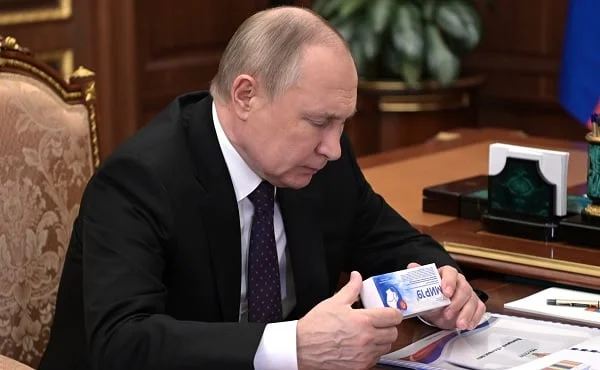
MOSCOW — In the wake of a highly contentious and physically disrupted parliamentary electoral cycle, Russian President Vladimir Putin delivered a defiant address at the Kremlin, asserting that the ultimate victory in the ongoing geopolitical struggle firmly belongs to Moscow. Addressing leaders of major political parties, the Russian leader stated unequivocally that the electorate demonstrated a profound resilience against what he characterized as relentless foreign interference, intimidation tactics, and asymmetric warfare.
The parliamentary elections, which spanned a three-day voting window from September 18 to September 20, served as a major political barometer for the Kremlin amidst ongoing international isolation and economic sanctions. Rather than fracturing public trust, Putin argued that external pressures and hostile maneuvers only served to consolidate domestic support, resulting in high voter turnout that he claimed guaranteed the indisputable and absolute legitimacy of the electoral outcome.
However, the political process was heavily overshadowed by a massive escalation in military hostilities, highlighting the volatile security environment in which the democratic exercise took place. The final day of voting was punctuated by what authorities described as the largest coordinated aerial assault by unmanned aerial vehicles (UAVs) targeting Russian territory since the commencement of the full-scale conflict.
Chronology of the Electoral Clash and Aerial Attacks
The backdrop of the September 2026 parliamentary elections was defined by heightened tensions along both internal political lines and external conflict zones. As polling stations opened across Russia’s numerous time zones on September 18, domestic security services were already on high alert. The campaign period itself had faced persistent digital disruptions, targeted cyberattacks against electoral infrastructure, and widespread information operations designed to suppress voter engagement.
As the voting process progressed smoothly through its first two days, the security situation deteriorated sharply on September 20. In the early morning hours, a massive wave of Ukrainian drones was launched toward strategic targets inside the Russian Federation, with a primary concentration directed at the capital city of Moscow and its surrounding metropolitan region.
According to briefings provided by the Russian Ministry of Defense and regional officials, air defense networks across multiple oblasts were activated simultaneously. Official tallies released in the aftermath of the barrage indicated that more than 1,600 individual UAVs were successfully intercepted or suppressed through electronic warfare systems during the peak of the offensive. Of that total, approximately 450 drones were neutralized as they approached the airspace immediately surrounding Moscow.
Moscow Mayor Sergey Sobyanin addressed the public as the scale of the bombardment became clear, characterizing the assault as unprecedented in both its geographic scope and the sheer volume of aerial devices deployed. Debris from intercepted drones rained down on several residential and commercial sectors within the Moscow region, shattering windows, damaging critical infrastructure, and sparking localized fires that required rapid emergency responses. Tragically, regional health authorities confirmed that at least two civilians lost their lives due to falling debris and direct impacts, while several others sustained varying degrees of injuries.
Despite the explosions echoing across the outskirts of the capital and the visible activation of air defense batteries, electoral officials decided against suspending the vote. Polling stations remained open under heavy security, a move that the Kremlin later framed as a testament to the stoicism of the Russian population.
Official Responses and Kremlin Assertions
During his meeting with political faction leaders at the Kremlin, President Putin did not shy away from addressing the disruptions. He explicitly accused foreign intelligence services and their proxies of orchestrating the attacks to sow panic, disrupt logistical operations, and delegitimize the parliamentary results.
"Efforts to disrupt the election campaign and blatantly interfere in the sovereign internal affairs of our state have ultimately failed," Putin declared to the assembled politicians. "Our adversaries utilized terrorist methods, kinetic strikes, and the full arsenal of foreign intelligence instruments, yet they fundamentally underestimated the resolve of the Russian people."
Putin extended his gratitude to the tens of millions of citizens who cast their ballots despite the palpable security risks. He emphasized that the robust turnout figures served as a direct rebuttal to Western critics who have frequently questioned the democratic standing of Russian institutions. In the view of the administration, the participation rate provided an ironclad mandate, securing what the Kremlin termed an "absolute and undeniable legitimacy" that insulates the government from external pressure.
Independent observers and international analysts, however, offered a sharply contrasting perspective on the proceedings. Western capitals and international monitoring bodies pointed out that the electoral environment was heavily managed long before a single vote was cast. Key opposition figures remain imprisoned, exiled, or legally barred from participating, and independent media outlets face severe censorship restrictions under wartime legislation. Critics argue that characterizing the vote as a free and fair democratic exercise ignores the systematic suppression of political dissent that has characterized Russia’s political landscape in recent years.
Security Implications and Strategic Analysis
The convergence of a major national election with a large-scale aerial bombardment marks a significant escalation in the tactics surrounding the ongoing conflict. Military analysts examining the September 2026 events note that the synchronized drone strikes represented a deliberate psychological and strategic effort to demonstrate the vulnerability of the Russian heartland precisely when the state was attempting to project an image of absolute control and domestic stability.
By targeting Moscow on the final day of voting, the operators of the UAVs sought to create maximum visibility, forcing the civilian population to confront the direct consequences of the war on their own doorsteps. The scale of the air defense response—involving over 1,600 drones—also underscores the immense logistical and technological burden placed on Russia’s military infrastructure, which must simultaneously maintain defensive shields for major urban centers while supporting offensive operations on the front lines.
From a domestic political standpoint, the Kremlin has adeptly leveraged the attacks to reinforce its official narrative of an existential struggle against a hostile coalition of foreign powers. By framing the electoral participation as an act of patriotic defiance against external aggression, the Russian leadership successfully mobilized its core demographic base. The narrative positions every vote not merely as a choice of political representation, but as a referendum on national survival and sovereign independence.
Broader geopolitical implications point toward a hardening of positions on both sides. The failure of the kinetic disruptions to derail the electoral process suggests that the Kremlin will continue its domestic political trajectory without deviation, maintaining strict control over the legislative apparatus and tightening security protocols nationwide. Meanwhile, the willingness to execute deep strikes inside Russian territory during a high-profile political event signals that military pressure on the Russian mainland will remain a persistent feature of the conflict, with urban centers like Moscow no longer insulated from the physical realities of the war.
As the dust settles from the electoral weekend and the debris is cleared from the streets of the Moscow region, the political reality within Russia remains firmly consolidated under the current administration. President Putin’s declaration of ultimate victory encapsulates a leadership determined to project strength, absorb strategic shocks, and press forward with its domestic and foreign policy agendas regardless of the mounting costs.