
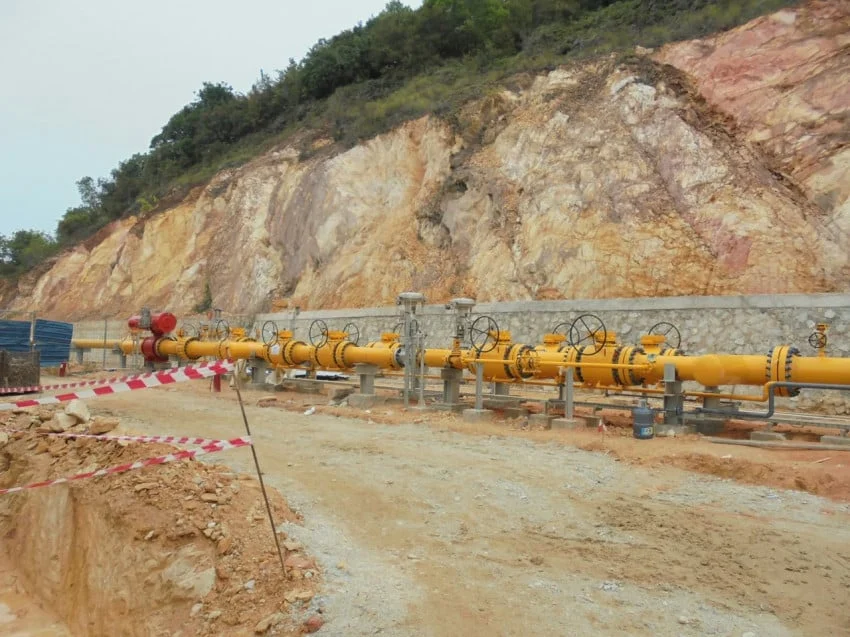
JAKARTA — In a landmark development for Indonesia’s domestic energy security, PT PLN Energi Primer Indonesia (PLN Energi Primer Indonesia/PLN EPI) has successfully commenced the commercial transportation of natural gas from the offshore Natuna fields to Batam Island. The milestone operation, executed on Tuesday, October 27, 2026, utilizes the vital West Natuna Transportation System (WNTS) connecting to the Pemping pipeline infrastructure. This strategic energy maneuver delivers an initial volume of 15 million standard cubic feet per day (MMSCFD) of natural gas, acting as a crucial lifeblood to reinforce the operational reliability of power generation units managed by PT PLN Batam.
This critical energy milestone coincides with the celebration of Indonesia’s 81st National Electricity Day (Hari Listrik Nasional ke-81), underscoring the government and state-owned enterprises’ joint commitment to optimizing domestic resource allocation. By channeling natural gas from remote offshore fields directly to industrial and residential demand centers, PLN EPI continues to execute its broader mandate of transforming Indonesia’s primary energy mix toward more efficient, secure, and domestically sourced commodities.
Strategic Execution and Real-Time Chronology of the Gas Flow
The complex engineering and logistical operation required precise coordination among multiple stakeholders, including upstream gas producers, pipeline operators, and electricity generation units. According to operational logs released by PLN EPI, the strategic gas injection sequence commenced in the early hours of Tuesday, October 27, 2026.
The chronological timeline of the operation unfolded with high precision:
- 00:25 WIB: The initial pressure stabilization and gas release protocol from the WNTS pipeline network was officially initiated.
- Progressive Ramp-Up: Engineers gradually stepped up the volume, carefully monitoring pressure ratings and pipeline integrity through automated supervisory control and data acquisition (SCADA) systems.
- 01:01 WIB: The flow successfully achieved the targeted delivery rate, channeling a stable stream of 15 MMSCFD directly into the Tanjung Uncang power plant located in Batam.
This swift injection serves an immediate, vital purpose: covering potential energy deficits while primary gas processing facilities undergo scheduled maintenance. Specifically, the Natuna gas supply acts as a reliable bridging fuel during the planned turnaround (TAR) maintenance of the Jambi Merang production facilities, scheduled from October 24 to November 3, 2026. Without this alternative interconnection, the region could face severe generation constraints, highlighting the indispensable value of integrated regional pipeline networks.
Technical Specifications of the WNTS-Pemping Infrastructure
The successful integration of Natuna gas into Batam’s grid is the physical manifestation of years of strategic infrastructure planning. The WNTS-Pemping project was developed following explicit directives from the Ministry of Energy and Mineral Resources (ESDM). The government tasked PLN EPI with spearheading the construction and operational management of downstream infrastructure capable of capturing excess or stranded gas assets and rerouting them to domestic centers of economic growth.
At the heart of this network is a dedicated subsea and onshore pipeline segment connecting the main WNTS transmission trunkline to an advanced Onshore Receiving Facility (ORF) situated on Pulau Pemping within the Riau Islands province.
Key technical parameters of this infrastructure include:
- Pipeline Length: Approximately 4.5 kilometers of high-grade steel piping.
- Pipeline Diameter: 16 inches, optimized for high-volume regional transport.
- Design Capacity: Up to 300 MMSCFD, offering substantial headroom for future industrial expansion and increased electrical demand across the Batam-Bintan-Karimun free trade zone.
The physical connection bridges the gap between major upstream exploration blocks in the Natuna Sea and the rapidly growing power demands of Batam’s industrial manufacturing sectors and urban population.
Official Statements and Leadership Perspectives
Addressing the media following the successful flow activation, the Acting President Director (Plh. Direktur Utama) of PLN EPI, Rakhmad Dewanto, emphasized the strategic weight of the achievement. He noted that the project represents a profound leap forward in optimizing domestic energy utilization.

"Alhamdulillah, coinciding with the 81st National Electricity Day, Natuna gas has successfully flowed to Batam. The connectivity of the WNTS-Pemping infrastructure opens up unprecedented access to domestic natural gas utilization, strengthening the reliability of our power plants and comprehensively supporting the electricity needs of the community and the business world," stated Rakhmad in an official corporate release.
Rakhmad further elaborated that the integration of the WNTS-Pemping asset aligns with PLN Group’s long-term transformation strategy. By diversifying primary energy sourcing and reducing reliance on volatile liquid fuels, the company is insulating regional grids against global market shocks while championing cleaner-burning fossil alternatives.
Contextual Background: Securing the Batam-Bintan Energy Corridor
The Riau Islands region, particularly the Batam and Bintan industrial corridors, has historically experienced complex energy dynamics. As manufacturing hubs, shipyards, and digital data infrastructure proliferate across the islands, electrical demand has surged exponentially. Ensuring an uninterrupted baseload power supply is paramount to maintaining investor confidence in Indonesia’s premier special economic zones.
The urgency of fortifying this energy corridor was recently underscored by regulatory and legal scrutiny surrounding regional grid stability. Incidents such as previous system-wide power disruptions (blackouts) affecting the Batam-Bintan transmission systems—which triggered intensive investigations by law enforcement agencies, including the Indonesian National Police’s Criminal Investigation Agency (Bareskrim Polri)—have forced a structural overhaul of risk management protocols across regional utilities.
To prevent recurrence and ensure grid resilience, energy planners have prioritized redundancy, dual-sourcing, and robust primary energy inventory management. The introduction of the WNTS-Pemping pipeline directly addresses these historical vulnerabilities by introducing a secondary, highly reliable gas supply pipeline that diversifies feedstock risks away from single-source dependency.
Broader Implications for the National Economy and Energy Transition
The successful monetization and domestic routing of Natuna gas carry profound economic and geopolitical implications for Indonesia. For decades, a significant portion of natural gas extracted from the remote offshore Natuna blocks was exported to neighboring countries due to a lack of domestic receiving infrastructure connecting the outer islands to the Sumatra-Java or Riau mainland grids.
By building connective tissue like the WNTS-Pemping pipeline, Indonesia is asserting greater sovereignty over its natural resources, ensuring that domestic industries—particularly those driving export-oriented manufacturing in Batam—reap the direct benefits of national energy wealth.
Furthermore, the initiative supports Indonesia’s broader commitment to the energy transition roadmap. While natural gas is a fossil fuel, it produces significantly lower carbon dioxide emissions compared to coal or heavy fuel oil, making it an essential transitional bridge fuel as PLN scales up variable renewable energy sources like solar and wind over the coming decades. Stable gas-fired combined-cycle power plants provide the necessary fast-ramping baseload power required to stabilize grids hosting high penetrations of intermittent green energy.
Outlook: Future Expansion and Regional Energy Independence
Looking ahead, PLN EPI plans to optimize the newly opened capacity of the WNTS-Pemping corridor. With a design capacity scaling up to 300 MMSCFD, the current initial flow of 15 MMSCFD represents only a fraction of the pipeline’s ultimate potential. As regional demand from PLN Batam and surrounding industrial estates increases, the infrastructure is fully primed to absorb higher volumetric allocations without requiring additional major capital expenditure on trunkline construction.
Industry analysts and energy economists have lauded the milestone as a textbook example of effective state-enterprise execution in resolving structural energy bottlenecks. As maintenance at the Jambi Merang facilities progresses through early November, the seamless substitution provided by Natuna gas reassures both commercial enterprises and household consumers that power stability in the Riau Islands remains uncompromised. Through disciplined infrastructure development, PLN EPI continues to solidify the backbone of Indonesia’s archipelagic energy architecture, paving the way for sustainable, secure, and self-reliant regional economic growth.
