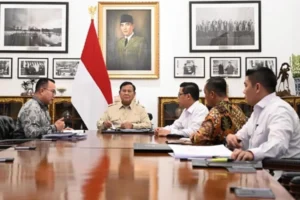
The Indonesian National Armed Forces (TNI) is currently undertaking a significant strategic reorganization of its territorial command structure, centered on the formal establishment of the Kodam XXVI/Mataram. This institutional shift involves the transition of ten Military District Commands (Kodim) from the jurisdiction of the Kodam IV/Diponegoro, which traditionally oversaw the entirety of Central Java and the Special Region of Yogyakarta (DIY), to the newly minted Kodam XXVI/Mataram. This realignment is designed to streamline military oversight, enhance local responsiveness, and provide a dedicated command presence for the Yogyakarta region and its surrounding territories.
The shift in command and control, known in Indonesian military terminology as Alih Komando dan Pengendalian (Kodal), signifies a broader policy effort by the TNI AD (Indonesian Army) to optimize its territorial footprint. By decoupling Yogyakarta and specific Central Java districts from the Diponegoro command, the military aims to foster closer coordination between defense units and local government authorities, ensuring that security operations are more effectively integrated with regional development and disaster management priorities.
The Geography of the Transition
Historically, the Kodam IV/Diponegoro served as the sole pillar of military authority across the heart of Java. Its vast operational theater encompassed the highly populated and culturally significant regions of Central Java and DIY. The creation of Kodam XXVI/Mataram, which will be headquartered in Yogyakarta, represents a major decentralization of this power.
According to official military disclosures, the ten Kodim units slated for transfer include five units located within the Special Region of Yogyakarta and five units situated in Central Java. The specific units transitioning from Kodam IV/Diponegoro to Kodam XXVI/Mataram are:
- Kodim 0706/Temanggung
- Kodim 0707/Wonosobo
- Kodim 0708/Purworejo
- Kodim 0723/Klaten
- Kodim 0728/Wonogiri
These, combined with the five Kodim units based in the DIY administrative area, form the foundational core of the new regional command. This grouping is geographically strategic, connecting the highlands of Central Java with the administrative hub of Yogyakarta, thereby creating a cohesive operational zone that facilitates more rapid deployment and improved logistical support.
Official Statements and Administrative Progression
Pangdam XXVI/Mataram, Major General TNI Drajad Brima Yoga, confirmed that the formal decision regarding the transfer of command was finalized at the Army Headquarters (Mabes TNI AD) in Jakarta. Following the bureaucratic ratification, General Drajad initiated a series of high-level consultations with local stakeholders in Yogyakarta, most notably meeting with the Governor of the Special Region of Yogyakarta, Sri Sultan Hamengku Buwono X, at the Kepatihan complex.
"The planning phase dictates that these ten Kodim units will eventually report to the Kodam XXVI/Mataram," General Drajad stated during his briefing. He emphasized that while the legal framework for the transfer is in place, the physical manifestation of the new command—specifically the construction of its headquarters—remains in the early stages of bureaucratic navigation.
The proposed site for the new headquarters is a nine-hectare plot of Sultan Ground in the Sidoluhur area of Godean, Sleman. The utilization of Sultan Ground requires strict adherence to both regional and traditional administrative protocols. General Drajad noted that the military is actively engaging with the Yogyakarta provincial government, district-level authorities, and local village administrations to ensure full compliance with land-use regulations.
"We are proceeding through the proper channels, which include reporting to Ngarsa Dalem (Sultan HB X) and engaging in the necessary discussions with local government officials. It is a rigorous process, but it is essential for the long-term viability of the command," Drajad explained.
Regulatory and Logistical Challenges
The establishment of a new Kodam is not merely a change in administrative reporting; it is a massive logistical undertaking. It requires the development of an entirely new organizational structure, the activation of various supporting functional bodies, and a comprehensive recruitment and redeployment strategy for military personnel.
Currently, the manpower requirements for the new command are being met in phases. To ensure continuity of operations, the fledgling Kodam XXVI/Mataram is utilizing the existing infrastructure of the Korem 072/Pamungkas in Yogyakarta as a temporary operational base. This dual-use arrangement allows for the command to maintain readiness while the long-term facility in Sleman undergoes planning and eventual construction.
General Drajad acknowledged that current staffing levels remain below the full table of organization and equipment (TOE) requirements, as is typical for newly inaugurated units. "The personnel situation is in flux because the organization is brand new. However, we are managing the transition in stages, and we will fulfill our staffing requirements as the organizational development progresses," he said.
From the perspective of the Yogyakarta administration, the process is viewed through the lens of legal and customary protocol. Sri Sultan Hamengku Buwono X, speaking on the use of Sultan Ground, underscored that while the provincial government supports the military’s initiative, the project must navigate the same regulatory environment as any other development project in the region. "There are no fundamental objections, but the administrative process must be observed. The rules apply to everyone, whether it is for a police headquarters or any other government institution," the Sultan noted.
Strategic Implications and Defense Analysis
The creation of the Kodam XXVI/Mataram reflects a broader trend in the Indonesian military’s modernization strategy: the push toward "territorial proliferation." By increasing the number of regional commands, the TNI seeks to bring command structures closer to the administrative centers of Indonesia’s provinces.
Analysts have pointed out several key implications of this move:
- Enhanced Crisis Response: With a dedicated Kodam in Yogyakarta, the military can more effectively coordinate with provincial-level disaster management agencies (BPBD). Given that the region is prone to seismic activity and volcanic threats from Mount Merapi, a localized command structure can streamline the deployment of troops for humanitarian aid and disaster relief (HADR).
- Civil-Military Integration: The proximity of the Kodam headquarters to the provincial government allows for a more fluid exchange of intelligence and strategic planning regarding regional security, social stability, and public order.
- Optimized Resource Management: Decentralizing the Kodam IV/Diponegoro allows for a more manageable span of control. The Diponegoro command, which previously oversaw a vast area, can now focus its resources more intensely on the core regions of Central Java, while the Mataram command can tailor its doctrine to the specific socio-political and geographic requirements of Yogyakarta and the surrounding districts.
- Logistical Efficiency: By situating the headquarters in Godean, the military gains a strategic central point in the DIY-Central Java border region, reducing the time required for troop movements across this corridor.
Timeline of Development
While the official announcement of the transfer occurred in October, the project is part of a multi-year effort to restructure the regional military footprint. The timeline for the coming months is expected to include:
- Phase I (Completed): Formalization of the Kodam XXVI/Mataram and the legal transfer of the ten Kodim units under the new command umbrella.
- Phase II (Ongoing): Detailed land-use mapping and environmental assessments for the Godean site; ongoing personnel recruitment and administrative staffing.
- Phase III (Pending): Formal ground-breaking for the new headquarters, contingent upon the completion of all local government permits and Sultanate approval.
- Phase IV (Long-term): Full operational capability (FOC), where the new Kodam assumes full independent control over its regional territorial defense, separate from the interim reliance on Korem 072/Pamungkas.
Conclusion
The transition of ten Kodim units to the newly established Kodam XXVI/Mataram is a testament to the evolving nature of the Indonesian National Armed Forces. By recalibrating its territorial architecture, the TNI is positioning itself to be more agile, responsive, and integrated into the local governance structures of the Yogyakarta and Central Java regions.
The success of this initiative will ultimately depend on the seamless coordination between the military and local civilian authorities. As the project moves from the planning tables in Jakarta to the construction sites in Sleman, the focus will remain on balancing the urgent requirements of national defense with the necessary adherence to the unique regulatory and cultural landscape of the Yogyakarta Special Region. For the residents of the affected districts, the change signifies a shift in the military’s administrative face, but for the TNI, it represents a foundational step in ensuring the nation’s defense posture remains robust in a rapidly changing regional environment.