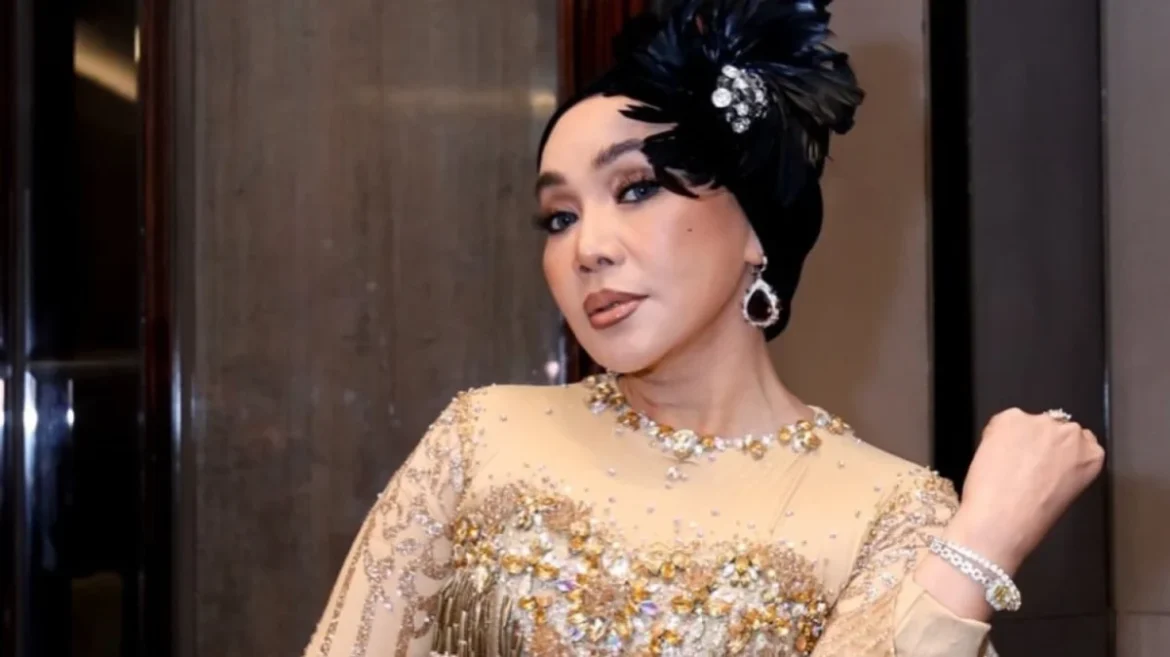
The Indonesian entertainment industry has recently been stirred by a flurry of speculative reports circulating on social media regarding the personal life of prominent comedian and presenter Andre Taulany. Amidst these discussions, the name of veteran singer and actress Dewi Gita has unexpectedly surfaced, linked by netizens to an unverified screenshot of a WhatsApp conversation. The digital discourse centers on an unidentified individual referred to by the moniker "Degoy," leading online observers to conjecture about the identity behind the nickname. Despite the lack of concrete evidence or official confirmation, the association has drawn significant public attention, highlighting the volatile nature of celebrity gossip in the era of viral social media speculation.
The Genesis of the Speculation
The current controversy traces back to the dissemination of fragmented screenshots on various social media platforms, including X (formerly Twitter) and TikTok. These screenshots purportedly depict private exchanges involving an individual identified as "Degoy." While the identity of this person remains unconfirmed, internet users began cross-referencing names that could potentially be abbreviated or stylized as "Degoy." Consequently, the name of Dewi Gita—the wife of Gigi band vocalist Armand Maulana—was thrust into the conversation.
It is critical to note that the account responsible for the initial leak did not explicitly name Dewi Gita. Furthermore, no media organization or reliable source has provided corroborating evidence linking the singer to the alleged communication. The situation serves as a prime example of how digital anonymity and social media algorithms can quickly escalate rumors into widespread public speculation, often causing reputational distress to public figures who may have no involvement in the events described.
Professional Background of Dewi Gita
Dewi Gita, born Dewi Yuliarti on July 28, 1970, in Bandung, West Java, is a highly respected figure in the Indonesian performing arts scene. Her career spans over three decades, marked by a versatile trajectory that began in the realm of classical and traditional dance before transitioning into the music industry.
Her rise to prominence was characterized by a series of significant achievements throughout the late 1980s and early 1990s. She demonstrated early promise by securing top honors in several prestigious competitions, including the Festival Pop Singer of West Java, the Keroncong Competition of West Java in 1988, and the Bintang Radio and Television of West Java in 1989. Her artistic reach extended beyond national borders when, in 1992, she achieved second place in the Grand Champion Asia Bagus competition, a platform that showcased talent from across the continent.
Her discography reflects a prolific period in the 1990s and early 2000s. Debuting with the single "Jujur" in 1990, she solidified her status as a pop vocalist with the release of the album "Penari" in 1995. This was followed by a string of successful releases, including "Apa Jadinya" (1996), "Padamu" (1999), and "Kegaiban Biru" (2000). These works not only demonstrated her vocal prowess but also her ability to remain relevant amidst the changing landscape of the Indonesian music industry.
Domestic Life and Career Transitions
Beyond her professional accolades, Dewi Gita is widely recognized for her enduring marriage to Armand Maulana, the frontman of the legendary rock band Gigi. The couple married on January 11, 1994, and have since raised their daughter, Naja Dewi Maulana. Their partnership has been viewed by the public as one of the most stable and long-standing marriages within the Indonesian celebrity circle.
In 2001, following a decade of intense professional activity, Dewi Gita made the strategic decision to recalibrate her priorities. She consciously chose to reduce her involvement in the entertainment industry to dedicate more time to her family life and motherhood. This pivot was not an abandonment of her craft, but rather a reflection of the challenges many public figures face when balancing high-profile careers with personal commitments. Throughout the following years, she occasionally returned to the stage and television, maintaining a presence that underscored her enduring influence in the industry.
The Dynamics of Digital Misinformation
The situation involving the "Degoy" moniker and its subsequent attachment to Dewi Gita raises broader questions regarding the ethics of online discourse. In the current digital landscape, social media users often act as informal investigators, attempting to "dox" or identify individuals involved in scandals, often without regard for the accuracy of their claims or the potential for defamation.
Experts in media ethics note that such phenomena are exacerbated by "confirmation bias," where users seek out information that confirms their existing suspicions rather than relying on verifiable facts. The lack of an official statement from either Andre Taulany or the individuals mentioned in the rumors has created a vacuum, which is quickly filled by speculative narratives. This lack of transparency, while understandable from a private perspective, often leaves public figures vulnerable to the court of public opinion.
Public and Industry Response
As of the time of reporting, there have been no official responses from the camps of Andre Taulany or Dewi Gita regarding these specific rumors. In professional crisis management, silence is often the preferred strategy when dealing with unsubstantiated claims, as engaging with them can inadvertently provide the rumors with more legitimacy.
Industry observers suggest that the resilience of Dewi Gita’s public image is largely due to her established history of professionalism. Having navigated the industry for over 30 years, she has maintained a reputation that is distinct from the chaotic nature of tabloid sensationalism. Her supporters have largely dismissed the rumors as baseless, pointing to the lack of evidence and the speculative nature of the social media threads as proof of their inaccuracy.
Broader Implications for Indonesian Celebrity Culture
The incident serves as a reminder of the fragility of privacy in the modern era. When a private interaction—or even a fabricated one—is leaked, it can result in significant collateral damage. For established artists like Dewi Gita, whose career is built on years of hard work and public goodwill, such allegations can be particularly disruptive.
Furthermore, the "Andre Taulany" factor cannot be ignored. As one of Indonesia’s most recognizable and successful comedians, his life is under constant scrutiny. Any mention of his name in the context of personal or marital issues inevitably draws a massive audience, and the inclusion of other high-profile names only serves to amplify the narrative.
Conclusion and Future Outlook
While the internet continues to churn out theories regarding the identity of the person in the leaked conversation, there remains no factual basis to link Dewi Gita to the situation. Her career remains a testament to her dedication to the arts, and her personal life continues to be a subject of public interest largely due to her status as a public figure.
As the situation unfolds, it is likely that the fervor will dissipate as quickly as it began, once the lack of concrete evidence becomes apparent to the broader public. For now, the narrative remains firmly in the realm of speculation. The case of Dewi Gita and the "Degoy" rumor underscores the necessity for media literacy and a cautious approach to consuming information shared on digital platforms, emphasizing that behind every viral headline is a human being whose professional and personal integrity deserves a standard of evidence that currently, this rumor fails to meet.
Ultimately, the enduring legacy of Dewi Gita as a singer and performer stands independent of the ephemeral and often unsubstantiated nature of social media gossip. Her contributions to the Indonesian music scene remain the primary lens through which she is viewed by her peers and the public alike, a legacy that is unlikely to be tarnished by the digital noise of the present moment.