
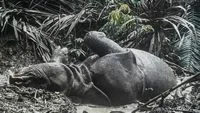
The fate of one of the world’s rarest and most elusive mammals has once again captured the public spotlight, driven by recent government proposals to establish a secondary habitat for the critically endangered Javan rhinoceros. As discussions intensify regarding the potential transfer of a portion of the population from its sole remaining natural stronghold in Ujung Kulon National Park to Alas Purwo National Park in East Java, conservationists, policymakers, and the public are grappling with a fundamental question: What is the current state of the Javan rhinoceros population, and can splitting this fragile group safeguard its future, or will it invite unforeseen ecological risks?
This contentious policy debate highlights the precarious existence of Rhinoceros sondaicus, a species that once roamed vast swathes of Southeast Asia but has been pushed to the absolute brink of extinction. Against the backdrop of global biodiversity loss, the Indonesian government and international conservation bodies face mounting pressure to balance urgent disaster-risk mitigation with the delicate science of wildlife translocation.
Global Status and Historical Decline of the Javan Rhinoceros
To understand the gravity of the current debate, it is necessary to examine the broader taxonomic and historical context of the species. According to data compiled by the International Rhino Foundation, the global rhinoceros family comprises five distinct species: the white rhinoceros, the black rhinoceros, the greater one-horned or Indian rhinoceros, the Javan rhinoceros, and the Sumatran rhinoceros. Among these, the Javan and Sumatran rhinos are classified as critically endangered, facing an exceptionally high risk of extinction in the wild.
Historically, the Javan rhinoceros enjoyed a wide distribution stretching across northeastern India, Myanmar, Thailand, Peninsular Malaysia, and the islands of Sumatra and Java. However, centuries of aggressive commercial poaching—driven by the demand for rhino horn in traditional medicine—coupled with widespread agricultural encroachment and habitat destruction, decimated their numbers. By the mid-20th century, the species had vanished from mainland Asia and the outer islands, leaving Ujung Kulon, located on the westernmost tip of Java, as its last natural refuge.
Current Population Metrics and Conservation Status
Recent data released by the Yayasan Badak Indonesia (YABI, or the Indonesian Rhino Foundation) indicates that the current population of the Javan rhinoceros hovers between 80 and 100 individuals. This represents a fragile, albeit encouraging, recovery from historical lows, though the species remains perilously close to the point of no return.
Ujung Kulon National Park has maintained intensive, systematic population monitoring protocols since 1967. During the initial phases of rigorous monitoring in the late 1960s, conservationists estimated that as few as 25 individual rhinos survived in the dense tropical rainforests of the peninsula. Through decades of dedicated protection, anti-poaching patrols, and habitat management, that number showed a slow upward trajectory, reaching approximately 76 individuals by 2022. Recent projections for 2025 estimate the population to have stabilized within the 87 to 100 range.
Despite this numeric stabilization, the species’ formal conservation status remains unchanged. The International Union for Conservation of Nature (IUCN) Red List classifies the Javan rhinoceros as Critically Endangered, a status reinforced by comprehensive assessments. Domestically, the species is accorded the highest level of legal protection under Indonesian jurisdiction, specifically listed within Regulation of the Minister of Environment and Forestry of the Republic of Indonesia Number P.20/MENLHK/SETJEN/KUM.1/6/2018.
The Catalyst for Relocation: Natural Disaster Vulnerability
The current discourse surrounding the relocation of the Javan rhinoceros is not a spontaneous policy shift, but rather the resurgence of a long-standing strategic conservation debate. The primary driver behind the renewed push to move a cohort of rhinos to a secondary habitat is the severe, persistent threat of catastrophic natural disasters in and around Ujung Kulon.
Ujung Kulon National Park is geographically situated in a region highly vulnerable to tectonic and volcanic activity. Most notably, the park lies in close proximity to the Anak Krakatau volcanic complex in the Sunda Strait. The catastrophic collapse and subsequent tsunami triggered by Anak Krakatau in December 2018 served as a profound wake-up call for Indonesian conservation authorities. While direct casualties among the Javan rhino population during the 2018 event were not officially documented, the disaster vividly underscored the existential hazard of concentrating 100 percent of a globally unique species in a single, geographically vulnerable location.
Hashim Djojohadikusumo, the Indonesian President’s Special Envoy for Energy and Environment, has publicly articulated these concerns. According to administration officials, maintaining the entire global population of Javan rhinos in Ujung Kulon exposes the species to an unacceptable level of systemic risk. A major earthquake, a destructive tsunami, or a violent volcanic eruption from Krakatau could theoretically wipe out the entire population in a matter of hours, leading to the instantaneous extinction of the species.
Official Stance and Long-Term Conservation Strategy
The Ministry of Forestry (Kemenhut) has clarified that the concept of establishing a second natural habitat for the Javan rhinoceros has been under technical discussion for several decades. Ministry officials emphasize that consolidating all conservation efforts for a critically endangered flagship species in a single geographic zone violates fundamental principles of wildlife management and risk diversification.
Ristianto Pribadi, Head of the Bureau of Public Relations and Foreign Cooperation at the Ministry of Forestry, elaborated on the rationale behind the policy in an official statement released on Monday, November 16. He noted that developing a secondary habitat represents a cornerstone of long-term conservation planning.
"The development of a second habitat for the Javan rhinoceros has been a conservation priority for several decades," Pribadi stated. "Concentrating the entirety of a rare wildlife population in a single location carries an inherently higher risk of total extinction. Therefore, exploring alternative locations to ensure the long-term survival and continuity of the species is a strategic imperative."
The Ministry has identified Taman Nasional Alas Purwo, located at the southeastern tip of East Java, as a primary candidate for this ambitious translocation project. Alas Purwo historically formed part of the natural historical range of the Javan rhinoceros and offers expansive lowland forest ecosystems that bear ecological similarities to Ujung Kulon.
Rigorous Scientific Prerequisites and Ecological Assessment
While the policy objective of establishing a secondary habitat is widely supported by conservation science, forestry officials and independent biologists emphasize that the physical translocation of the animals cannot proceed hastily. The process demands meticulous scientific evaluation, comprehensive risk assessments, and adherence to strict ecological protocols.
Before any rhinos are moved, the Ministry of Forestry has mandated thorough feasibility studies covering a wide array of environmental and socio-ecological parameters. These prerequisites include:
- Ecosystem Suitability: Verifying that the flora, climate, and topography of Alas Purwo closely mirror the natural habitat requirements of the Javan rhinoceros.
- Carrying Capacity: Assessing the capacity of the landscape to support a growing, healthy population without inducing severe resource competition.
- Food and Water Availability: Conducting exhaustive botanical surveys to ensure an abundant, year-round supply of preferred browse plants and reliable freshwater sources.
- Disease Risk Analysis: Evaluating potential endemic pathogens, parasites, or vector-borne diseases present in Alas Purwo that could devastate a naive rhino population lacking acquired immunity.
- Threat and Disaster Mitigation: Analyzing local environmental hazards, including potential human encroachment, illegal activities, and localized natural disaster risks in East Java.
- Security and Long-Term Management: Establishing robust infrastructural, financial, and institutional frameworks to guarantee round-the-clock protection against poaching and habitat degradation.
- Social Acceptance and Community Engagement: Assessing the socioeconomic dynamics of local communities surrounding Alas Purwo and ensuring their active participation and consent in conservation initiatives.
"The selection of any translocation site must be strictly grounded in empirical evidence and adequate risk assessments," Pribadi emphasized. "The safety of the animals, alongside the capacity of the habitat to support a healthy and sustainably reproducing population, remains our absolute primary consideration."
Implications and the Road Ahead
The ongoing debate over the Javan rhinoceros translocation initiative marks a critical juncture in Indonesian wildlife conservation. On one hand, the status quo in Ujung Kulon has successfully brought the species back from the brink of functional extinction, proving that intensive protection can yield positive demographic results. On the other hand, the geographic concentration of the population leaves the species terrifyingly vulnerable to low-probability, high-impact natural catastrophes.
Implementing a successful translocation program is fraught with logistical and biological challenges. Moving large, solitary, and highly sensitive wild mammals requires delicate capture protocols, specialized transport mechanisms, and seamless post-release monitoring to minimize capture myopathy and psychological stress. Furthermore, past attempts at translocating similar rhinoceros species globally have met with mixed results, underscoring the need for extreme caution.
As the Ministry of Forestry proceeds with baseline ecological assessments for Alas Purwo, the international conservation community will be watching closely. The decision ultimately represents a calculated trade-off: balancing the acute, immediate stress of translocation against the permanent, catastrophic risk of maintaining all eggs in one fragile basket. For now, the future of the Javan rhinoceros hangs in the balance, dependent on the wisdom of science-based policymaking and the unwavering commitment to preserving one of Earth’s most irreplaceable natural treasures.
