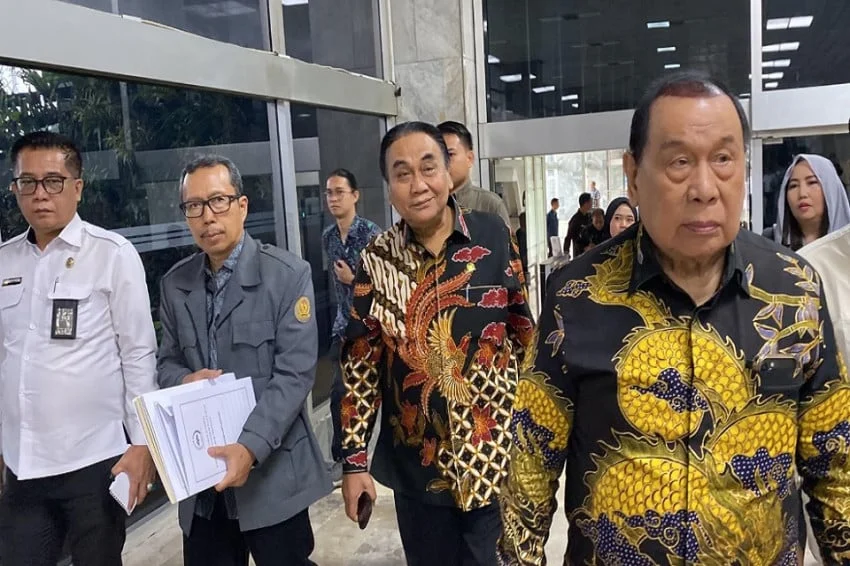
The political landscape in Indonesia entered a high-stakes phase on Monday, November 23, 2026, as the leadership of the People’s Consultative Assembly (MPR RI) convened for a critical joint meeting (Ragab). The gathering at the Nusantara V Building in the Parliament Complex, Jakarta, serves as the immediate precursor to a long-awaited constitutional milestone: the formal submission of two vice-presidential candidates by President Prabowo Subianto. The atmosphere at the legislative complex was notably tense, marked by the arrival of key parliamentary figures tasked with processing the selection of a successor or a partner to the head of state.
The Anatomy of the Legislative Gathering
The joint meeting, which commenced shortly after 11:00 AM WIB, brought together the core leadership of the MPR RI and representatives from various internal parliamentary organs, known as the Alat Kelengkapan Dewan (AKD). The meeting is considered a procedural necessity, intended to align the legislative body’s internal mechanisms before the executive branch officially delivers the names to the secretariat.
Among those observed arriving at the venue were prominent Deputy Speakers of the MPR RI, including Bambang Wuryanto, Kahar Muzakir, Lestari Moerdijat, Rusdi Kirana, Eddy Soeparno, Edhie Baskoro Yudhoyono, and Abcandra Muhammad Akbar Supratman. Their presence signals a cross-party consensus or, at the very least, a coordinated effort to address the vacuum or the addition of a vice-presidential seat that has kept the political corridors of Jakarta buzzing for weeks.
The Speaker of the MPR RI, Ahmad Muzani, arrived shortly thereafter at 11:15 AM. While Muzani remained tight-lipped regarding the specific deliberations taking place behind closed doors, his arrival underscored the gravity of the session. The meeting is expected to establish the formal protocols for receiving the nominations, verifying the credentials of the proposed candidates, and setting the timeline for the subsequent parliamentary debates that will determine the final approval.
Background and Constitutional Context
The urgency surrounding today’s meeting is rooted in the unique constitutional dynamics currently unfolding under President Prabowo Subianto’s administration. Following the transition of power, the necessity to finalize the vice-presidential position has become a priority for maintaining administrative stability. Under the Indonesian constitutional framework, the vacancy or the selection of a new vice president requires rigorous vetting by the legislative branch to ensure that the candidate meets all eligibility criteria set forth in the 1945 Constitution and the prevailing Election Laws.
The decision to limit the submission to two names is widely viewed as a strategic move to focus the legislative debate and streamline the selection process. Historically, the selection of a vice president in the post-Reformasi era has often been a delicate balancing act of coalition politics, regional representation, and technocratic capability. The choice of these two individuals, therefore, represents not just personal preferences of the President, but the outcome of extensive negotiations between the ruling coalition parties and the various factions represented within the MPR.
Chronology of the Selection Process
The path leading to this Monday’s joint meeting has been marked by a series of closed-door consultations. Since the initiation of the nomination process earlier this month, the public has been speculating on the backgrounds of the potential candidates. The following timeline outlines the progression of this political event:
- Early November 2026: Informal discussions began among coalition party leaders regarding the criteria for a suitable vice-presidential candidate.
- Mid-November 2026: President Prabowo Subianto reportedly held a series of private interviews and background checks on potential candidates, focusing on economic and security expertise.
- November 20, 2026: The MPR leadership announced that they were preparing the infrastructure to receive the executive submission.
- November 23, 2026 (Today): The joint meeting of the MPR leadership and the AKD takes place to prepare for the official receipt of the names from the Palace.
Analysis of the Two-Candidate Submission
Political analysts suggest that the presentation of exactly two candidates is a deliberate maneuver to prevent a stalemate within the parliamentary voting process. By narrowing the field to two, the President ensures that the MPR is forced to deliberate on viable, pre-vetted options rather than being overwhelmed by a larger, more contentious list of nominees.
The composition of the two names is expected to reflect the "Indonesia Maju" vision, emphasizing candidates who have demonstrated track records in either infrastructure development, fiscal management, or national security. From an economic standpoint, the market is closely watching these developments. Stability in the vice-presidential office is seen as a key indicator of policy continuity, particularly regarding the ongoing national development projects initiated under the previous administration and expanded under President Prabowo.
Legislative Hurdles and Public Expectations
While the meeting today focuses on the procedural aspects of the submission, the real challenge for the MPR will lie in the vetting phase. The parliament is tasked with ensuring that the candidates possess the moral and ethical standing required for such a high office. There is significant public interest in whether the candidates will undergo a public hearing process or if the vetting will remain largely confined to the parliamentary committees.
Lestari Moerdijat and Edhie Baskoro Yudhoyono, among others present at the meeting, represent diverse political factions. Their involvement suggests that the MPR is committed to a transparent and democratic process, aiming to avoid the perception of a top-down appointment. If the MPR leadership can facilitate a smooth confirmation process, it will likely bolster the President’s political capital and allow the government to focus on its 2027 policy agenda without the distraction of political infighting.
Implications for the Political Landscape
The submission of the two names will likely trigger a flurry of activity in the coming days. Once the names are formally received by the MPR, the legislative body will have to schedule a plenary session for the final vote. This period is expected to be characterized by intense lobbying, as political parties outside the current coalition may seek to influence the outcome or express their opposition to specific candidates.
For the public, the implications are profound. The vice-presidential role serves as a crucial check and balance within the executive branch. The chosen candidate will not only be a heartbeat away from the presidency but will also play a pivotal role in mediating between the executive and the legislature.
Official Stance and Future Outlook
As of this writing, neither the Presidential Palace nor the MPR leadership has disclosed the names of the two candidates. However, official sources within the Parliament indicate that the process will be expedited to avoid a prolonged period of uncertainty.
The Speaker of the MPR, Ahmad Muzani, is expected to hold a press conference following the completion of the joint meeting to outline the next steps. Observers are particularly interested in whether a specific deadline for the final selection will be set. With the political season heating up, the MPR’s ability to manage this transition with professionalism and adherence to constitutional norms will be a major test for the legislative body in the current term.
In conclusion, the events unfolding at the Nusantara V Building represent a critical juncture for the Indonesian government. By moving toward the formal submission of vice-presidential candidates, the administration of President Prabowo Subianto is taking a decisive step toward completing its leadership structure. As the MPR leadership convenes to finalize the procedural framework, the eyes of the nation remain fixed on the outcome, waiting to see who will be chosen to help steer the country through the challenges of the coming years. The efficiency and transparency of this process will undoubtedly serve as a bellwether for the health of Indonesia’s democratic institutions.