
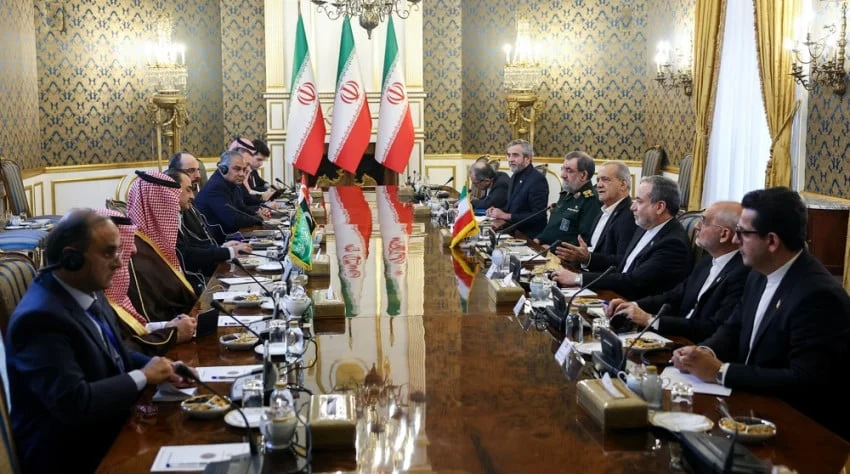
Geopolitical alignments in the Middle East and South Asia are undergoing a profound and potentially historic transformation, marked by a high-level quadrilateral meeting held in Tehran. The gathering brought together senior security officials from Iran, Pakistan, Saudi Arabia, and Turkey—a grouping occasionally referred to in regional security discourse as the Mecca Alliance due to the historical and diplomatic weight of its member states’ Islamic leadership and diplomatic gravity. According to senior Iranian officials, this summit represents a monumental strategic victory for the Islamic Republic, symbolizing the culmination of years of diplomatic maneuvering, economic resilience under heavy international sanctions, and military deterrence.
The high-stakes consultations, hosted in the Iranian capital, were led by Major General Mohsen Rezaei, the Secretary of Iran’s Supreme National Security Council (SNSC). Following the conclusion of the talks, Ali Bagheri Kani, the Deputy Secretary of the SNSC, delivered a comprehensive assessment of the summit’s implications. Bagheri Kani characterized the meeting as a direct fruit of the heroic resistance demonstrated by the Iranian nation and the formidable capabilities displayed by the Armed Forces of the Islamic Republic of Iran. The gathering underscored an emergent regional consensus: that lasting security, stability, and economic prosperity in West Asia and its surrounding corridors can no longer be outsourced to external superpowers, but must instead be cultivated through indigenous, intra-regional cooperation.
The Chronology and Diplomatic Genesis of the Tehran Quad
To fully grasp the magnitude of the Tehran quadrilateral meeting, it is essential to examine the diplomatic timeline that precipitated this unexpected convergence. Historically, relations between Iran and its regional rivals—most notably Saudi Arabia—have been fraught with sectarian tensions, proxy conflicts, and competing ambitions for regional hegemony. The severance of diplomatic ties in 2016 following the execution of a prominent Shia cleric in Saudi Arabia and the subsequent attack on the Saudi embassy in Tehran marked a nadir in bilateral relations, plunging the region into a protracted cold war.
However, the geopolitical landscape began to shift dramatically in March 2023, when Iran and Saudi Arabia reached a landmark détente brokered by the People’s Republic of China in Beijing. This agreement paved the way for the reopening of embassies, the resumption of direct diplomatic channels, and a gradual de-escalation of hostilities in critical proxy arenas such as Yemen. Building upon this foundational normalization, secondary diplomatic tracks began to emerge, involving middle powers like Pakistan and Turkey, both of which maintain complex, multifaceted relationships with Western nations, China, and Iran.
In the months leading up to the Tehran summit, Pakistan, Saudi Arabia, and Turkey had engaged in a series of tripartite consultations aimed at addressing overlapping security concerns, including counter-terrorism, border management, and regional trade corridors. During these preliminary sessions, the participating nations recognized that any comprehensive regional security architecture would be incomplete—and ultimately fragile—without the constructive inclusion of Iran.
According to diplomatic disclosures shared by Iranian security officials, Pakistan’s military leadership played a crucial bridging role in this process. During a recent official visit to Tehran, Pakistan’s Chief of Army Staff, Field Marshal Asim Munir, engaged in extensive strategic dialogues with Major General Mohsen Rezaei. During these closed-door discussions, General Munir formally conveyed the collective desire of Pakistan, Saudi Arabia, and Turkey to convene a joint summit. Crucially, recognizing Tehran’s rising diplomatic leverage and its insistence on sovereign equality, the three nations explicitly proposed traveling to the Iranian capital to ensure the meeting could proceed on Iranian soil. This concession—that the regional powers would journey to Tehran rather than demanding a neutral venue—was viewed by Iranian state media and security analysts as a powerful indicator of shifting regional power dynamics.
Core Pillars of the New Regional Paradigm
In his post-summit briefing, Deputy SNSC Secretary Ali Bagheri Kani articulated the core philosophical and strategic shifts underpinning the Tehran meeting. He outlined several key signals that demonstrate why the Islamic Republic views the summit as a major victory.
First and foremost is the unequivocal endorsement of self-reliance and indigenous capability. For decades, various states in the Persian Gulf and broader West Asian region operated under the assumption that an explicit security umbrella provided by the United States and other Western superpowers was indispensable for national survival. Massive arms purchases, bilateral defense pacts, and the hosting of foreign military bases formed the cornerstone of their national security doctrines.
However, recent geopolitical developments—including shifting U.S. foreign policy priorities, Washington’s hesitant responses to regional crises, and the demonstrated limits of conventional deterrence—have triggered a profound reassessment. As Bagheri Kani noted, regional governments have increasingly realized that external powers prioritize their own strategic calculus above the security of their local allies.
"Some countries in this region once imagined that by allying with great powers like the United States, they could protect themselves from any threat," Bagheri Kani stated. "However, in practice, they found that this notion does not correspond with reality. Consequently, these countries concluded that there is no alternative other than relying on regional engagement and building security based on cooperation and synergy among the nations of the region."
This growing realization has given rise to a new diplomatic pragmatism. Nations that were previously locked in fierce geopolitical competition are finding common ground in economic interdependence, joint infrastructure projects, and collaborative counter-terrorism frameworks.
The Impact on Regional Geopolitics and the Resistance Axis
Beyond the immediate diplomatic optics, the Tehran summit carries profound implications for ongoing conflicts in the region, particularly concerning the State of Israel and its strategic calculus. For years, Israeli security planners have sought to build a regional coalition—often implicitly or explicitly linked through the Abraham Accords and intelligence-sharing frameworks—to counter Iran’s expanding influence and missile capabilities.
The convergence of Iran, Saudi Arabia, Pakistan, and Turkey in Tehran severely complicates Israel’s strategic environment. While ideological differences and historical rivalries between these four nations certainly persist, their willingness to sit at the same negotiating table to discuss regional security without Western mediation signals a dilution of anti-Iran coalitions. By establishing independent security dialogues, these nations are collectively dampening the prospects of a unified regional front against Tehran.
Furthermore, the participation of Pakistan—a nuclear-armed state with deep historical ties to both the Islamic world and Western defense structures—adds immense geopolitical weight to the Tehran talks. Similarly, Turkey’s role as a North Atlantic Treaty Organization (NATO) member engaging in high-level security coordination with Iran highlights Ankara’s increasingly independent foreign policy and its commitment to pragmatic regionalism. Saudi Arabia’s active participation, meanwhile, institutionalizes the post-Beijing diplomatic thaw, transforming a fragile bilateral normalization into a multilateral security dialogue.
Economic and Security Implications for the Wider Region
The geopolitical shifts codified in the Tehran quadrilateral meeting are expected to cascade into multiple sectors, including trade, energy security, and border stability.
-
Trade and Economic Corridors: With regional tensions subsiding, long-dormant economic initiatives are receiving renewed attention. Projects such as the Iran-Pakistan gas pipeline, increased overland trade between Turkey and Central Asia through Iranian transit routes, and trilateral commercial investments involving Saudi capital are moving back to the forefront of policy discussions. Economic integration serves as a powerful deterrent against future military escalations, creating mutual stakes in regional stability.
-
Counter-Terrorism and Border Security: The security apparatuses of Iran, Pakistan, and Turkey share acute concerns regarding cross-border insurgencies, militant safe havens, and illicit narcotics trafficking. A coordinated intelligence-sharing mechanism among these nations, tacitly supported by Saudi diplomatic engagement, provides a robust framework to address security vulnerabilities along the porous borders of South and West Asia.
-
Multilateralism Without Western Tutelage: Perhaps the most enduring structural implication of the summit is its alignment with the broader global trend toward multipolarity. By demonstrating that major regional issues can be managed through indigenous dialogue rather than Western arbitration, Iran and its interlocutors are actively shaping a post-unipolar international order. This approach resonates strongly with rising global powers like China and Russia, both of which have consistently advocated for regional solutions to regional problems.
Official Responses and International Repercussions
While Western capitals have historically viewed autonomous regional security arrangements in West Asia with caution—frequently expressing concern over the circumvention of international sanctions or the diminution of Western strategic leverage—the response to the Tehran summit has been characterized by watchful waiting. Major international bodies and allied states are currently assessing whether this quadrilateral framework will translate into tangible policy shifts on contentious issues, such as regional proxy conflicts and maritime security in the Persian Gulf and the Gulf of Oman.
Domestically, the Iranian political establishment has framed the summit as a vindication of its steadfast resistance doctrine. Hardline and moderate factions alike within Iran’s complex political hierarchy have praised the diplomatic breakthrough, presenting it as undeniable proof that the country’s economic hardships and diplomatic isolation under maximum pressure campaigns have failed to break its regional standing.
Conclusion: A New Chapter for West Asian Diplomacy
The convening of the quadrilateral security meeting in Tehran marks a watershed moment in contemporary Middle Eastern and South Asian geopolitics. By bringing together Iran, Pakistan, Saudi Arabia, and Turkey in a spirit of pragmatic cooperation, the summit has laid the groundwork for a more autonomous, self-reliant regional security architecture.
As these four pivotal nations continue their dialogue, the traditional fault lines that have defined West Asian politics for decades are slowly being redrawn. Whether this nascent alignment will permanently alter the regional balance of power remains to be seen, but the symbolic and strategic victory claimed by Tehran in hosting this historic summit has indisputably set a new baseline for diplomacy in the region.
