The Mimika Regency Regional House of Representatives (DPRK) has officially deliberated the revised 2026 Regional Revenue and Expenditure Budget (APBD-P), which has been set at a substantial Rp6.1 trillion. This fiscal adjustment serves as a critical juncture for the local government to refine its development trajectory, ensuring that the substantial financial resources at its disposal are translated into tangible economic progress rather than administrative expenditure.
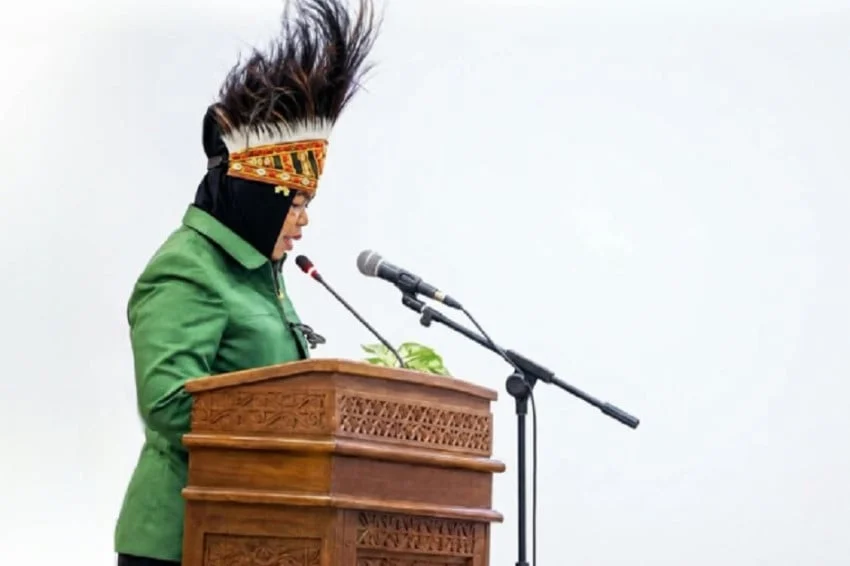
The announcement of the revised budget, which highlights a significant fiscal capacity for the region, has drawn immediate scrutiny from legislative stakeholders. Rampeani Rachman, a prominent member of the DPRK Mimika representing the Perindo Party, took a firm stance during the recent Rapat Paripurna II (Second Plenary Meeting) of the Third Session, emphasizing that the sheer scale of the budget must be matched by a corresponding level of accountability and strategic focus.
The Strategic Importance of the 2026 Revised Budget
In the context of Indonesian regional governance, the APBD-P is not merely an accounting exercise but a vital policy instrument used to adjust development priorities based on the actual revenue performance and changing socio-economic needs observed during the first half of the fiscal year. For Mimika—a region significantly shaped by the presence of large-scale mining operations and a diverse demographic—the allocation of Rp6.1 trillion represents a significant opportunity to address persistent challenges in infrastructure, public health, and local economic empowerment.
During the deliberation, Rachman argued that the primary failure of previous budget cycles often stemmed from a "spending for the sake of spending" culture. This phenomenon, often referred to in bureaucratic circles as the "absorption obsession," occurs when government agencies prioritize the depletion of allocated funds to meet internal performance targets, regardless of whether the projects themselves yield long-term societal benefits.
"The revised APBD must not only account for the regional financial capacity but must also guarantee that every rupiah allocated carries a clear, measurable benefit for the development and the people of Mimika Regency," Rachman stated during her address. Her critique underscores a growing legislative demand for "outcome-based budgeting," where performance is measured by economic multipliers—such as job creation and the stimulation of local small-to-medium enterprises (SMEs)—rather than just output-based indicators like the completion of physical buildings.
Chronology of the Budgetary Deliberation
The legislative process for the 2026 APBD-P followed a structured timeline intended to ensure transparency and public oversight.
- Early September 2026: The executive branch of the Mimika Regency government submitted the draft for the Revised APBD to the DPRK, citing adjustments needed due to shifting economic conditions and priority shifts in local programs.
- Mid-September 2026: The Budget Committee (Banggar) of the DPRK commenced internal hearings with various local government agencies to scrutinize the proposed amendments.
- Late September 2026 (The Plenary Session): During the Second Plenary Meeting of the Third Session, the Eme Neme Yauware Faction, represented by Rampeani Rachman, delivered their formal general view. This session was critical as it marked the transition from proposal to consensus-building among various political factions within the council.
- Post-Session Phase: Following the plenary sessions, the finalized document is expected to be submitted to the provincial level (Papua Provincial Government) for evaluation and registration before it is officially enacted as a regional regulation (Perda).
Socio-Economic Context of Mimika
Mimika holds a unique position within the Indonesian economic landscape. As the home of one of the world’s largest gold and copper mining operations, the region experiences a level of fiscal wealth that is anomalous compared to many other regencies in the country. However, this wealth also creates a complex set of socio-economic challenges, including a high cost of living, significant wealth inequality, and a reliance on the extractive industry sector.
The Rp6.1 trillion budget is intended to act as a buffer and a catalyst for diversifying the local economy. If invested correctly, these funds can bridge the gap between the affluent mining-dependent economy and the subsistence-based sectors that employ the majority of the indigenous population. Experts suggest that for the 2026 revised budget to be successful, a significant portion must be directed toward the "Multiplier Effect" sectors, specifically agriculture, tourism, and vocational training, which are essential for sustainable long-term growth.
Legislative Oversight and the "Outcome-Based" Mandate
The call from the Eme Neme Yauware Faction for clear and measurable programs is part of a broader trend of legislative reform in Indonesia. Following decentralization, local parliaments have been tasked with evolving from simple rubber-stamping bodies into robust oversight institutions.
Rachman’s insistence on "clear and measurable" programs implies three fundamental requirements for the local executive agencies:
- Baseline Data: Projects must be supported by accurate, up-to-date socio-economic data to ensure they address real-world problems.
- Key Performance Indicators (KPIs): Every program must have defined, quantifiable targets that can be audited by the public and the legislative council.
- Sustainability Planning: Projects must demonstrate how they will be maintained after the initial funding is spent, preventing the creation of "white elephant" infrastructure that falls into disrepair due to a lack of operational maintenance budgets.
Analysis of Fiscal Implications
The decision to revise the budget to Rp6.1 trillion is a signal that the regional government expects a change in revenue—likely from tax receipts, revenue-sharing arrangements (Dana Bagi Hasil), or adjusted central government transfers. However, with this increased fiscal capacity comes the risk of inflationary pressure if the spending is not managed effectively.
If the regional government injects this capital into the local economy through inefficient public works, the result could be a short-term spike in economic activity followed by stagnation. Conversely, if the budget is allocated to building the human capital of Mimika’s youth through education grants, health services, and improved connectivity for rural farmers, the region could see a stabilization of its economy that persists even when mining output fluctuates.
The Role of Political Factions
The stance taken by the Perindo Party, through Rampeani Rachman, reflects a growing sentiment among the council members that the legislative body must act as the "people’s conscience" in the face of massive budgetary figures. By vocalizing the need for accountability during the plenary session, the faction ensures that the executive branch is aware that the budget approval is not a blank check.
This legislative vigilance is essential in the Papuan region, where historical concerns regarding budget transparency have often led to public distrust. By maintaining a focus on "real impact," the DPRK Mimika is attempting to restore public confidence in the local government’s ability to manage the vast wealth that the region generates.
Future Outlook and Recommendations
As the 2026 fiscal year progresses, the focus of the public and the media will be on the actual implementation of the projects funded by the Rp6.1 trillion APBD-P. Transparency in the bidding process for government contracts, the speed of project execution, and the quality of the final infrastructure will be the true measures of success.
The following recommendations have been synthesized from the discourse within the DPRK and general best practices for regional budget management:
- Prioritize Digitalization: Implementing e-budgeting and e-procurement systems to minimize leakage and corruption risks.
- Community Engagement: Involving local community leaders in the planning phase to ensure that projects in remote areas of Mimika meet the specific needs of those communities.
- Audit Readiness: Ensuring that all budget realizations are subject to an independent audit to prevent the typical end-of-year rush that often compromises quality.
In conclusion, the Rp6.1 trillion APBD-P for Mimika is a significant commitment that carries with it the potential to fundamentally improve the quality of life for its residents. However, as noted by the legislative representatives, the true value of these funds lies not in the digits of the budget document, but in the measurable improvement of the lives of the people of Mimika. The demand for accountability is high, and the upcoming months will prove whether the local government can rise to the challenge of translating fiscal power into sustainable, people-centered development.